






A full polishing range.
From cutting and one-step correction to final finishing.
Specialist chemistry. Expert application.
 QUARTZ99 / CERAMIC BASE COAT
The foundation of your coating system.
A layerable quartz base coat designed for mechanical protection. Pair it with a suitable top coat to create the final finish.
For application by NANOLAB certified installers only.
Four formulas. Extended working time. Find the coating for your finish.
Explore the BEAST family of ceramic coatings.
Find the coating for each exterior surface.
 PPF & VINYLGLOSSProtection for glossy films and wraps.Discover
 MATTE & SATINMATTEProtection that respects the finish.Discover
 GLASSWINDOWSExplore dedicated glass protection.Discover
 WHEEL PROTECTIONWHEELSA dedicated coating for your wheels.Discover
 TRIM PROTECTIONPLASTICProtection for plastic surfaces.Discover
Dedicated care for the surfaces inside.
 LEATHER SURFACESLEATHERDiscover NANOLAB leather protection.Discover PLASTIC SURFACESPLASTICProtection for interior plastic surfaces.Discover TEXTILE SURFACESFABRICExplore the latest fabric formulation.Discover
Spray protection, maintenance and upcoming wash products.
 MAINTENANCEBEAST 365Explore the BEAST maintenance range.Discover
Next in washing, cleaning & care.
Ceramic protection for boats and yachts.
An easy-to-apply ceramic coating with an established track record on boats and yachts around the world.
Results vary with surface preparation, exposure and maintenance.
Read 50 MARINE guides →Explore MARINEProtection for the surfaces you live with.
A look at what we’re developing.
From cutting and one-step correction to final finishing.
A wider range for professional vehicle care.
Taking shape alongside BEAST & MATRIX.
Practical guidance for your next coating project.
Explore all guides →
Coordinate lifting and coating schedules so fresh protection and existing finishes are assessed around strap contact areas.
Updated · NANOLAB Knowledge
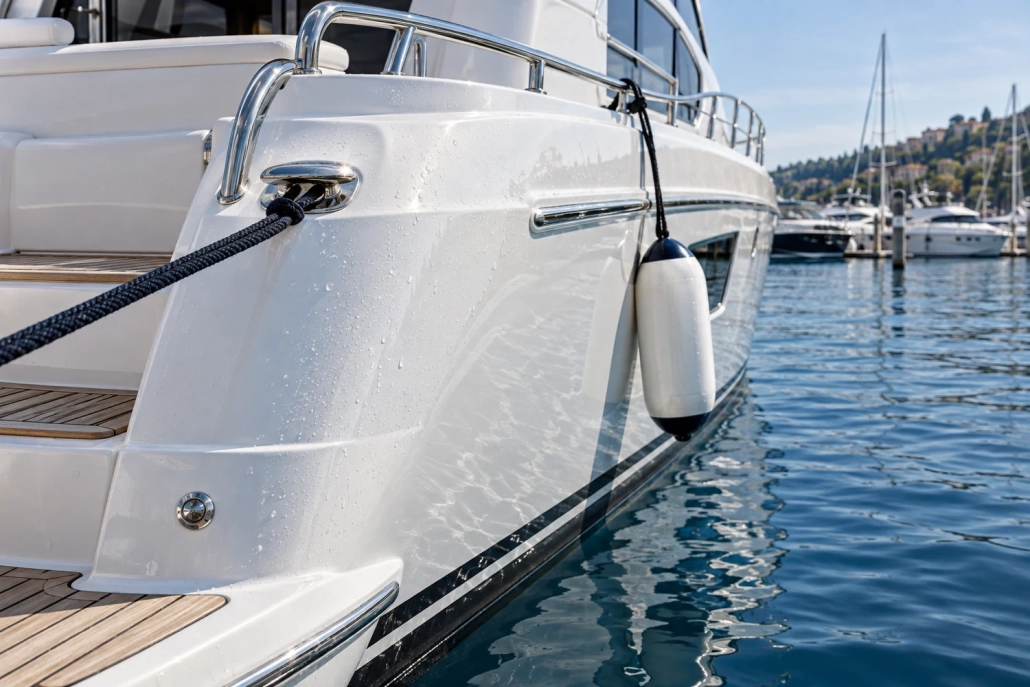
Boat lifting involves equipment and procedures that must remain under the control of qualified operators. A ceramic coating plan should coordinate with that work, especially when straps may contact freshly treated surfaces. The coating does not protect against every pressure or abrasion mark.
Identify when the vessel will be moved relative to preparation, coating and required curing. Provide the relevant product restrictions to the yard before work starts. Do not alter lifting positions or equipment solely to accommodate a cosmetic coating.
If contact cannot be avoided within the required curing period, revise the sequence with the installer and operator. Coating after the move or treating affected zones later may be more practical, depending on access and product instructions.
Inspect and photograph the finish before lifting. Record known marks and areas where straps or supports will contact it. The operator’s approved equipment and procedures take priority; do not introduce unapproved padding or slippery treatments into a lifting system.
After the move, inspect accessible contact areas once it is safe to do so. Separate dirt transfer from visible damage and avoid immediately polishing away evidence of a concern.
Consult NANOLAB MARINE for product-specific application and curing guidance. If local correction or renewal is necessary, record the exact area and its new care timeline.
At handover, explain any surfaces completed after the main job. A coordinated schedule helps preserve a clear finish history, while the lifting operation itself remains a specialised task governed by the vessel and yard requirements.
The period after application is part of the coating process.
Coordinate coating readiness, cover contact and the boat's storage plan before winter shrink-wrapping.
Inspect repeated tender and davit contact areas separately from the broader ceramic-coated marine finish.
 Ceramic Coating Before Winter Boat Shrink-Wrapping