






A full polishing range.
From cutting and one-step correction to final finishing.
Specialist chemistry. Expert application.
 QUARTZ99 / CERAMIC BASE COAT
The foundation of your coating system.
A layerable quartz base coat designed for mechanical protection. Pair it with a suitable top coat to create the final finish.
For application by NANOLAB certified installers only.
Four formulas. Extended working time. Find the coating for your finish.
Explore the BEAST family of ceramic coatings.
Find the coating for each exterior surface.
 PPF & VINYLGLOSSProtection for glossy films and wraps.Discover
 MATTE & SATINMATTEProtection that respects the finish.Discover
 GLASSWINDOWSExplore dedicated glass protection.Discover
 WHEEL PROTECTIONWHEELSA dedicated coating for your wheels.Discover
 TRIM PROTECTIONPLASTICProtection for plastic surfaces.Discover
Dedicated care for the surfaces inside.
 LEATHER SURFACESLEATHERDiscover NANOLAB leather protection.Discover PLASTIC SURFACESPLASTICProtection for interior plastic surfaces.Discover TEXTILE SURFACESFABRICExplore the latest fabric formulation.Discover
Spray protection, maintenance and upcoming wash products.
 MAINTENANCEBEAST 365Explore the BEAST maintenance range.Discover
Next in washing, cleaning & care.
Ceramic protection for boats and yachts.
An easy-to-apply ceramic coating with an established track record on boats and yachts around the world.
Results vary with surface preparation, exposure and maintenance.
Read 50 MARINE guides →Explore MARINEProtection for the surfaces you live with.
A look at what we’re developing.
From cutting and one-step correction to final finishing.
A wider range for professional vehicle care.
Taking shape alongside BEAST & MATRIX.
Practical guidance for your next coating project.
Explore all guides →
Control which instruction revision staff use and who reviews changes.
Updated · NANOLAB Knowledge
A workshop procedure library should make the correct instruction easier to use than an outdated copy. Storing files is only the first step. The team also needs to know which product and task each procedure covers and who approves changes.
Use clear entries for product identity, surface scope, procedure title and revision. Link to current manufacturer instructions and identify any workshop-specific coordination steps separately. Internal notes should not silently alter the product's approved application process.
Assign an owner to review new documents and notify affected staff. Keep superseded versions for traceability while removing them from the normal working view. For example, a printed instruction beside a workstation needs attention when the digital library is updated; changing the file alone does not update the paper copy.
When a meaningful revision arrives, confirm that the team understands what changed. Use a short discussion or observed task where appropriate rather than relying only on a read receipt. Record unresolved questions and obtain clarification before the revised procedure is used. A reliable library supports consistent work across technicians and shifts. It should reduce dependence on personal memory and informal messages while keeping the actual product documents at the centre of the application process.
Give each procedure an owner, approved product scope, source-document reference and review date. Separate general workshop habits from product-specific application instructions. A useful procedure makes the required information easier to use without creating an unofficial competing version.
When a product or instruction changes, identify affected procedures and withdraw obsolete copies from active workstations. Keep historical versions linked to completed jobs where needed. Ask a technician unfamiliar with the draft to walk through it and identify missing decisions. If the procedure requires assumptions that only its author understands, revise it. A small controlled library is more useful than a large collection of unlabelled printouts and remembered shortcuts.
Send NANOLAB your workshop application details. For supporting information, review the current product documentation and the professional coating guides.
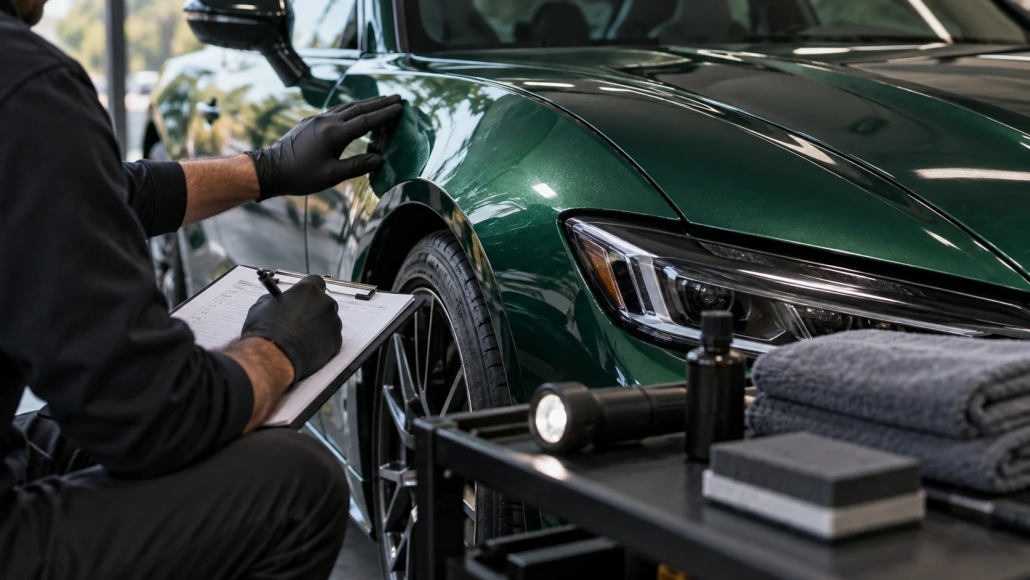
Collect the surface history, owner priorities and practical care information needed to build an accurate coating proposal.

Use clear checkpoints before application, after levelling and at handover to make coating work consistent and traceable.

Record what the customer purchased and which appearance issues are outside the agreed work.