






A full polishing range.
From cutting and one-step correction to final finishing.
Specialist chemistry. Expert application.
 QUARTZ99 / CERAMIC BASE COAT
The foundation of your coating system.
A layerable quartz base coat designed for mechanical protection. Pair it with a suitable top coat to create the final finish.
For application by NANOLAB certified installers only.
Four formulas. Extended working time. Find the coating for your finish.
Explore the BEAST family of ceramic coatings.
Find the coating for each exterior surface.
 PPF & VINYLGLOSSProtection for glossy films and wraps.Discover
 MATTE & SATINMATTEProtection that respects the finish.Discover
 GLASSWINDOWSExplore dedicated glass protection.Discover
 WHEEL PROTECTIONWHEELSA dedicated coating for your wheels.Discover
 TRIM PROTECTIONPLASTICProtection for plastic surfaces.Discover
Dedicated care for the surfaces inside.
 LEATHER SURFACESLEATHERDiscover NANOLAB leather protection.Discover PLASTIC SURFACESPLASTICProtection for interior plastic surfaces.Discover TEXTILE SURFACESFABRICExplore the latest fabric formulation.Discover
Spray protection, maintenance and upcoming wash products.
 MAINTENANCEBEAST 365Explore the BEAST maintenance range.Discover
Next in washing, cleaning & care.
Ceramic protection for boats and yachts.
An easy-to-apply ceramic coating with an established track record on boats and yachts around the world.
Results vary with surface preparation, exposure and maintenance.
Read 50 MARINE guides →Explore MARINEProtection for the surfaces you live with.
A look at what we’re developing.
From cutting and one-step correction to final finishing.
A wider range for professional vehicle care.
Taking shape alongside BEAST & MATRIX.
Practical guidance for your next coating project.
Explore all guides →
Equal mass loss does not necessarily mean equal volume loss when materials have different densities. A coating abrasion report should explain the chosen outcome and retain the information needed for a fair comparison.
Updated · NANOLAB Knowledge
Taber's rotary guidance highlights density and test settings when comparing materials. A buyer should also establish what material was removed: the coating, substrate or a combination. A mass change without that context may answer a narrower question than the proposed claim about coating wear.
Arithmetic example: a hypothetical loss of one gram corresponds to different volumes for materials with densities of one and two grams per cubic centimetre. The arithmetic does not determine which coating performs better; it shows why the measurement basis must be stated.
Do not estimate coating density from appearance or assume the substrate contributed nothing. This article does not provide an abrasion acceptance limit. The laboratory should determine whether mass loss, volume loss, appearance change or another endpoint best answers the intended product question.
Technical references: Taber: rotary abrasion testing. These sources describe their stated methods or products; they do not certify NANOLAB products or establish compatibility with an unlisted surface.
Ask NANOLAB about the exact product and intended use. Use the current product documentation for formulation-specific instructions.
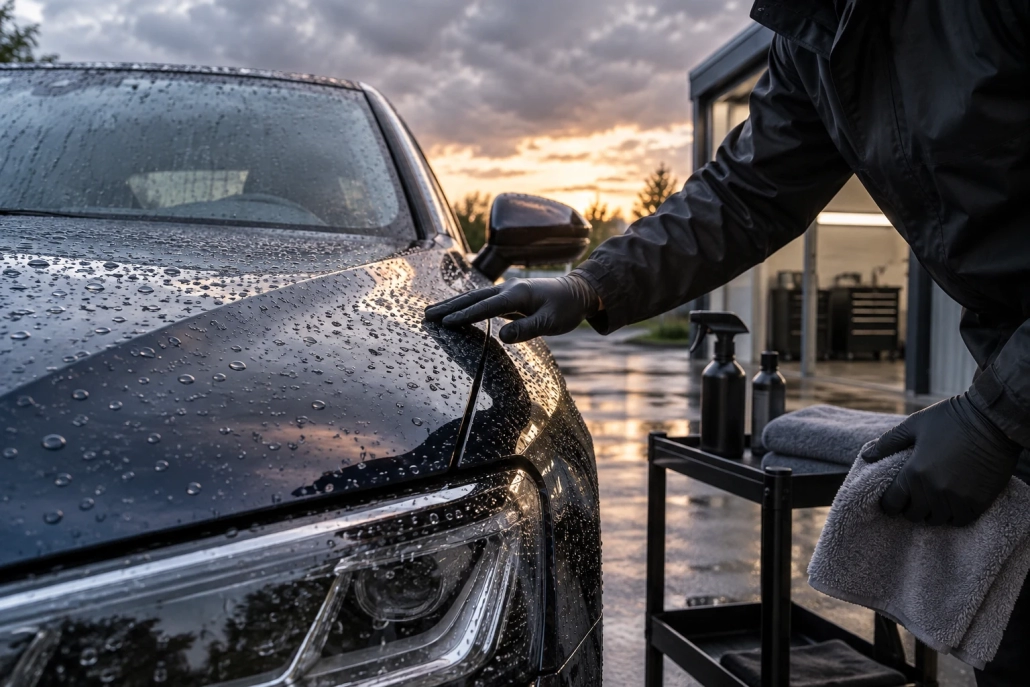
Agree shelter, collection and rescheduling options before rain, heat or changing conditions affect a ceramic coating booking.
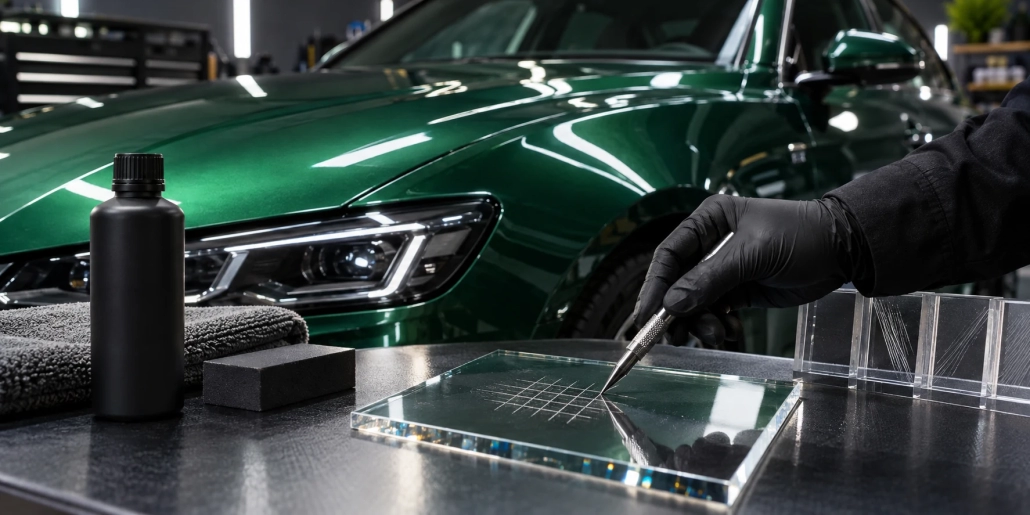
Distinguish pencil hardness from abrasion resistance when comparing ceramic coatings, and read the test method, substrate and failure measure behind each claim.

A mass value and a force value should not share an unexplained load label. Clarify how the test apparatus defines its load before comparing abrasion or scratch reports.