






A full polishing range.
From cutting and one-step correction to final finishing.
Specialist chemistry. Expert application.
 QUARTZ99 / CERAMIC BASE COAT
The foundation of your coating system.
A layerable quartz base coat designed for mechanical protection. Pair it with a suitable top coat to create the final finish.
For application by NANOLAB certified installers only.
Four formulas. Extended working time. Find the coating for your finish.
Explore the BEAST family of ceramic coatings.
Find the coating for each exterior surface.
 PPF & VINYLGLOSSProtection for glossy films and wraps.Discover
 MATTE & SATINMATTEProtection that respects the finish.Discover
 GLASSWINDOWSExplore dedicated glass protection.Discover
 WHEEL PROTECTIONWHEELSA dedicated coating for your wheels.Discover
 TRIM PROTECTIONPLASTICProtection for plastic surfaces.Discover
Dedicated care for the surfaces inside.
 LEATHER SURFACESLEATHERDiscover NANOLAB leather protection.Discover PLASTIC SURFACESPLASTICProtection for interior plastic surfaces.Discover TEXTILE SURFACESFABRICExplore the latest fabric formulation.Discover
Spray protection, maintenance and upcoming wash products.
 MAINTENANCEBEAST 365Explore the BEAST maintenance range.Discover
Next in washing, cleaning & care.
Ceramic protection for boats and yachts.
An easy-to-apply ceramic coating with an established track record on boats and yachts around the world.
Results vary with surface preparation, exposure and maintenance.
Read 50 MARINE guides →Explore MARINEProtection for the surfaces you live with.
A look at what we’re developing.
From cutting and one-step correction to final finishing.
A wider range for professional vehicle care.
Taking shape alongside BEAST & MATRIX.
Practical guidance for your next coating project.
Explore all guides →
Send NANOLAB a focused technical enquiry with product, surface, process and observations so the next recommendation can be specific.
Updated · NANOLAB Knowledge

A technical enquiry becomes easier to resolve when it describes the exact system and the decision needed. “The coating is not working” leaves too many possibilities open. A short, structured record can reduce several rounds of clarification.
| Field | Useful detail |
|---|---|
| Product | Exact name, code and batch where available |
| Surface | Material, finish, repairs and existing treatment |
| Process | Preparation, application, timing and conditions |
| Observation | What changed, where and when |
| Action already taken | Cleaners, wiping, polishing or added protection |
Write “a visible streak remains on the lower left door after drying” before proposing that the coating failed. Include whether the mark changes under different light or after an approved maintenance step. Distinguish verified facts from uncertain history.
Provide a wide view locating the issue and a close view showing it. Keep the surface condition and lighting described. For glass, identify the treated face; for vehicles, identify the panel and any film or repair.
Examples include whether the surface is suitable for the proposed product, which documented recovery process applies, or what additional evidence is needed before rework. A clear decision request helps technical support respond at the right level.
“We used [exact product] on [identified finish] after [preparation]. The issue appeared at [stage and time] in [location]. We have tried [recorded approved step], with [observed result]. The attached images show the dry surface. Which next assessment is appropriate before further treatment?”
The bracketed fields are a template to complete with actual information. Do not substitute assumptions when a field is unknown.
Avoid repeated unapproved treatments while waiting for guidance. They can alter the surface and make the original issue harder to diagnose. Keep product documentation and the job record together so any recommended next step can be followed and verified accurately.
Ask NANOLAB about your surface and intended use. For application and care, use the current instructions for the exact product.
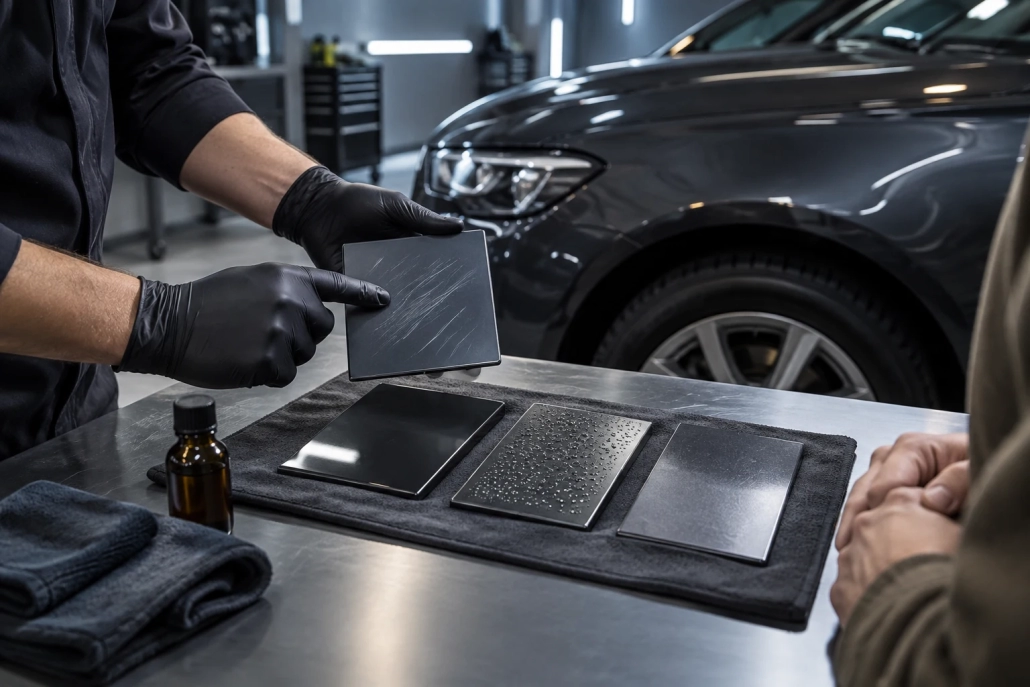
Keep coating performance statements connected to their product version, test method and limitations before using them in sales material.
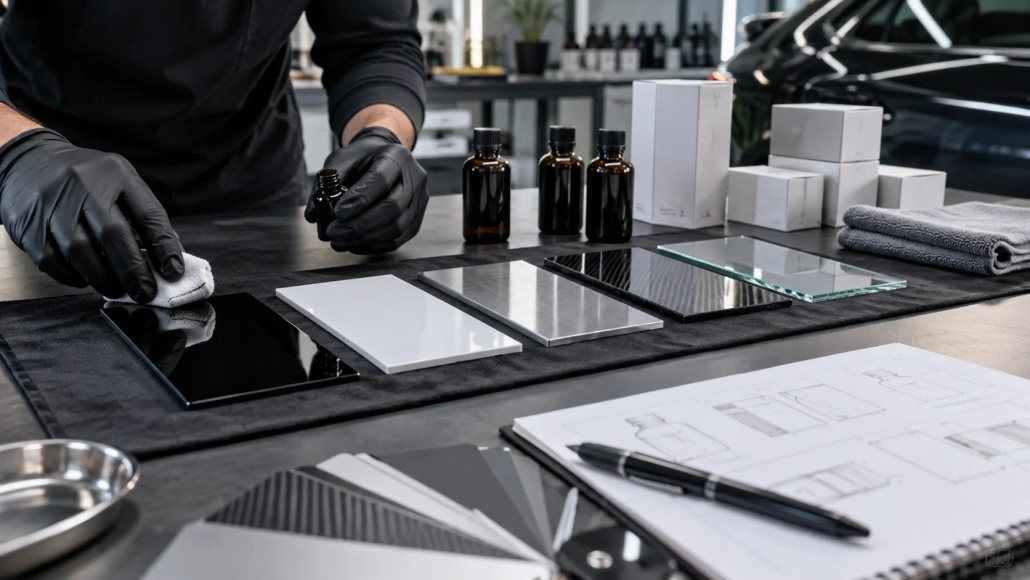
Prepare a useful product brief covering target surfaces, application experience, documentation and support before starting a private-label coating project.
Close a coating complaint with verified corrective work and a follow-up check that shows whether the underlying process improved.
 From Ceramic Coating Complaint to Preventive Action: Close the Evidence Loo...