






A full polishing range.
From cutting and one-step correction to final finishing.
Specialist chemistry. Expert application.
 QUARTZ99 / CERAMIC BASE COAT
The foundation of your coating system.
A layerable quartz base coat designed for mechanical protection. Pair it with a suitable top coat to create the final finish.
For application by NANOLAB certified installers only.
Four formulas. Extended working time. Find the coating for your finish.
Explore the BEAST family of ceramic coatings.
Find the coating for each exterior surface.
 PPF & VINYLGLOSSProtection for glossy films and wraps.Discover
 MATTE & SATINMATTEProtection that respects the finish.Discover
 GLASSWINDOWSExplore dedicated glass protection.Discover
 WHEEL PROTECTIONWHEELSA dedicated coating for your wheels.Discover
 TRIM PROTECTIONPLASTICProtection for plastic surfaces.Discover
Dedicated care for the surfaces inside.
 LEATHER SURFACESLEATHERDiscover NANOLAB leather protection.Discover PLASTIC SURFACESPLASTICProtection for interior plastic surfaces.Discover TEXTILE SURFACESFABRICExplore the latest fabric formulation.Discover
Spray protection, maintenance and upcoming wash products.
 MAINTENANCEBEAST 365Explore the BEAST maintenance range.Discover
Next in washing, cleaning & care.
Ceramic protection for boats and yachts.
An easy-to-apply ceramic coating with an established track record on boats and yachts around the world.
Results vary with surface preparation, exposure and maintenance.
Read 50 MARINE guides →Explore MARINEProtection for the surfaces you live with.
A look at what we’re developing.
From cutting and one-step correction to final finishing.
A wider range for professional vehicle care.
Taking shape alongside BEAST & MATRIX.
Practical guidance for your next coating project.
Explore all guides →
Use a witness coupon beside a shower-glass mock-up as a process reference, and document where its preparation and exposure differ from the installed glass.
Updated · NANOLAB Knowledge
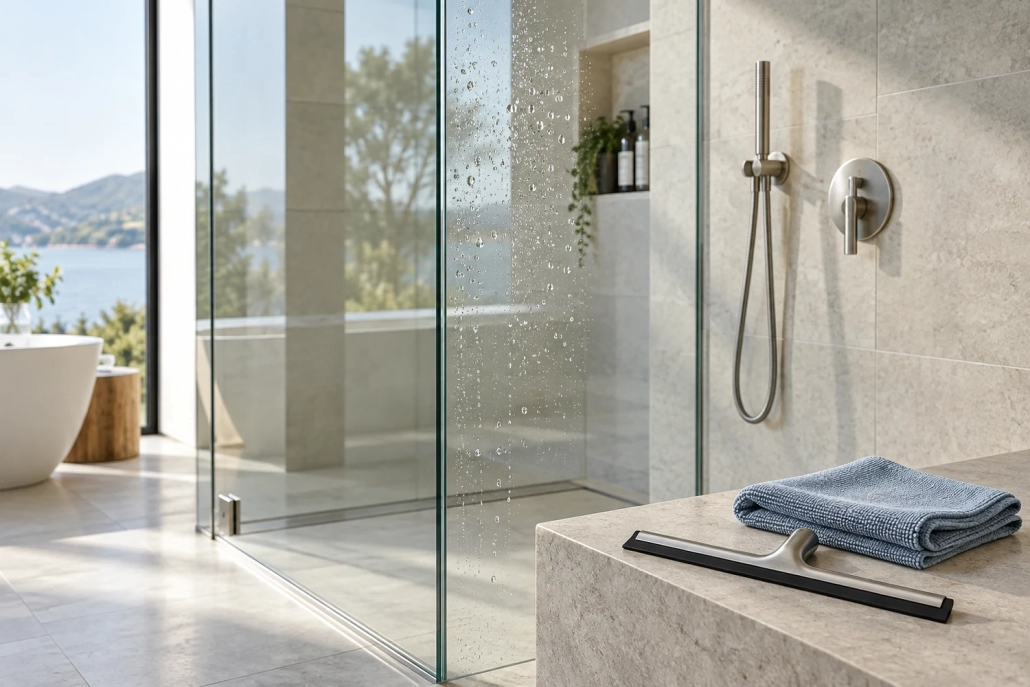
A small witness coupon can make a shower-glass project easier to inspect and discuss. It can preserve a reference from an application session without repeatedly handling the installed panel. Its usefulness depends on what it witnesses: shared application conditions do not automatically mean shared service exposure.
Decide whether it is an application reference, an appearance sample, a retained material or an exposed comparison. One coupon may serve several purposes, but each purpose needs its own record. A sample kept in a dry office cannot independently prove what happened to glass exposed to daily showers.
| Role | What it may support | What it cannot establish alone |
|---|---|---|
| Application witness | Evidence of the recorded preparation and coating session | Uniform coverage of every installed area |
| Appearance reference | A documented visual starting point | Appearance under every installation light |
| Exposed companion | Behaviour in its recorded location | Equivalent exposure elsewhere in the enclosure |
| Retained sample | Later comparison of a preserved condition | Real-use durability |
Record the glass source, surface treatment, coated face, preparation and product batch. A generic piece of clear glass may be useful for training but may not represent a decorated, factory-treated or differently finished project panel. Identify mismatches before interpreting the sample.
Apply the documented process with traceable timing and tools. If the installer coats the coupon at the beginning of the shift and the main panel hours later, preserve that difference rather than describing them as an identical application event.
If the coupon is exposed, choose a secure arrangement approved for the location that does not create a sharp-edge or falling-object hazard. Record orientation, water contact, cleaning and drying. Avoid placing loose glass in an occupied shower simply to create a convenient comparison.
A fixed panel may receive direct spray, runoff and repeated wiping. A companion sample on a shelf may receive only humidity. Those are different exposure histories, even when they share the same room.
Suppose the retained coupon remains visually clear while the installed panel develops residue. That is consistent with their different environments and does not by itself identify application failure. Conversely, a defect on the coupon may reveal something about its own preparation without proving the whole installation is affected.
Review the records to ask where the histories diverged. Then inspect a relevant installed area with an appropriate method. The coupon helps organise the investigation; it should not replace it.
Attach a concise record with sample identity, preparation, product, date, storage or exposure and intended use. Keep photographs of both the sample and its relationship to the mock-up. A well-labelled witness remains useful months later because the reviewer can see what comparison is justified and which questions still require evidence from the actual shower.
Discuss your shower-glass project. Follow the current instructions for the exact product when planning application and care.
 Ceramic Frit and Clear Shower Glass: Define Separate Coating Test Areas