






A full polishing range.
From cutting and one-step correction to final finishing.
Specialist chemistry. Expert application.
 QUARTZ99 / CERAMIC BASE COAT
The foundation of your coating system.
A layerable quartz base coat designed for mechanical protection. Pair it with a suitable top coat to create the final finish.
For application by NANOLAB certified installers only.
Four formulas. Extended working time. Find the coating for your finish.
Explore the BEAST family of ceramic coatings.
Find the coating for each exterior surface.
 PPF & VINYLGLOSSProtection for glossy films and wraps.Discover
 MATTE & SATINMATTEProtection that respects the finish.Discover
 GLASSWINDOWSExplore dedicated glass protection.Discover
 WHEEL PROTECTIONWHEELSA dedicated coating for your wheels.Discover
 TRIM PROTECTIONPLASTICProtection for plastic surfaces.Discover
Dedicated care for the surfaces inside.
 LEATHER SURFACESLEATHERDiscover NANOLAB leather protection.Discover PLASTIC SURFACESPLASTICProtection for interior plastic surfaces.Discover TEXTILE SURFACESFABRICExplore the latest fabric formulation.Discover
Spray protection, maintenance and upcoming wash products.
 MAINTENANCEBEAST 365Explore the BEAST maintenance range.Discover
Next in washing, cleaning & care.
Ceramic protection for boats and yachts.
An easy-to-apply ceramic coating with an established track record on boats and yachts around the world.
Results vary with surface preparation, exposure and maintenance.
Read 50 MARINE guides →Explore MARINEProtection for the surfaces you live with.
A look at what we’re developing.
From cutting and one-step correction to final finishing.
A wider range for professional vehicle care.
Taking shape alongside BEAST & MATRIX.
Practical guidance for your next coating project.
Explore all guides →
Assess ceramic-frit decoration and clear glass as separate working surfaces when planning a shower-glass coating sample and cleaning trial.
Updated · NANOLAB Knowledge
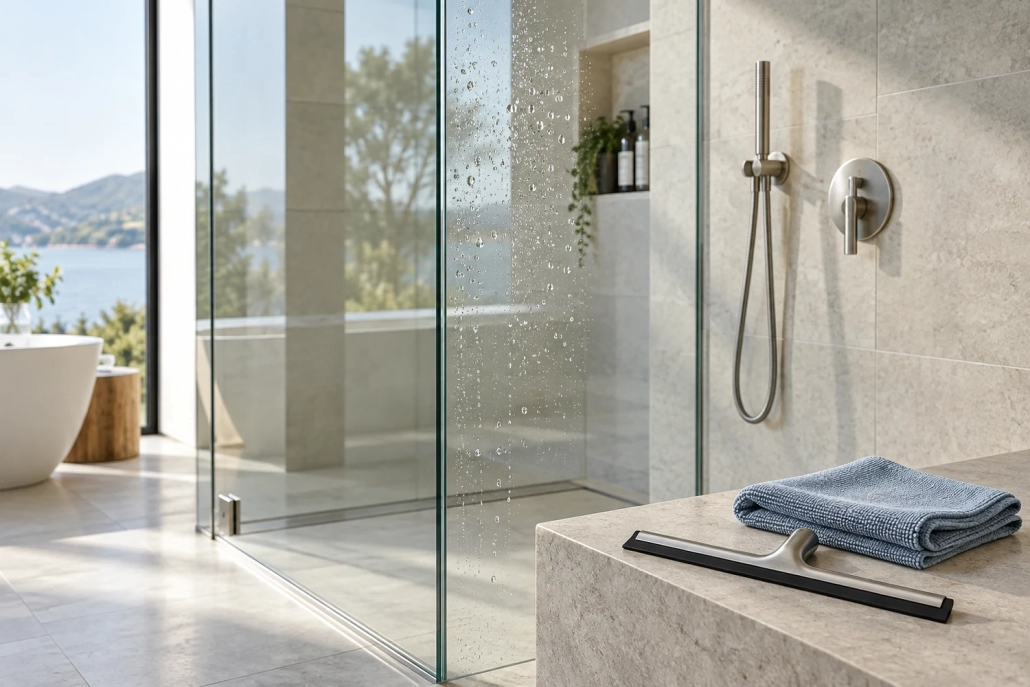
A shower screen with decorative dots, bands or opaque areas may not present the same exposed surface everywhere. If decoration is ceramic frit, the coated face can include both clear glass and fired ceramic material. Treating the entire panel as chemically and optically uniform can hide a compatibility problem.
Ask the glass fabricator for the construction and care information. A printed film, painted decoration, etched texture and ceramic enamel are different systems. Pilkington describes enamelled glass as ceramic paint fired into the surface during heat treatment. That manufacturing description does not establish compatibility with every aftermarket coating or cleaner.
Also confirm which face carries the decoration. A pattern visible through glass may be on the opposite side from the intended application. Mark the faces on the project drawing so the applicator and installer use the same terminology.
| Zone | Assessment |
|---|---|
| Clear glass | Dry appearance, cleaning response and supported coating behaviour |
| Decorated area | Colour, gloss, texture and product-removal behaviour |
| Transition | Visible residue, uneven wiping or a change at the boundary |
| Bonding or hardware region | Supplier-defined exclusions and installation requirements |
Use a representative offcut or sample from the project wherever available. A test on plain glass from another source cannot resolve a concern about the decorated surface.
Determine what changes would be unacceptable: darker appearance, new gloss, patchiness, visible residue or altered privacy effect. Inspect the untreated sample under representative front and back lighting. Keep that reference available during the trial rather than relying on a memory of how the pattern looked.
Confirm the preparation and coating process with the relevant suppliers. Do not assume a cleaning method suitable for clear glass is appropriate for every decoration, and do not increase abrasion to make the areas appear more similar.
The edge between decorated and clear areas deserves its own inspection. Differences in texture or wiping response can make this region more revealing than the centre of either zone. Assess the sample dry, after the required application and curing stages, and again after a defined compatible cleaning sequence.
For example, an illustrative sample may look uniform from the room side but show a residue line when backlit. That observation should be resolved before treating the full order. A single favourable viewing angle is not sufficient acceptance for a decorative screen.
Record the exact decoration, face, approved process and exclusions. Give the installer and cleaner the same marked drawing. If a later order changes the frit pattern, colour or glass construction, review whether the existing sample still represents it.
The purpose is not to reject decorated glass as a category. It is to establish compatibility for the actual working surfaces and preserve the designed appearance while adding an appropriately supported protective treatment.
These sources support the identified technical concepts. The planning examples in this guide are illustrative and are not NANOLAB performance test results.
Discuss your shower-glass project. Follow the current instructions for the exact product when planning application and care.
 Coated Shower Glass behind a Fixed Screen: Design the Cleaning Access First