






A full polishing range.
From cutting and one-step correction to final finishing.
Specialist chemistry. Expert application.
 QUARTZ99 / CERAMIC BASE COAT
The foundation of your coating system.
A layerable quartz base coat designed for mechanical protection. Pair it with a suitable top coat to create the final finish.
For application by NANOLAB certified installers only.
Four formulas. Extended working time. Find the coating for your finish.
Explore the BEAST family of ceramic coatings.
Find the coating for each exterior surface.
 PPF & VINYLGLOSSProtection for glossy films and wraps.Discover
 MATTE & SATINMATTEProtection that respects the finish.Discover
 GLASSWINDOWSExplore dedicated glass protection.Discover
 WHEEL PROTECTIONWHEELSA dedicated coating for your wheels.Discover
 TRIM PROTECTIONPLASTICProtection for plastic surfaces.Discover
Dedicated care for the surfaces inside.
 LEATHER SURFACESLEATHERDiscover NANOLAB leather protection.Discover PLASTIC SURFACESPLASTICProtection for interior plastic surfaces.Discover TEXTILE SURFACESFABRICExplore the latest fabric formulation.Discover
Spray protection, maintenance and upcoming wash products.
 MAINTENANCEBEAST 365Explore the BEAST maintenance range.Discover
Next in washing, cleaning & care.
Ceramic protection for boats and yachts.
An easy-to-apply ceramic coating with an established track record on boats and yachts around the world.
Results vary with surface preparation, exposure and maintenance.
Read 50 MARINE guides →Explore MARINEProtection for the surfaces you live with.
A look at what we’re developing.
From cutting and one-step correction to final finishing.
A wider range for professional vehicle care.
Taking shape alongside BEAST & MATRIX.
Practical guidance for your next coating project.
Explore all guides →
Design a useful coating trial in one working bathroom by separating feasibility, local comparisons and the limits of a single-room observation.
Updated · NANOLAB Knowledge
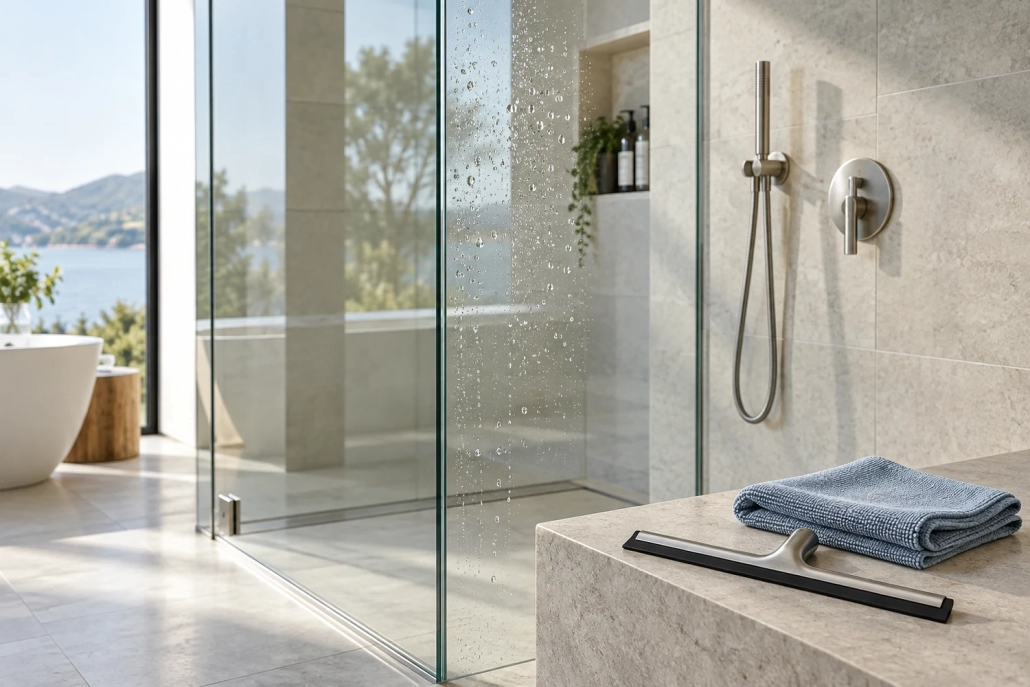
Only one bathroom is available for a shower-glass coating trial. That does not make testing pointless, but it changes the strength of the conclusions. A single-room pilot can reveal application practicality, appearance and maintenance issues. It cannot represent every household, water supply or cleaning team.
Start with a narrow objective: can the proposed treatment be applied acceptably to this glass, and can the user maintain it with the agreed routine? If the objective is a comparative durability claim, plan additional independent installations before relying on the single bathroom.
Experimental design should follow the question. NIST’s design guidance provides general background on selecting designs; the bathroom plan below is an illustrative operational approach, not a prescribed standard test.
A treated and untreated area on the same panel can offer useful context only when the division is suitable for the glass, product and owner. Choose locations with reasonably comparable exposure. Avoid placing one area directly in the shower jet and the other behind a dry screen, then crediting the difference to treatment.
| Possible approach | Useful for | Main limitation |
|---|---|---|
| Documented before-and-after routine | Practical cleaning changes | Use and cleaning behaviour may change over time |
| Approved adjacent comparison areas | Local appearance and residue comparison | Runoff and wiping can cross the boundary |
| Companion sample outside the shower | Application practice | It does not reproduce installed exposure |
Schedule preparation, application and return to service according to the exact product instructions. Do not shorten required cure or release conditions because it is the only shower. If a suitable interruption cannot be arranged, postpone the installed trial and start with a separate compatible sample.
Agree who cleans, which products are used and which observations are recorded. Keep the routine realistic; a trial maintained by a specialist every day may say little about the household’s intended care.
Log approximate use, cleaning events, product changes and unusual exposures. Photograph the same dry areas under consistent lighting. Note cleaning effort using a simple repeatable record, such as the defined sequence completed and whether additional work was needed. Do not count each photograph as a new independent installation.
An illustrative conclusion might say that application and routine cleaning were acceptable in one bathroom over the documented observation period, with one issue around an inaccessible corner. That is useful evidence for improving the next pilot. It does not support a universal lifespan or a percentage reduction in labour across hotels.
Use the results to refine the process and select the next sites. The value of a small pilot lies in exposing practical questions early, while preserving the distinction between a promising local outcome and a validated broad claim.
These sources support the identified technical concepts. The planning examples in this guide are illustrative and are not NANOLAB performance test results.
Discuss your shower-glass project. Follow the current instructions for the exact product when planning application and care.

 A Shower Glass Mock-Up with a Witness Coupon: Match Exposure before Drawing...