






A full polishing range.
From cutting and one-step correction to final finishing.
Specialist chemistry. Expert application.
 QUARTZ99 / CERAMIC BASE COAT
The foundation of your coating system.
A layerable quartz base coat designed for mechanical protection. Pair it with a suitable top coat to create the final finish.
For application by NANOLAB certified installers only.
Four formulas. Extended working time. Find the coating for your finish.
Explore the BEAST family of ceramic coatings.
Find the coating for each exterior surface.
 PPF & VINYLGLOSSProtection for glossy films and wraps.Discover
 MATTE & SATINMATTEProtection that respects the finish.Discover
 GLASSWINDOWSExplore dedicated glass protection.Discover
 WHEEL PROTECTIONWHEELSA dedicated coating for your wheels.Discover
 TRIM PROTECTIONPLASTICProtection for plastic surfaces.Discover
Dedicated care for the surfaces inside.
 LEATHER SURFACESLEATHERDiscover NANOLAB leather protection.Discover PLASTIC SURFACESPLASTICProtection for interior plastic surfaces.Discover TEXTILE SURFACESFABRICExplore the latest fabric formulation.Discover
Spray protection, maintenance and upcoming wash products.
 MAINTENANCEBEAST 365Explore the BEAST maintenance range.Discover
Next in washing, cleaning & care.
Ceramic protection for boats and yachts.
An easy-to-apply ceramic coating with an established track record on boats and yachts around the world.
Results vary with surface preparation, exposure and maintenance.
Read 50 MARINE guides →Explore MARINEProtection for the surfaces you live with.
A look at what we’re developing.
From cutting and one-step correction to final finishing.
A wider range for professional vehicle care.
Taking shape alongside BEAST & MATRIX.
Practical guidance for your next coating project.
Explore all guides →
Use a small pad-and-compound matrix to identify a suitable polishing system without changing several variables unpredictably.
Updated · NANOLAB Knowledge
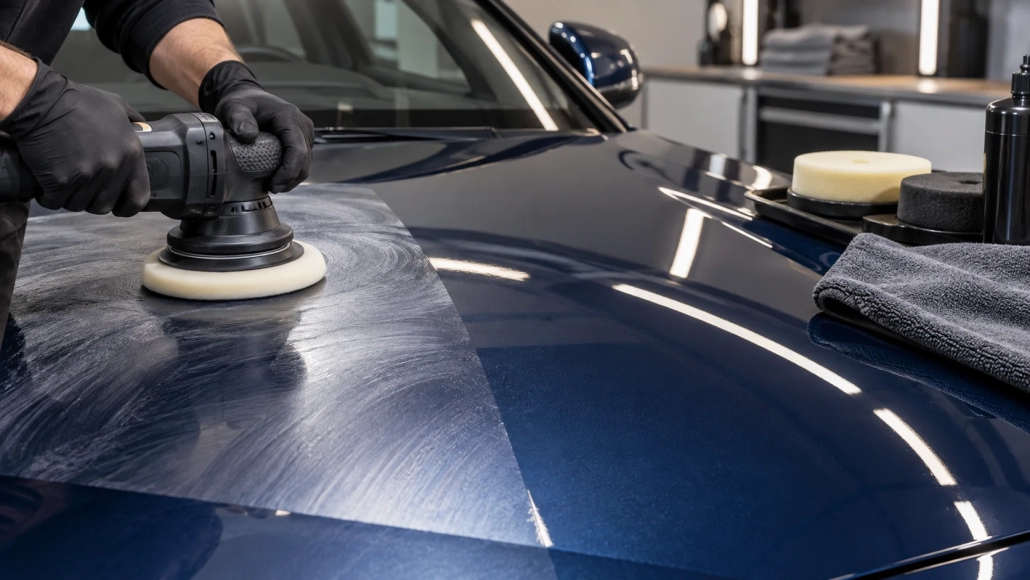
When paint responds poorly, changing the pad and compound together may find an acceptable result but reveal little about why it worked. A small planned matrix helps compare complete systems while preserving useful information about each component.
Start with the paint condition and the equipment manufacturer’s requirements. Select compatible pad-and-liquid combinations; not every pad should be paired with every compound. Keep machine, operator, area and inspection method consistent enough for the comparison.
| Liquid X | Liquid Y | |
|---|---|---|
| Pad A | Combination A-X | Combination A-Y, if suitable |
| Pad B | Combination B-X, if suitable | Combination B-Y |
Choose adjacent representative areas with comparable defects and paint history. Do not test the most aggressive combination on the worst damage and then compare its finish directly with a gentle combination on an easier section.
Measure or describe defect reduction, residual haze, wipe-off effort, required refinement and total accepted time. Record pad loading and behaviour during the trial. A combination that cuts well but becomes inconsistent after a short period needs further evaluation.
If one pad performs well with both liquids, the pad choice may be important under these conditions. If each liquid works best with a different pad, the system interaction matters. The trial does not prove that either component is universally superior.
Published manufacturer finishing systems illustrate why tools, pads and liquids are often specified together. Their settings should not be transferred automatically to a different product or machine.
Repeat the preferred combination on another representative area and check the result after suitable residue removal. Preserve the paint’s limits and stop if the process behaves unexpectedly.
The matrix is a structured way to learn, not a reason to test every possible combination on a customer’s vehicle. Keep the trial small, appropriate and tied to the intended finish.
The sources below support the stated concepts or describe their own methods. The worked scenarios are editorial examples, not NANOLAB test results.
Ask NANOLAB about your surface and intended use. For application and care, use the current instructions for the exact product.
Choose a polishing process by testing defect removal, finishing quality and clear-coat preservation rather than counting steps alone.
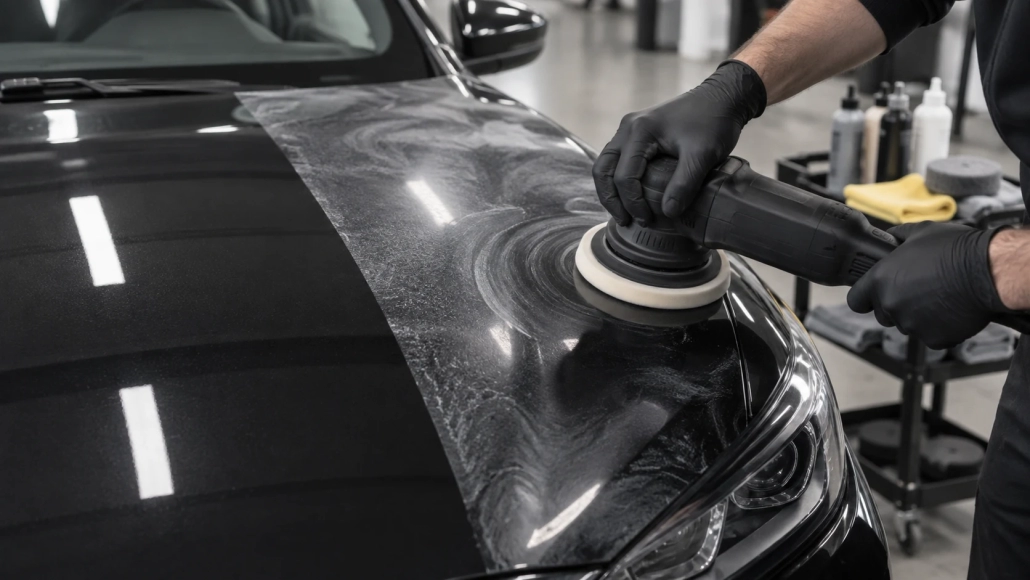
Diagnose resistant compound residue through product loading, working cycle, pad condition and compatible removal methods without forcing the finish.
Measure polishing progress against an agreed defect target and paint-preservation limit so remaining deep scratches do not drive unnecessary correction.
 Measuring Polishing Progress without Chasing Every Remaining Scratch