






A full polishing range.
From cutting and one-step correction to final finishing.
Specialist chemistry. Expert application.
 QUARTZ99 / CERAMIC BASE COAT
The foundation of your coating system.
A layerable quartz base coat designed for mechanical protection. Pair it with a suitable top coat to create the final finish.
For application by NANOLAB certified installers only.
Four formulas. Extended working time. Find the coating for your finish.
Explore the BEAST family of ceramic coatings.
Find the coating for each exterior surface.
 PPF & VINYLGLOSSProtection for glossy films and wraps.Discover
 MATTE & SATINMATTEProtection that respects the finish.Discover
 GLASSWINDOWSExplore dedicated glass protection.Discover
 WHEEL PROTECTIONWHEELSA dedicated coating for your wheels.Discover
 TRIM PROTECTIONPLASTICProtection for plastic surfaces.Discover
Dedicated care for the surfaces inside.
 LEATHER SURFACESLEATHERDiscover NANOLAB leather protection.Discover PLASTIC SURFACESPLASTICProtection for interior plastic surfaces.Discover TEXTILE SURFACESFABRICExplore the latest fabric formulation.Discover
Spray protection, maintenance and upcoming wash products.
 MAINTENANCEBEAST 365Explore the BEAST maintenance range.Discover
Next in washing, cleaning & care.
Ceramic protection for boats and yachts.
An easy-to-apply ceramic coating with an established track record on boats and yachts around the world.
Results vary with surface preparation, exposure and maintenance.
Read 50 MARINE guides →Explore MARINEProtection for the surfaces you live with.
A look at what we’re developing.
From cutting and one-step correction to final finishing.
A wider range for professional vehicle care.
Taking shape alongside BEAST & MATRIX.
Practical guidance for your next coating project.
Explore all guides →
Evaluate containment, bottle damage and carton appearance as separate outcomes when testing secondary packaging for coating shipments.
Updated · NANOLAB Knowledge
A damaged carton can contain an intact bottle, and a clean-looking carton can conceal a closure problem. Secondary-packaging trials should assess these outcomes separately rather than assigning one overall impression.
Record bottle count, dividers, cushioning, closures, outer carton and packing method. Include the intended product and fill configuration where appropriate. The test plan should reflect relevant distribution hazards and applicable shipping requirements.
| Level | Endpoint |
|---|---|
| Outer package | Damage, labels and handling usability |
| Internal support | Movement, collapse or loss of separation |
| Primary container | Breakage, deformation and closure condition |
| Product containment | Leakage or loss |
Have a packaging specialist select suitable tests and acceptance criteria. Record the method and sample history. Reusing a previously damaged carton for a later challenge changes the test configuration and should be intentional, not accidental.
If carton corners crush but containment remains intact, the commercial appearance requirement may still fail. If a bottle leaks with little carton damage, stronger cardboard alone may not solve it. Verify the revised system under the same relevant assessment. Retain photographs and component specifications so the approved packing method can be reproduced on the warehouse floor, including the position of dividers and any required orientation.
Discuss your private-label coating project. For application and care, use the current instructions for the exact product.
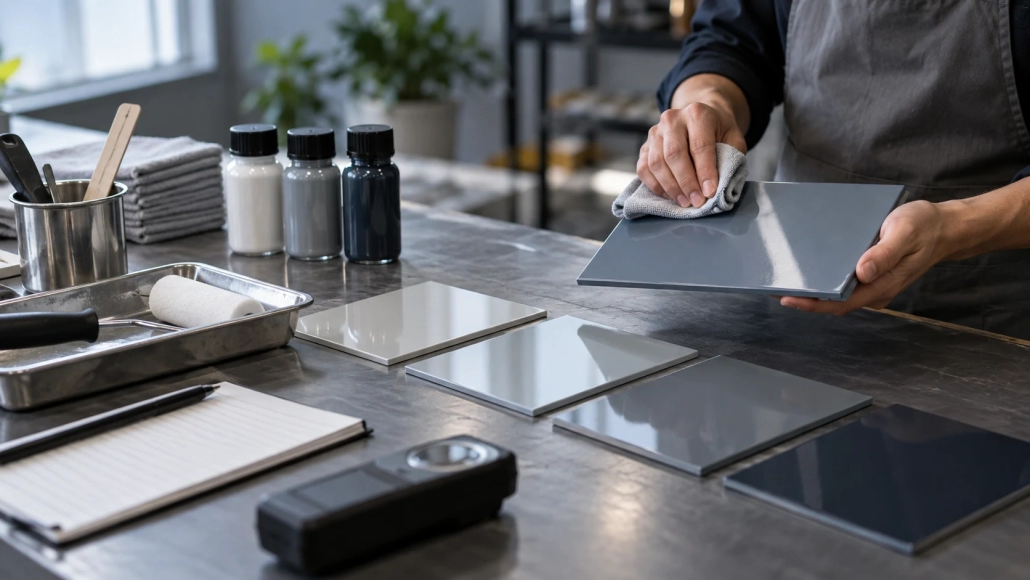
Compare private label coating samples using consistent preparation, application notes, finish checks and aftercare observations.

A packing trial using one loose bottle cannot reveal all problems in a full carton. The final bottle may be harder to insert or may load neighbouring packs differently.
Include drips, closure residue and usable output when evaluating how efficiently a coating package dispenses its contents.
 Dispensing Drips and Product Loss: Include the Closure in a Usage Trial