






A full polishing range.
From cutting and one-step correction to final finishing.
Specialist chemistry. Expert application.
 QUARTZ99 / CERAMIC BASE COAT
The foundation of your coating system.
A layerable quartz base coat designed for mechanical protection. Pair it with a suitable top coat to create the final finish.
For application by NANOLAB certified installers only.
Four formulas. Extended working time. Find the coating for your finish.
Explore the BEAST family of ceramic coatings.
Find the coating for each exterior surface.
 PPF & VINYLGLOSSProtection for glossy films and wraps.Discover
 MATTE & SATINMATTEProtection that respects the finish.Discover
 GLASSWINDOWSExplore dedicated glass protection.Discover
 WHEEL PROTECTIONWHEELSA dedicated coating for your wheels.Discover
 TRIM PROTECTIONPLASTICProtection for plastic surfaces.Discover
Dedicated care for the surfaces inside.
 LEATHER SURFACESLEATHERDiscover NANOLAB leather protection.Discover PLASTIC SURFACESPLASTICProtection for interior plastic surfaces.Discover TEXTILE SURFACESFABRICExplore the latest fabric formulation.Discover
Spray protection, maintenance and upcoming wash products.
 MAINTENANCEBEAST 365Explore the BEAST maintenance range.Discover
Next in washing, cleaning & care.
Ceramic protection for boats and yachts.
An easy-to-apply ceramic coating with an established track record on boats and yachts around the world.
Results vary with surface preparation, exposure and maintenance.
Read 50 MARINE guides →Explore MARINEProtection for the surfaces you live with.
A look at what we’re developing.
From cutting and one-step correction to final finishing.
A wider range for professional vehicle care.
Taking shape alongside BEAST & MATRIX.
Practical guidance for your next coating project.
Explore all guides →
Estimate paint-correction work from the distribution of defects and surface types instead of relying only on vehicle size or a single test spot.
Updated · NANOLAB Knowledge
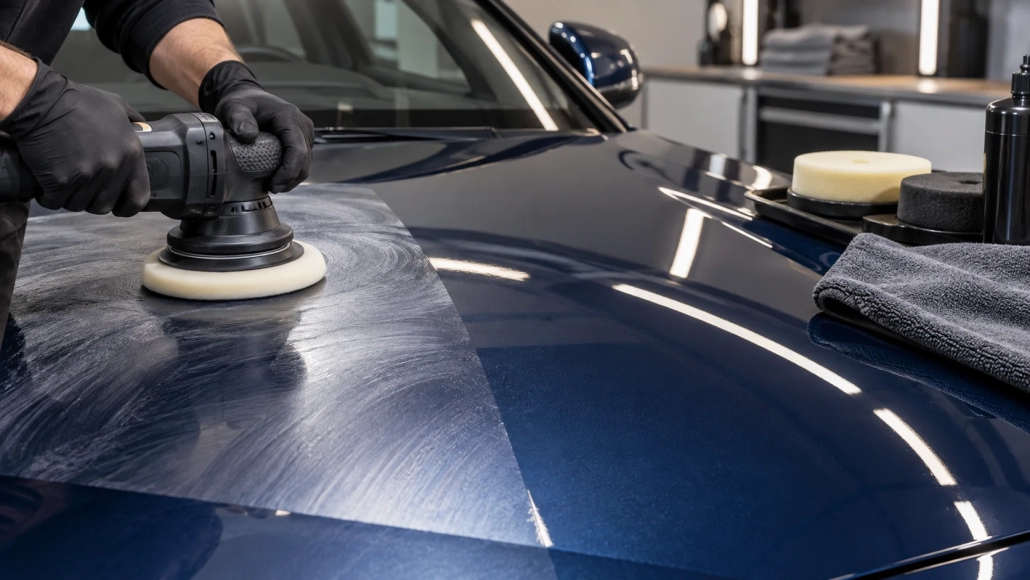
Two vehicles of the same size can require very different correction work. Defect depth, repairs, geometry and the requested finish determine the process. A zone-based estimate makes those differences visible.
Group areas by surface condition and required method, not merely by panel name. For example, broad lightly marked paint, heavily affected lower sections and uncertain repaired panels may need separate assessment.
Choose a suitable test area within each important condition. Record the supported process, accepted outcome and remaining limitations. Do not extrapolate the easiest flat section to every contour.
| Zone | Estimate input |
|---|---|
| Routine correction | Area and demonstrated process time |
| Complex geometry | Tool changes and access time |
| Uncertain condition | Assessment allowance and decision point |
| Whole job | Preparation, cleanup and inspection |
An estimate might assume that most paint responds like the accepted test areas, with a defined allowance for different sections. If an unexpected repair is found, use the agreed scope-review process rather than silently increasing aggressiveness to stay on schedule.
Record where time differed and why. Over several jobs, this improves quoting more effectively than adding a blanket percentage to every vehicle.
The customer should understand the intended finish and exclusions, while the workshop retains a practical production plan. Vehicle size remains useful, but it is one input rather than a substitute for inspecting the paint.
Ask NANOLAB about your surface and intended use. For application and care, use the current instructions for the exact product.
Choose a polishing process by testing defect removal, finishing quality and clear-coat preservation rather than counting steps alone.
A vehicle that cannot be moved limits access and inspection. Resolve those limits before quoting a correction process based on an ordinary movable car.
Control initial pad loading when comparing polishing systems so a fresh dry pad and a heavily loaded pad do not create an unfair trial.
 A Defect Pareto Chart for a Polishing Workshop