






A full polishing range.
From cutting and one-step correction to final finishing.
Specialist chemistry. Expert application.
 QUARTZ99 / CERAMIC BASE COAT
The foundation of your coating system.
A layerable quartz base coat designed for mechanical protection. Pair it with a suitable top coat to create the final finish.
For application by NANOLAB certified installers only.
Four formulas. Extended working time. Find the coating for your finish.
Explore the BEAST family of ceramic coatings.
Find the coating for each exterior surface.
 PPF & VINYLGLOSSProtection for glossy films and wraps.Discover
 MATTE & SATINMATTEProtection that respects the finish.Discover
 GLASSWINDOWSExplore dedicated glass protection.Discover
 WHEEL PROTECTIONWHEELSA dedicated coating for your wheels.Discover
 TRIM PROTECTIONPLASTICProtection for plastic surfaces.Discover
Dedicated care for the surfaces inside.
 LEATHER SURFACESLEATHERDiscover NANOLAB leather protection.Discover PLASTIC SURFACESPLASTICProtection for interior plastic surfaces.Discover TEXTILE SURFACESFABRICExplore the latest fabric formulation.Discover
Spray protection, maintenance and upcoming wash products.
 MAINTENANCEBEAST 365Explore the BEAST maintenance range.Discover
Next in washing, cleaning & care.
Ceramic protection for boats and yachts.
An easy-to-apply ceramic coating with an established track record on boats and yachts around the world.
Results vary with surface preparation, exposure and maintenance.
Read 50 MARINE guides →Explore MARINEProtection for the surfaces you live with.
A look at what we’re developing.
From cutting and one-step correction to final finishing.
A wider range for professional vehicle care.
Taking shape alongside BEAST & MATRIX.
Practical guidance for your next coating project.
Explore all guides →
Create a sampling map for shared water supplies so detailing and glass-coating teams can trace which water reaches each process.
Updated · NANOLAB Knowledge
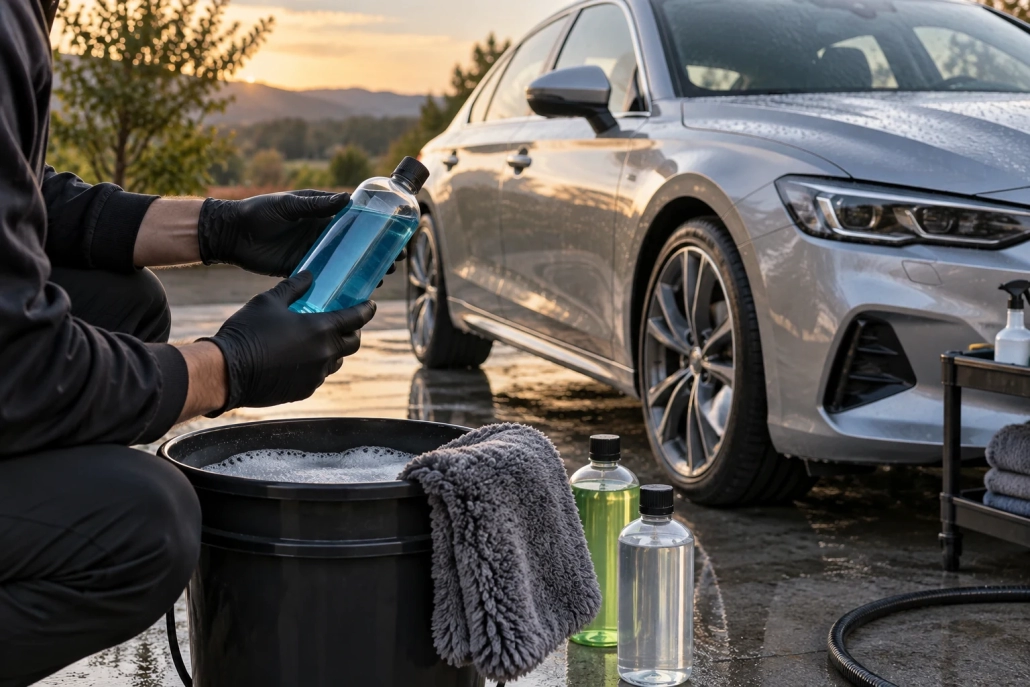
A facility may use one incoming supply for glass washing, vehicle washing, preparation and final rinsing. Treatment, storage and hose connections can make the water at those stations different. A sampling map prevents results from being assigned to the wrong process.
Identify the inlet, treatment stages, tanks, bypasses and point-of-use outlets. Confirm the arrangement with the responsible equipment or facilities team. Label the sampling points in plain language and give each a stable code.
Do not rely only on pipe colour or a handwritten label that may predate a plumbing change. Check which outlet feeds the actual task.
| Point | Example purpose |
|---|---|
| Incoming water | Track supply variation |
| After treatment | Evaluate the treatment stage |
| Glass washer outlet | Investigate glass residue |
| Final-rinse nozzle | Check delivered rinse water |
Include time, relevant equipment state, recent maintenance and the prescribed sampling procedure. A stagnant sample and a flushed operating sample answer different questions. Keep them labelled accordingly rather than combining them in one trend.
If only the glass line shows a change, compare its upstream and downstream points before changing vehicle-care chemistry. If several outlets change together, investigate the shared path. This logic narrows the search without claiming that a single reading identifies the cause.
Update the map after plumbing or treatment changes and retire obsolete sampling codes. A short, accurate map often prevents more confusion than an extensive spreadsheet containing measurements whose locations nobody can reconstruct.
Ask NANOLAB about your surface and intended use. For application and care, use the current instructions for the exact product.
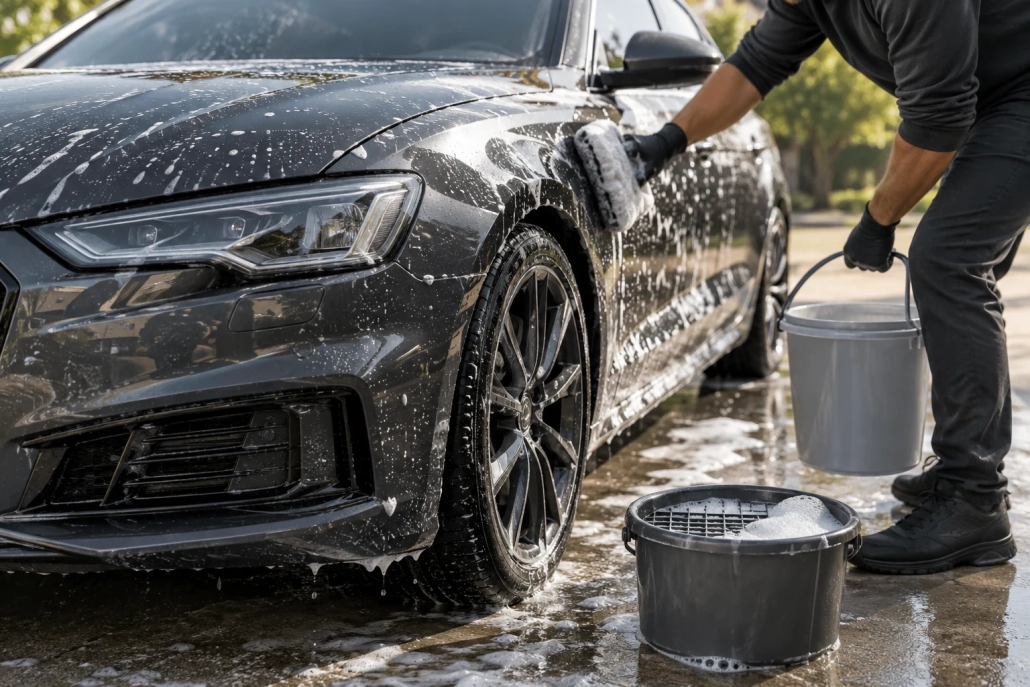
Build a gentle wash routine that removes loose grit before contact, keeps wheel tools separate and ends with careful rinsing and drying.
A first-draw water sample and a sample collected after an agreed flush can represent different conditions. State which was collected when investigating wash-bay water or comparing results over time.
Trial a changed water supply on a limited, controlled wash task before modifying shampoo, rinse equipment and maintenance practice together.
 Testing a New Water Supply before Changing the Whole Wash Process