






A full polishing range.
From cutting and one-step correction to final finishing.
Specialist chemistry. Expert application.
 QUARTZ99 / CERAMIC BASE COAT
The foundation of your coating system.
A layerable quartz base coat designed for mechanical protection. Pair it with a suitable top coat to create the final finish.
For application by NANOLAB certified installers only.
Four formulas. Extended working time. Find the coating for your finish.
Explore the BEAST family of ceramic coatings.
Find the coating for each exterior surface.
 PPF & VINYLGLOSSProtection for glossy films and wraps.Discover
 MATTE & SATINMATTEProtection that respects the finish.Discover
 GLASSWINDOWSExplore dedicated glass protection.Discover
 WHEEL PROTECTIONWHEELSA dedicated coating for your wheels.Discover
 TRIM PROTECTIONPLASTICProtection for plastic surfaces.Discover
Dedicated care for the surfaces inside.
 LEATHER SURFACESLEATHERDiscover NANOLAB leather protection.Discover PLASTIC SURFACESPLASTICProtection for interior plastic surfaces.Discover TEXTILE SURFACESFABRICExplore the latest fabric formulation.Discover
Spray protection, maintenance and upcoming wash products.
 MAINTENANCEBEAST 365Explore the BEAST maintenance range.Discover
Next in washing, cleaning & care.
Ceramic protection for boats and yachts.
An easy-to-apply ceramic coating with an established track record on boats and yachts around the world.
Results vary with surface preparation, exposure and maintenance.
Read 50 MARINE guides →Explore MARINEProtection for the surfaces you live with.
A look at what we’re developing.
From cutting and one-step correction to final finishing.
A wider range for professional vehicle care.
Taking shape alongside BEAST & MATRIX.
Practical guidance for your next coating project.
Explore all guides →
A supplier's ingredient data sheet can inform product development, but it does not automatically substantiate the same claim for a finished ceramic coating. The final formulation, application and intended use must remain part of the evidence.
Updated · NANOLAB Knowledge
An ingredient may be tested at a particular concentration, in a particular system or under conditions unlike the finished product. Removing that context can turn a legitimate technical result into an unsupported marketing statement. Build a claim record that distinguishes ingredient evidence, formulation evidence and the actual customer-facing promise.
Illustrative example: a raw-material brochure describes a property in a reference formulation. A private-label brand wants to put the same property on its coating bottle. The missing step is evidence that the supplied finished product supports that wording, not a more attractive graphic based on the brochure.
Do not imply that an ingredient supplier has tested or endorsed a NANOLAB private-label product unless that is documented. A source citation cannot repair an overbroad claim. When the evidence is incomplete, narrow the wording or obtain the relevant evaluation before publication.
Discuss bulk supply and private-label requirements with NANOLAB. Use the current product documentation for formulation-specific instructions.
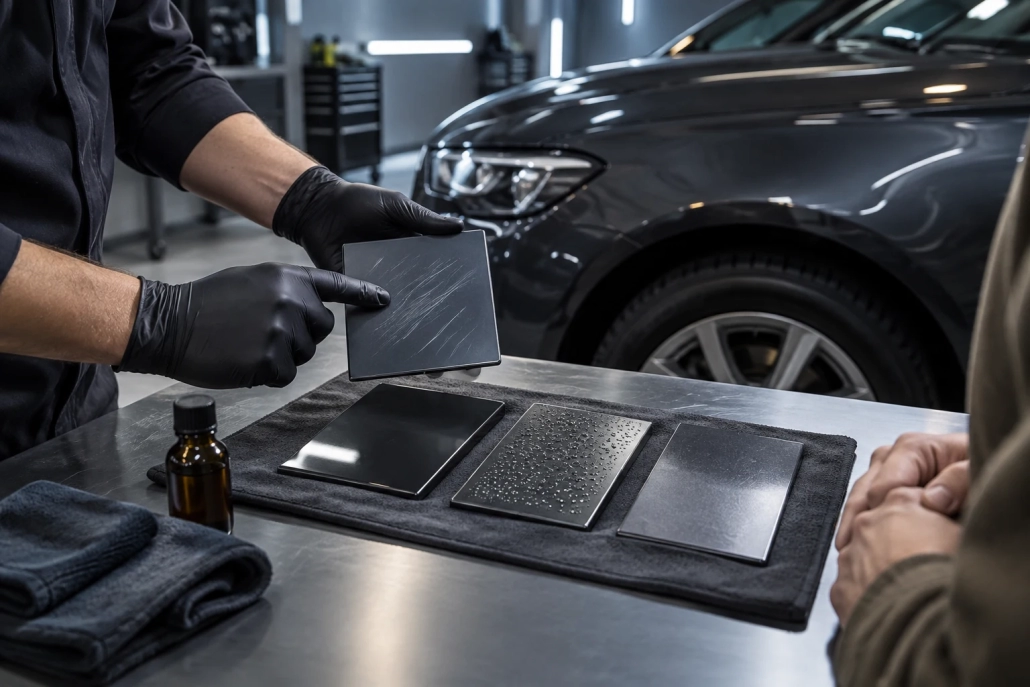
Keep coating performance statements connected to their product version, test method and limitations before using them in sales material.

Accelerated screening can help investigate behaviour, but it does not automatically establish an equivalent real-time shelf life.
ISO 14001 addresses environmental management systems. A certificate referencing it does not automatically substantiate a claim that a particular coating is biodegradable, harmless or environmentally preferable in every use.