






A full polishing range.
From cutting and one-step correction to final finishing.
Specialist chemistry. Expert application.
 QUARTZ99 / CERAMIC BASE COAT
The foundation of your coating system.
A layerable quartz base coat designed for mechanical protection. Pair it with a suitable top coat to create the final finish.
For application by NANOLAB certified installers only.
Four formulas. Extended working time. Find the coating for your finish.
Explore the BEAST family of ceramic coatings.
Find the coating for each exterior surface.
 PPF & VINYLGLOSSProtection for glossy films and wraps.Discover
 MATTE & SATINMATTEProtection that respects the finish.Discover
 GLASSWINDOWSExplore dedicated glass protection.Discover
 WHEEL PROTECTIONWHEELSA dedicated coating for your wheels.Discover
 TRIM PROTECTIONPLASTICProtection for plastic surfaces.Discover
Dedicated care for the surfaces inside.
 LEATHER SURFACESLEATHERDiscover NANOLAB leather protection.Discover PLASTIC SURFACESPLASTICProtection for interior plastic surfaces.Discover TEXTILE SURFACESFABRICExplore the latest fabric formulation.Discover
Spray protection, maintenance and upcoming wash products.
 MAINTENANCEBEAST 365Explore the BEAST maintenance range.Discover
Next in washing, cleaning & care.
Ceramic protection for boats and yachts.
An easy-to-apply ceramic coating with an established track record on boats and yachts around the world.
Results vary with surface preparation, exposure and maintenance.
Read 50 MARINE guides →Explore MARINEProtection for the surfaces you live with.
A look at what we’re developing.
From cutting and one-step correction to final finishing.
A wider range for professional vehicle care.
Taking shape alongside BEAST & MATRIX.
Practical guidance for your next coating project.
Explore all guides →
A dynamic light scattering result depends on information about the liquid surrounding the particles, including viscosity. Using an inappropriate input can affect the calculated size even when the instrument completes the measurement successfully.
Updated · NANOLAB Knowledge
Malvern Panalytical explains the relationship between diffusion, viscosity and hydrodynamic size. The practical purchasing issue is traceability: the report should identify the dispersant and relevant measurement conditions. A software default is not evidence that the chosen value represents a diluted or mixed sample accurately.
Illustrative example: two laboratories assess samples prepared with different liquid mixtures. Their reports list particle sizes without documenting the viscosity input. Before concluding that the batches differ, the buyer asks for the missing preparation and analysis details and requests a technically appropriate comparison.
Do not modify laboratory settings merely to obtain an expected answer. This guide does not prescribe a viscosity value for any NANOLAB product or ingredient. The laboratory should select and justify the method conditions, including whether the sample is suitable for the proposed measurement.
Technical references: Malvern Panalytical: Viscosity requirements for DLS. These sources describe their stated methods or products; they do not certify NANOLAB products or establish compatibility with an unlisted surface.
Ask NANOLAB about the exact product and intended use. Use the current product documentation for formulation-specific instructions.
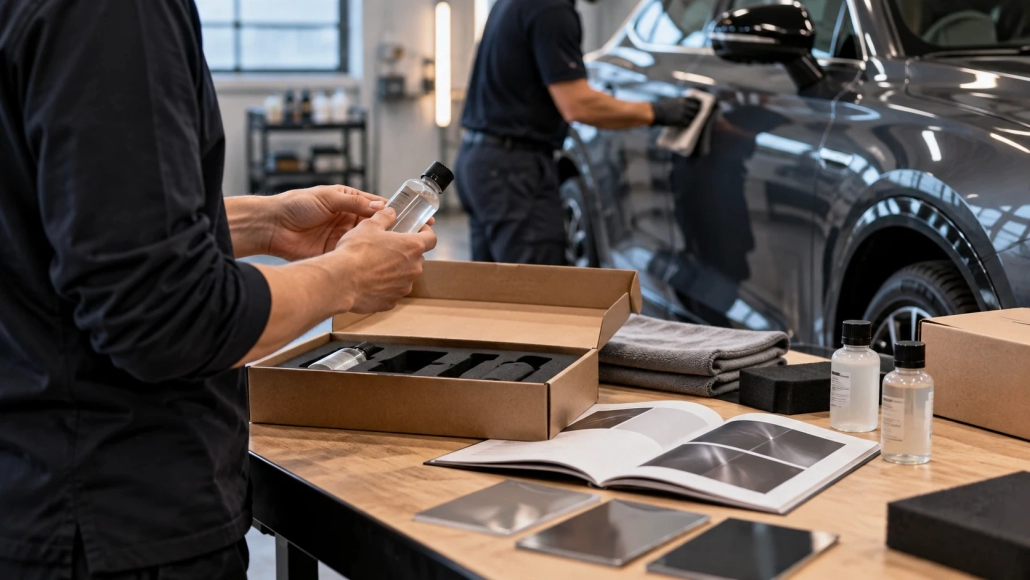
Set repeatable inspection intervals and record exposure changes during a ceramic coating field trial.
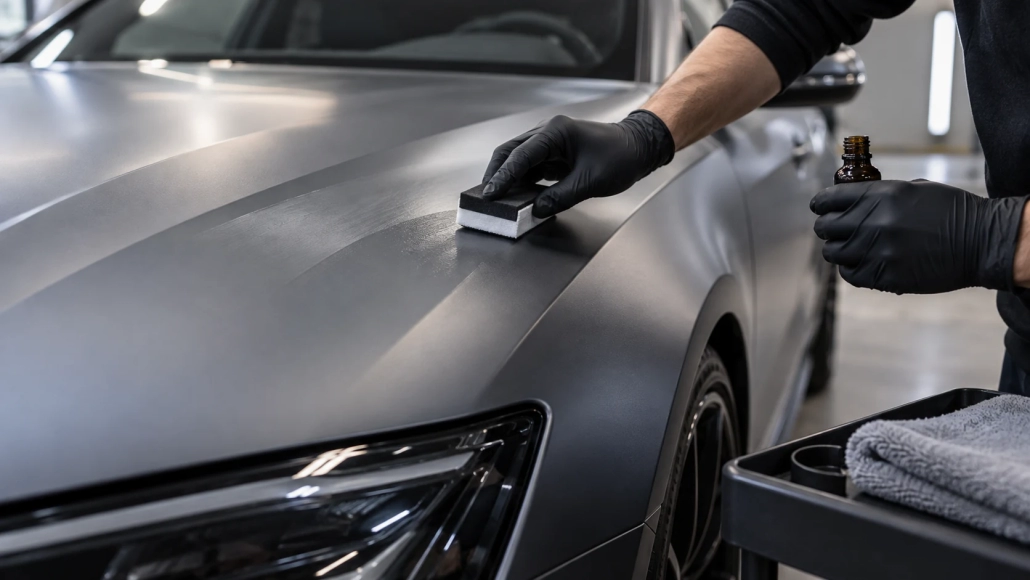
Plan a colour-change assessment for nano coatings with matched samples, consistent lighting and a clear distinction between visual observation and instrument data.

Dynamic light scattering reports size through particle motion in a liquid. That hydrodynamic measurement need not match a dimension measured from an image of a prepared particle sample. A difference requires interpretation before either result is rejected.