






A full polishing range.
From cutting and one-step correction to final finishing.
Specialist chemistry. Expert application.
 QUARTZ99 / CERAMIC BASE COAT
The foundation of your coating system.
A layerable quartz base coat designed for mechanical protection. Pair it with a suitable top coat to create the final finish.
For application by NANOLAB certified installers only.
Four formulas. Extended working time. Find the coating for your finish.
Explore the BEAST family of ceramic coatings.
Find the coating for each exterior surface.
 PPF & VINYLGLOSSProtection for glossy films and wraps.Discover
 MATTE & SATINMATTEProtection that respects the finish.Discover
 GLASSWINDOWSExplore dedicated glass protection.Discover
 WHEEL PROTECTIONWHEELSA dedicated coating for your wheels.Discover
 TRIM PROTECTIONPLASTICProtection for plastic surfaces.Discover
Dedicated care for the surfaces inside.
 LEATHER SURFACESLEATHERDiscover NANOLAB leather protection.Discover PLASTIC SURFACESPLASTICProtection for interior plastic surfaces.Discover TEXTILE SURFACESFABRICExplore the latest fabric formulation.Discover
Spray protection, maintenance and upcoming wash products.
 MAINTENANCEBEAST 365Explore the BEAST maintenance range.Discover
Next in washing, cleaning & care.
Ceramic protection for boats and yachts.
An easy-to-apply ceramic coating with an established track record on boats and yachts around the world.
Results vary with surface preparation, exposure and maintenance.
Read 50 MARINE guides →Explore MARINEProtection for the surfaces you live with.
A look at what we’re developing.
From cutting and one-step correction to final finishing.
A wider range for professional vehicle care.
Taking shape alongside BEAST & MATRIX.
Practical guidance for your next coating project.
Explore all guides →
Knowing when upholstery was cleaned is less useful than knowing how it was cleaned and whether the required finishing steps were completed. Obtain that information before deciding whether the surface is ready for a protective treatment.
Updated · NANOLAB Knowledge
Record the cleaner, application method, removal process and relevant drying conditions. A calendar interval alone cannot show that an assembly is ready for the next step. The protection manufacturer's preparation requirements and the upholstery maker's care restrictions should be reconciled before work begins, especially when separate contractors perform cleaning and coating.
Illustrative example: two seats were cleaned on the same day, but one received an additional finishing product. Treating their preparation histories as identical may overlook a relevant difference. The next installer needs the process record, not simply a completed date on a booking sheet.
Do not infer readiness from touch or elapsed time alone when the documentation requires more. Avoid applying extra cleaners to remove an unknown treatment without approval. Resolve missing information with the suppliers or service providers before proceeding.
Ask NANOLAB about the exact product and intended use. Use the current product documentation for formulation-specific instructions.
A cleaned textile may retain moisture beneath its visible surface. Readiness must follow the textile and treatment instructions.
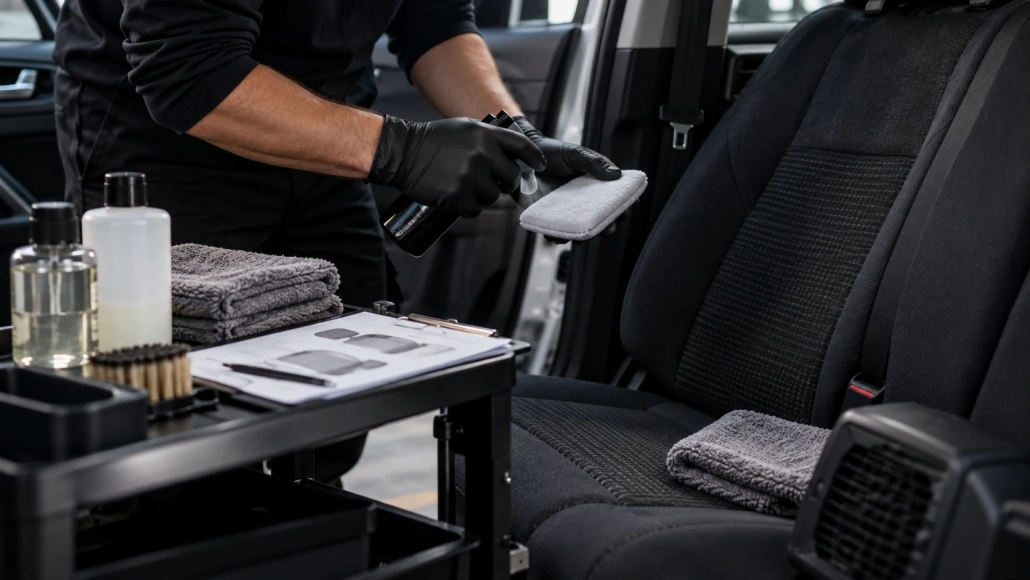
Identify the roof material, cleaning requirements and drying conditions before choosing a suitable fabric-protection treatment.
Judge Alcantara after the permitted cleaning process has been completed and the material has dried. A wet or disturbed surface can make it difficult to decide whether a mark remains or whether the appearance needs further assessment.