






A full polishing range.
From cutting and one-step correction to final finishing.
Specialist chemistry. Expert application.
 QUARTZ99 / CERAMIC BASE COAT
The foundation of your coating system.
A layerable quartz base coat designed for mechanical protection. Pair it with a suitable top coat to create the final finish.
For application by NANOLAB certified installers only.
Four formulas. Extended working time. Find the coating for your finish.
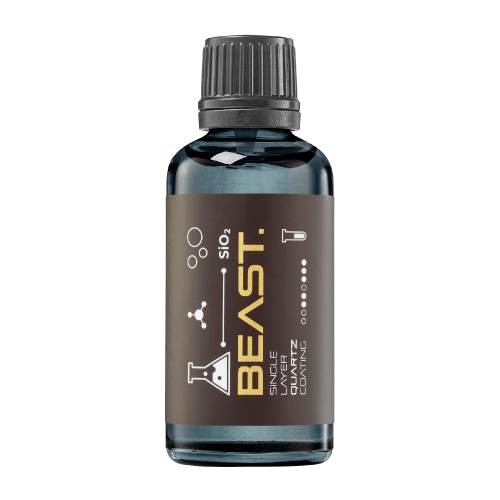
Explore the BEAST family of ceramic coatings.
Find the coating for each exterior surface.
 PPF & VINYLGLOSSProtection for glossy films and wraps.Discover
 MATTE & SATINMATTEProtection that respects the finish.Discover
 GLASSWINDOWSExplore dedicated glass protection.Discover
 WHEEL PROTECTIONWHEELSA dedicated coating for your wheels.Discover
 TRIM PROTECTIONPLASTICProtection for plastic surfaces.Discover
Dedicated care for the surfaces inside.
 LEATHER SURFACESLEATHERDiscover NANOLAB leather protection.Discover PLASTIC SURFACESPLASTICProtection for interior plastic surfaces.Discover TEXTILE SURFACESFABRICExplore the latest fabric formulation.Discover
Spray protection, maintenance and upcoming wash products.
 MAINTENANCEBEAST 365Explore the BEAST maintenance range.Discover
Next in washing, cleaning & care.
Ceramic protection for boats and yachts.
An easy-to-apply ceramic coating with an established track record on boats and yachts around the world.
Results vary with surface preparation, exposure and maintenance.
Read 50 MARINE guides →Explore MARINEProtection for the surfaces you live with.
A look at what we’re developing.
From cutting and one-step correction to final finishing.
A wider range for professional vehicle care.
Taking shape alongside BEAST & MATRIX.
Practical guidance for your next coating project.
Explore all guides →
Plot coating observations against actual elapsed time, preserve missing visits, and mark interventions that affect interpretation.
Updated · NANOLAB Knowledge
A chart can imply a steady rate of change even when observations were taken at irregular intervals. Plotting actual elapsed time preserves the spacing between visits and makes gaps in a coating study visible.
Suppose an illustrative trial has observations on days 0, 7, 30 and 120. Placing those visits at equal distances on a chart makes the last 90-day interval look the same as the first seven days. A date or elapsed-day axis represents the exposure more honestly.
Retain both the calendar date and time since application. If several samples began on different dates, elapsed time supports comparison while calendar dates help identify common weather or maintenance events.
Do not manufacture intermediate observations by joining a sparse series with a smooth curve that appears measured. A connecting line can guide the eye, but identify it as such and leave missing points visibly missing.
Mark events such as polishing, repair, a topper application or a changed cleaning procedure. A sudden change after one of these events cannot automatically be attributed to the original coating's natural ageing.
Use clear units and consistent axes when comparing samples. A tightly cropped vertical axis can make a tiny change look dramatic; a very wide one can hide a relevant change. State the range and show the original values where practical.
For a report, include sample count at each time point, because later averages may be based on fewer vehicles. A line that continues smoothly while the observed group shrinks can conceal substantial uncertainty. A useful chart communicates what was measured, when it was measured and which events may affect interpretation, rather than simply presenting an attractive trend.
For product-specific application instructions, consult NANOLAB technical documentation or ask about your surface and intended use.
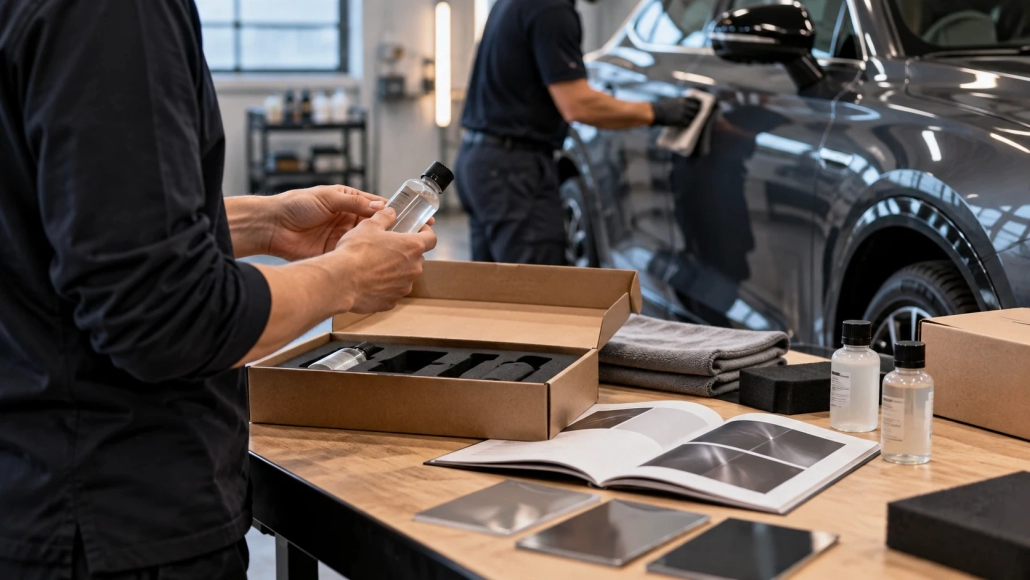
Design a coating field trial with recorded vehicles, use patterns, care routines and inspection points that produce interpretable feedback.
Several readings from one coated patch are not the same as several independently prepared test patches. Keep those two forms of repetition separate.

Define trial fields, units, sample IDs and missing values before combining coating spreadsheets or calculating comparison scores.