






A full polishing range.
From cutting and one-step correction to final finishing.
Specialist chemistry. Expert application.
 QUARTZ99 / CERAMIC BASE COAT
The foundation of your coating system.
A layerable quartz base coat designed for mechanical protection. Pair it with a suitable top coat to create the final finish.
For application by NANOLAB certified installers only.
Four formulas. Extended working time. Find the coating for your finish.
Explore the BEAST family of ceramic coatings.
Find the coating for each exterior surface.
 PPF & VINYLGLOSSProtection for glossy films and wraps.Discover
 MATTE & SATINMATTEProtection that respects the finish.Discover
 GLASSWINDOWSExplore dedicated glass protection.Discover
 WHEEL PROTECTIONWHEELSA dedicated coating for your wheels.Discover
 TRIM PROTECTIONPLASTICProtection for plastic surfaces.Discover
Dedicated care for the surfaces inside.
 LEATHER SURFACESLEATHERDiscover NANOLAB leather protection.Discover PLASTIC SURFACESPLASTICProtection for interior plastic surfaces.Discover TEXTILE SURFACESFABRICExplore the latest fabric formulation.Discover
Spray protection, maintenance and upcoming wash products.
 MAINTENANCEBEAST 365Explore the BEAST maintenance range.Discover
Next in washing, cleaning & care.
Ceramic protection for boats and yachts.
An easy-to-apply ceramic coating with an established track record on boats and yachts around the world.
Results vary with surface preparation, exposure and maintenance.
Read 50 MARINE guides →Explore MARINEProtection for the surfaces you live with.
A look at what we’re developing.
From cutting and one-step correction to final finishing.
A wider range for professional vehicle care.
Taking shape alongside BEAST & MATRIX.
Practical guidance for your next coating project.
Explore all guides →
Report missing coating-trial follow-ups as unknown outcomes and keep enrolled, inspected and passing sample counts visible.
Updated · NANOLAB Knowledge
A coating trial can look more successful when only customers who return are included. Missing follow-up observations are unknown outcomes, not automatic passes or failures. Reporting them clearly protects the usefulness of the study.
Suppose an illustrative trial enrolls 20 vehicles. Twelve return for the planned inspection and ten meet the defined criterion. The observed pass share among inspected vehicles is 10 of 12, or about 83 percent. Across all enrolled vehicles, ten confirmed passes are known; eight outcomes remain unobserved.
It would be misleading to say that 83 percent of all 20 vehicles passed without addressing the missing observations. It would also be incorrect to label all eight missing vehicles failures by default.
Separate scheduling problems, sold vehicles, withdrawn participation and inability to inspect. Some reasons may be related to the outcome. Customers with especially good or especially poor experiences may be more likely to respond, making the observed group unrepresentative.
Keep the follow-up window consistent. An inspection at one month is not a substitute for a planned six-month observation unless it is explicitly reported as a different time point.
Report enrolled, eligible, inspected and missing counts alongside the observed results. For an internal decision, examine how plausible outcomes among the missing cases could change the conclusion. Formal handling of missing data may require statistical advice.
Use this information to improve follow-up procedures, not to pressure customers into a preferred result. A transparent small trial with clearly reported gaps is more informative than a polished success percentage whose denominator quietly excludes inconvenient or unavailable cases. Keep any published claim within what was actually observed.
For product-specific application instructions, consult NANOLAB technical documentation or ask about your surface and intended use.
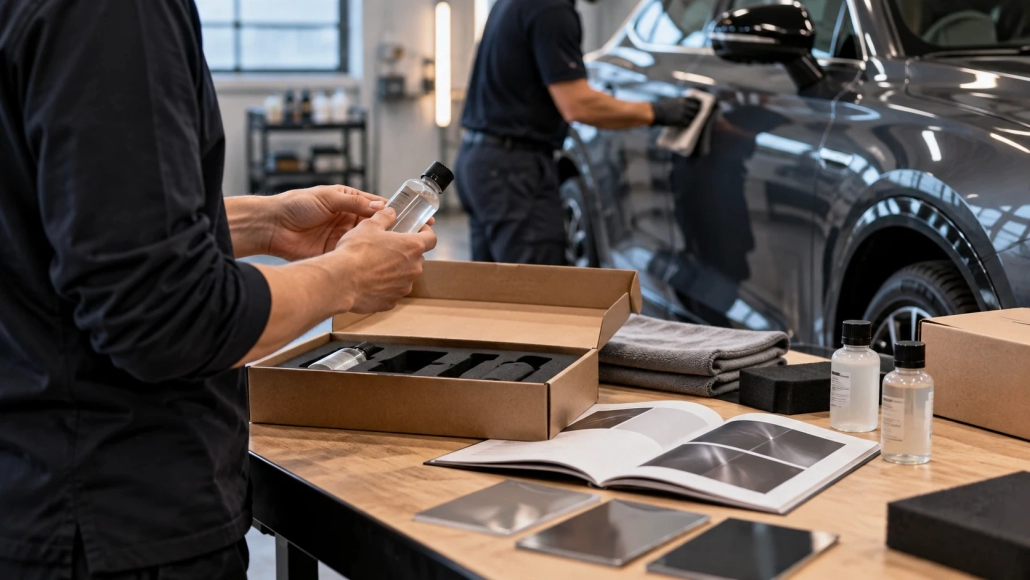
Design a coating field trial with recorded vehicles, use patterns, care routines and inspection points that produce interpretable feedback.
Several readings from one coated patch are not the same as several independently prepared test patches. Keep those two forms of repetition separate.

Track samples that leave a coating trial and avoid presenting only surviving vehicles as representative durability evidence.