






A full polishing range.
From cutting and one-step correction to final finishing.
Specialist chemistry. Expert application.
 QUARTZ99 / CERAMIC BASE COAT
The foundation of your coating system.
A layerable quartz base coat designed for mechanical protection. Pair it with a suitable top coat to create the final finish.
For application by NANOLAB certified installers only.
Four formulas. Extended working time. Find the coating for your finish.
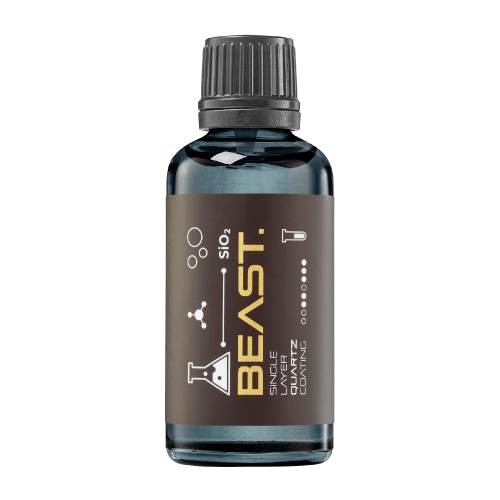
Explore the BEAST family of ceramic coatings.
Find the coating for each exterior surface.
 PPF & VINYLGLOSSProtection for glossy films and wraps.Discover
 MATTE & SATINMATTEProtection that respects the finish.Discover
 GLASSWINDOWSExplore dedicated glass protection.Discover
 WHEEL PROTECTIONWHEELSA dedicated coating for your wheels.Discover
 TRIM PROTECTIONPLASTICProtection for plastic surfaces.Discover
Dedicated care for the surfaces inside.
 LEATHER SURFACESLEATHERDiscover NANOLAB leather protection.Discover PLASTIC SURFACESPLASTICProtection for interior plastic surfaces.Discover TEXTILE SURFACESFABRICExplore the latest fabric formulation.Discover
Spray protection, maintenance and upcoming wash products.
 MAINTENANCEBEAST 365Explore the BEAST maintenance range.Discover
Next in washing, cleaning & care.
Ceramic protection for boats and yachts.
An easy-to-apply ceramic coating with an established track record on boats and yachts around the world.
Results vary with surface preparation, exposure and maintenance.
Read 50 MARINE guides →Explore MARINEProtection for the surfaces you live with.
A look at what we’re developing.
From cutting and one-step correction to final finishing.
A wider range for professional vehicle care.
Taking shape alongside BEAST & MATRIX.
Practical guidance for your next coating project.
Explore all guides →
Keep each coating sample paired with its own baseline and report both the size and consistency of before-and-after changes.
Updated · NANOLAB Knowledge
A paired comparison keeps each sample connected to its own before-and-after measurements. This is useful when starting surfaces differ. The analysis focuses on each sample's change rather than comparing two unrelated group averages.
Consider three illustrative cleaning-time pairs: 20 to 14 minutes, 12 to 10 minutes, and 30 to 20 minutes. The individual reductions are 6, 2 and 10 minutes; their mean reduction is 6 minutes. The sample identity must stay attached to both observations.
Do not sort the before and after columns separately or match them by their numerical order. That would create artificial pairs. If a baseline is missing, document the missing pair rather than borrowing a baseline from another sample.
A before-and-after difference can reflect changes other than the coating: soil amount, operator experience, cleaning method or weather. Pairing controls the identity of the sample, not every external influence. A suitable untreated or alternative-treatment control may still be needed.
For a practical trial, define the cleaning endpoint, method and exposure before collecting data. Record any event that changes the surface or procedure. A repolished sample should not silently continue as though only the coating had changed.
Show the individual differences or their distribution alongside a summary. A mean reduction can conceal one sample that became worse. For formal inference, use a statistical method appropriate to paired data and its assumptions.
Keep the conclusion within the trial scope. A controlled reduction in cleaning time on selected samples is not automatically a lifetime claim or proof that every customer will obtain the same saving. The strongest practical result states what changed, under which procedure, and how consistently it changed across the measured pairs.
Technical references: NIST: Analysis of paired observations.
For product-specific application instructions, consult NANOLAB technical documentation or ask about your surface and intended use.
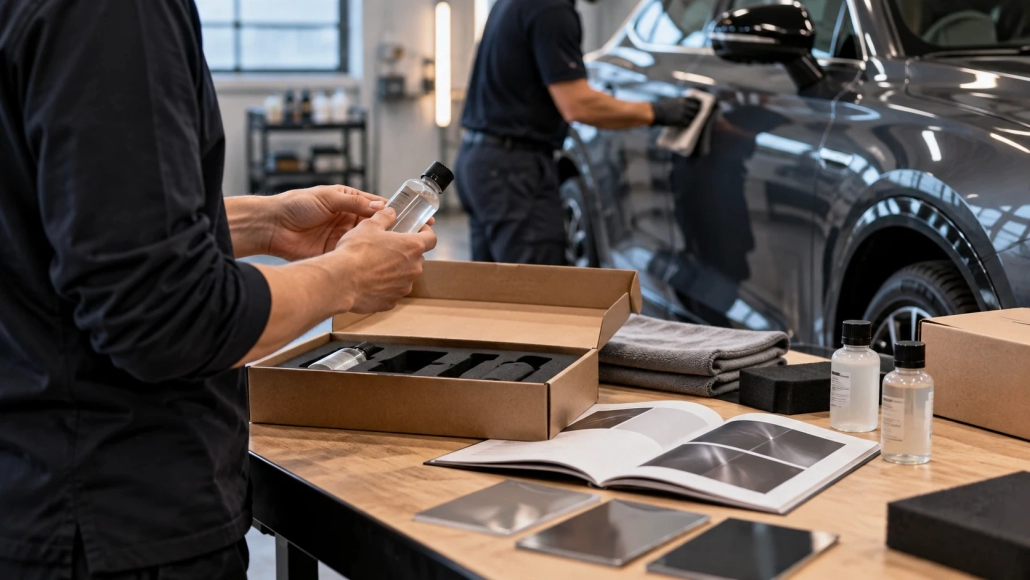
Design a coating field trial with recorded vehicles, use patterns, care routines and inspection points that produce interpretable feedback.
Several readings from one coated patch are not the same as several independently prepared test patches. Keep those two forms of repetition separate.

Compare mean and median cleaning times, retain legitimate difficult jobs, and choose a summary that matches the operational question.