






A full polishing range.
From cutting and one-step correction to final finishing.
Specialist chemistry. Expert application.
 QUARTZ99 / CERAMIC BASE COAT
The foundation of your coating system.
A layerable quartz base coat designed for mechanical protection. Pair it with a suitable top coat to create the final finish.
For application by NANOLAB certified installers only.
Four formulas. Extended working time. Find the coating for your finish.
Explore the BEAST family of ceramic coatings.
Find the coating for each exterior surface.
 PPF & VINYLGLOSSProtection for glossy films and wraps.Discover
 MATTE & SATINMATTEProtection that respects the finish.Discover
 GLASSWINDOWSExplore dedicated glass protection.Discover
 WHEEL PROTECTIONWHEELSA dedicated coating for your wheels.Discover
 TRIM PROTECTIONPLASTICProtection for plastic surfaces.Discover
Dedicated care for the surfaces inside.
 LEATHER SURFACESLEATHERDiscover NANOLAB leather protection.Discover PLASTIC SURFACESPLASTICProtection for interior plastic surfaces.Discover TEXTILE SURFACESFABRICExplore the latest fabric formulation.Discover
Spray protection, maintenance and upcoming wash products.
 MAINTENANCEBEAST 365Explore the BEAST maintenance range.Discover
Next in washing, cleaning & care.
Ceramic protection for boats and yachts.
An easy-to-apply ceramic coating with an established track record on boats and yachts around the world.
Results vary with surface preparation, exposure and maintenance.
Read 50 MARINE guides →Explore MARINEProtection for the surfaces you live with.
A look at what we’re developing.
From cutting and one-step correction to final finishing.
A wider range for professional vehicle care.
Taking shape alongside BEAST & MATRIX.
Practical guidance for your next coating project.
Explore all guides →
Track where wipe-on coating material goes, distinguish bottle consumption from retained film, and identify avoidable application waste.
Updated · NANOLAB Knowledge
Bottle consumption measures material used by a job. It does not measure material retained on the surface. A simple mass balance helps a workshop explain this difference and locate avoidable waste without pretending to measure a microscopic film.
Start with the bottle and all materials used during a controlled application. Product can move onto the panel, into the applicator, into levelling towels or into waste. Volatile material can also leave the system. A bottle-only weighing captures the total removed from the bottle, regardless of its destination.
In an illustrative job, 22 g leaves the bottle. It would be incorrect to report that the car received a 22 g cured coating. Some liquid remains in the tools, some is removed during levelling and some constituents may evaporate. Even weighing towels afterwards does not fully resolve the balance because evaporation and ambient moisture affect those readings.
Compare jobs with similar surface area and preparation. Record the number of applicators, towel changes, spills and any reworked sections. An unusually high bottle loss can then be investigated against an observable event rather than blamed automatically on the coating.
Keep deliberate training waste separate from normal production. If a trainee repeats a test section, that material is real stock consumption but should not set the standard application allowance for every future car.
Do not claim that a fixed percentage of every coating bottle reaches the vehicle unless it has been established by an appropriate study. Nor should a workshop reduce product below the specified application rate simply because another operator uses less.
The practical output is a consumption range with explanations: normal application, unusual geometry, rework and accidental loss. This supports stock planning and training. Film thickness and cured performance remain separate technical questions requiring suitable measurement methods.
Technical references: BYK-Gardner: density-cup measurement procedure.
For product-specific application instructions, consult NANOLAB technical documentation or ask about your surface and intended use.
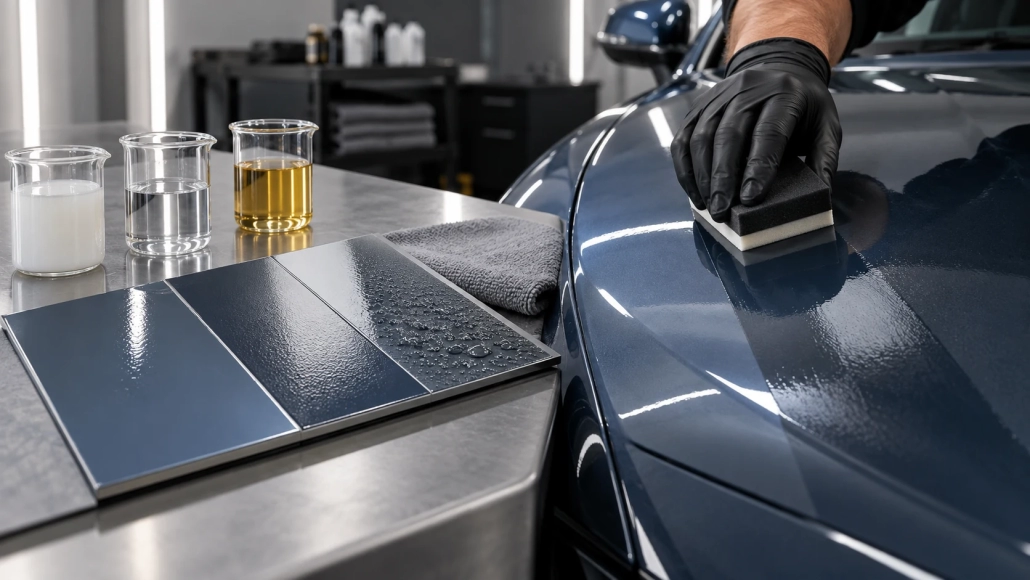
Read coating solids figures alongside application method, finish compatibility and documented performance rather than using one number alone.
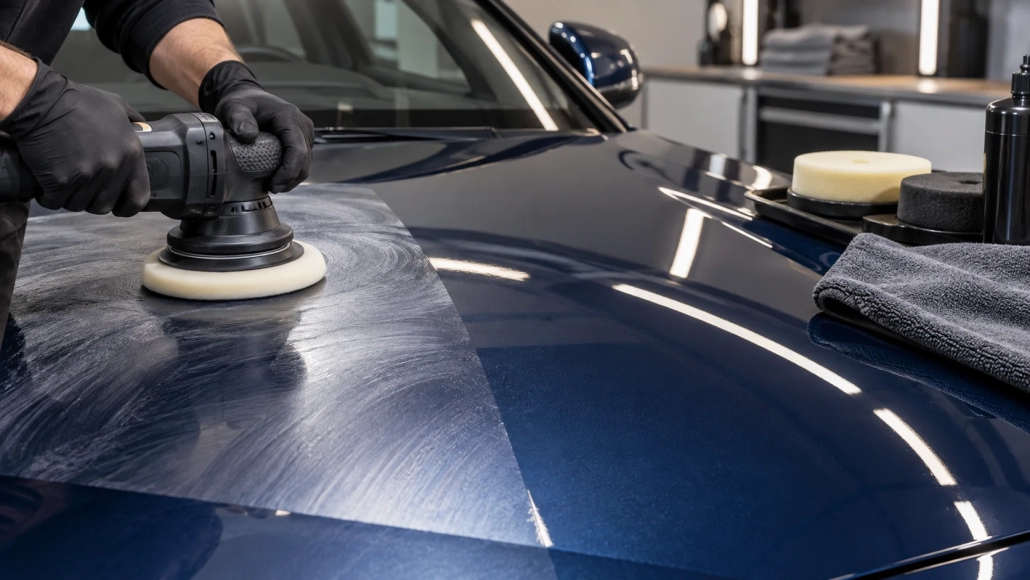
Understand heavy cut compound, fine cut and finishing polish, then choose a paint correction process that fits your paint, machine and intended result.
Understand 1K and 2K coating formats, mixing requirements and workflow costs without assuming that component count determines product quality.