






A full polishing range.
From cutting and one-step correction to final finishing.
Specialist chemistry. Expert application.
 QUARTZ99 / CERAMIC BASE COAT
The foundation of your coating system.
A layerable quartz base coat designed for mechanical protection. Pair it with a suitable top coat to create the final finish.
For application by NANOLAB certified installers only.
Four formulas. Extended working time. Find the coating for your finish.
Explore the BEAST family of ceramic coatings.
Find the coating for each exterior surface.
 PPF & VINYLGLOSSProtection for glossy films and wraps.Discover
 MATTE & SATINMATTEProtection that respects the finish.Discover
 GLASSWINDOWSExplore dedicated glass protection.Discover
 WHEEL PROTECTIONWHEELSA dedicated coating for your wheels.Discover
 TRIM PROTECTIONPLASTICProtection for plastic surfaces.Discover
Dedicated care for the surfaces inside.
 LEATHER SURFACESLEATHERDiscover NANOLAB leather protection.Discover PLASTIC SURFACESPLASTICProtection for interior plastic surfaces.Discover TEXTILE SURFACESFABRICExplore the latest fabric formulation.Discover
Spray protection, maintenance and upcoming wash products.
 MAINTENANCEBEAST 365Explore the BEAST maintenance range.Discover
Next in washing, cleaning & care.
Ceramic protection for boats and yachts.
An easy-to-apply ceramic coating with an established track record on boats and yachts around the world.
Results vary with surface preparation, exposure and maintenance.
Read 50 MARINE guides →Explore MARINEProtection for the surfaces you live with.
A look at what we’re developing.
From cutting and one-step correction to final finishing.
A wider range for professional vehicle care.
Taking shape alongside BEAST & MATRIX.
Practical guidance for your next coating project.
Explore all guides →
Calculate predicted dry-film thickness from wet thickness and volume solids, with clear limits for wipe-on ceramic coating applications.
Updated · NANOLAB Knowledge
For an appropriate conventional coating system, predicted dry-film thickness equals wet-film thickness multiplied by the volume-solids fraction. The calculation is useful only when the wet thickness and solids value genuinely describe the film being assessed.
An illustrative wet film of 80 micrometres at 60 percent volume solids predicts 48 micrometres dry: 80 × 0.60 = 48. To target 48 micrometres with the same assumptions, divide 48 by 0.60 to obtain 80 micrometres wet.
The percentage must be entered as a fraction. Using 60 instead of 0.60 creates a hundredfold error. Keep micrometres and mils in separate labelled columns if both appear in the project documents.
A calculation based on liquid dispensed from a bottle is not the same as a wet-film measurement. Wipe-on detailing products lose material to applicators and levelling towels. Surface geometry, uneven distribution and reactive curing can add further uncertainty. A predicted value is not a laboratory measurement of the installed film.
Wet-film combs are also intended for suitable measurable wet films. Their scale and contact method may be inappropriate for a very thin detailing coating, and using one on a customer surface can disturb the application. Select a measurement method with the coating and instrument suppliers before testing.
Write the measured wet thickness, volume-solids source, calculation and assumptions together. Label the output as predicted thickness. If the contract needs a verified cured thickness, specify the validated measurement method and uncertainty separately.
For a NANOLAB installation, follow the product's documented application rate and levelling procedure. Do not increase the applied quantity merely to satisfy a calculation borrowed from industrial paint. Extra liquid can create a finishing problem without demonstrating additional useful protection.
Technical references: Elcometer: Calculating Dry Film Thickness.
For product-specific application instructions, consult NANOLAB technical documentation or ask about your surface and intended use.
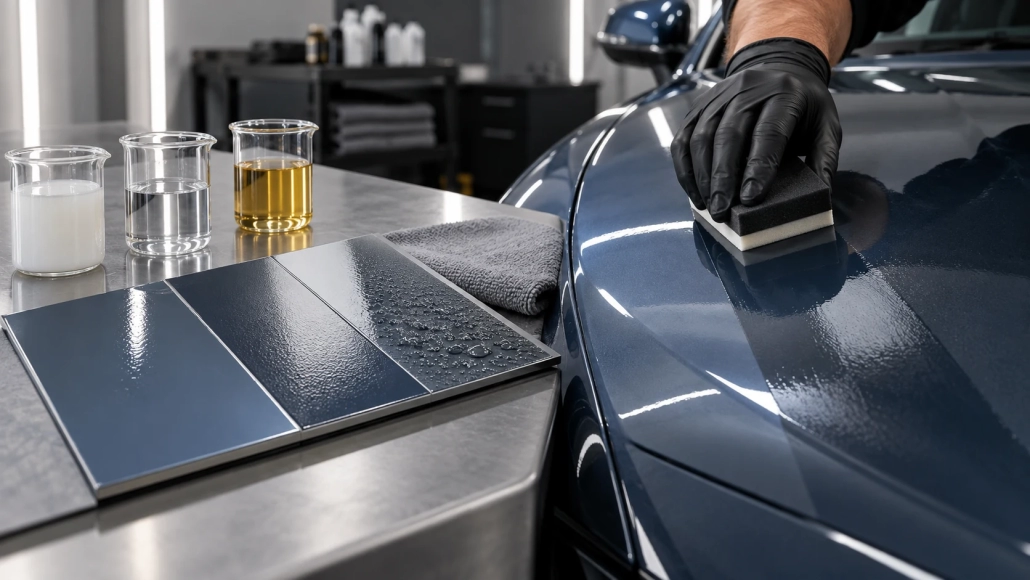
Read coating solids figures alongside application method, finish compatibility and documented performance rather than using one number alone.
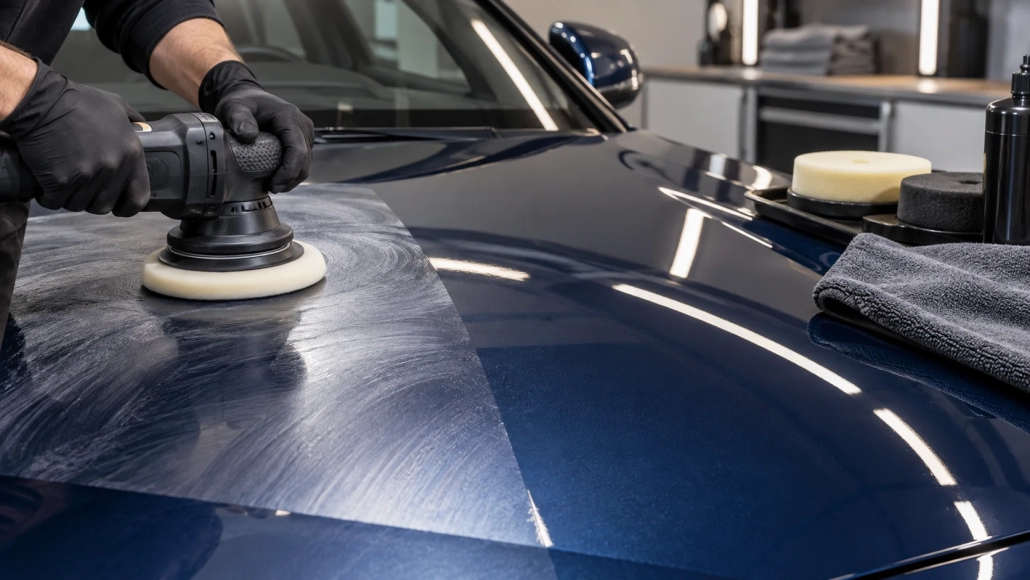
Understand heavy cut compound, fine cut and finishing polish, then choose a paint correction process that fits your paint, machine and intended result.
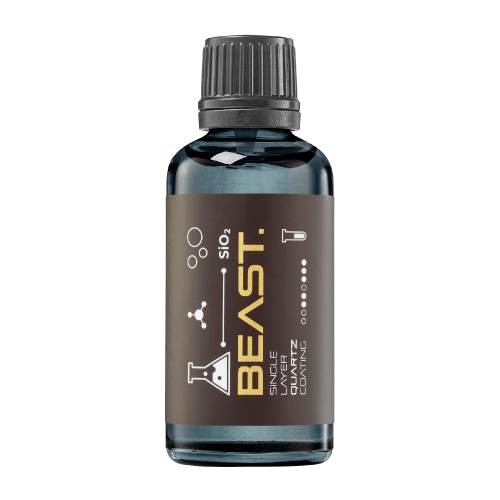
Compare weight solids and volume solids correctly, identify the measurement basis, and avoid unsupported coating coverage or thickness claims.