






A full polishing range.
From cutting and one-step correction to final finishing.
Specialist chemistry. Expert application.
 QUARTZ99 / CERAMIC BASE COAT
The foundation of your coating system.
A layerable quartz base coat designed for mechanical protection. Pair it with a suitable top coat to create the final finish.
For application by NANOLAB certified installers only.
Four formulas. Extended working time. Find the coating for your finish.
Explore the BEAST family of ceramic coatings.
Find the coating for each exterior surface.
 PPF & VINYLGLOSSProtection for glossy films and wraps.Discover
 MATTE & SATINMATTEProtection that respects the finish.Discover
 GLASSWINDOWSExplore dedicated glass protection.Discover
 WHEEL PROTECTIONWHEELSA dedicated coating for your wheels.Discover
 TRIM PROTECTIONPLASTICProtection for plastic surfaces.Discover
Dedicated care for the surfaces inside.
 LEATHER SURFACESLEATHERDiscover NANOLAB leather protection.Discover PLASTIC SURFACESPLASTICProtection for interior plastic surfaces.Discover TEXTILE SURFACESFABRICExplore the latest fabric formulation.Discover
Spray protection, maintenance and upcoming wash products.
 MAINTENANCEBEAST 365Explore the BEAST maintenance range.Discover
Next in washing, cleaning & care.
Ceramic protection for boats and yachts.
An easy-to-apply ceramic coating with an established track record on boats and yachts around the world.
Results vary with surface preparation, exposure and maintenance.
Read 50 MARINE guides →Explore MARINEProtection for the surfaces you live with.
A look at what we’re developing.
From cutting and one-step correction to final finishing.
A wider range for professional vehicle care.
Taking shape alongside BEAST & MATRIX.
Practical guidance for your next coating project.
Explore all guides →
Identify contamination, access and sequencing conflicts with adjacent trades.
Updated · NANOLAB Knowledge
Coating work often shares a site with installers, cleaners and other trades. Their activities can affect access, surface readiness and the timing of handover. Coordination should identify those dependencies before the coating team arrives.
List work that happens before, beside or after the treatment. Identify which activities may change the surface condition or require access to treated areas. Assign a contact for each trade so questions do not rely on informal messages passed through several people.
Define who confirms that preceding work is complete and the surface is ready for the coating team's assessment. For example, a glazing installation may be physically finished while residue removal or documentation of an existing treatment remains unresolved. Do not treat the contractor's departure as proof of readiness.
Use a clear area map and product-specific return-to-use instructions. State who is responsible for informing other teams and what happens if the area is disturbed or the schedule changes. Record handovers rather than relying only on a shared calendar. Good coordination does not require a complicated project system; it requires clear boundaries and owners. This allows the coating process to follow its approved requirements while helping other contractors understand when their work can proceed without creating conflicting assumptions.
List nearby work that can affect the treated area, including dust-producing tasks, cleaning, sealant work, access equipment and installation of adjacent components. Agree the sequence and identify who communicates changes.
For each interface, state the condition required before coating begins and before other work resumes. Do not assume that another contractor understands the coating's product-specific restrictions. If the sequence changes, review the affected area rather than carrying forward an outdated readiness approval. A simple marked drawing or zone list can help everyone identify which surfaces are involved. The objective is coordinated work, with clear responsibilities, rather than expecting the coating team to solve every conflict after application.
Send your project surface and scope to NANOLAB. For supporting information, review the current product documentation and the related coating guides.
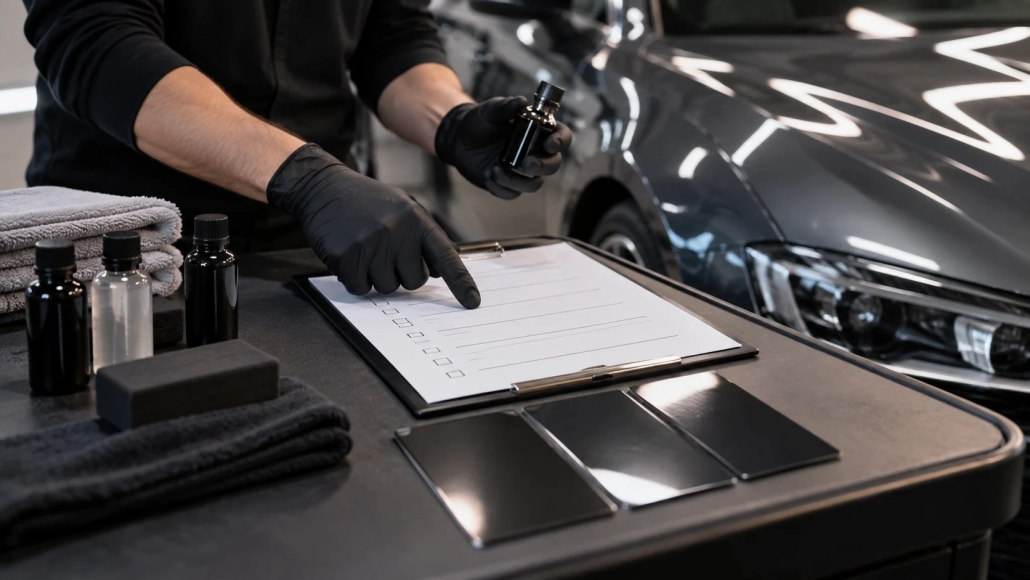
Use this checklist to compare preparation, product choice, treated surfaces and aftercare across ceramic coating proposals.
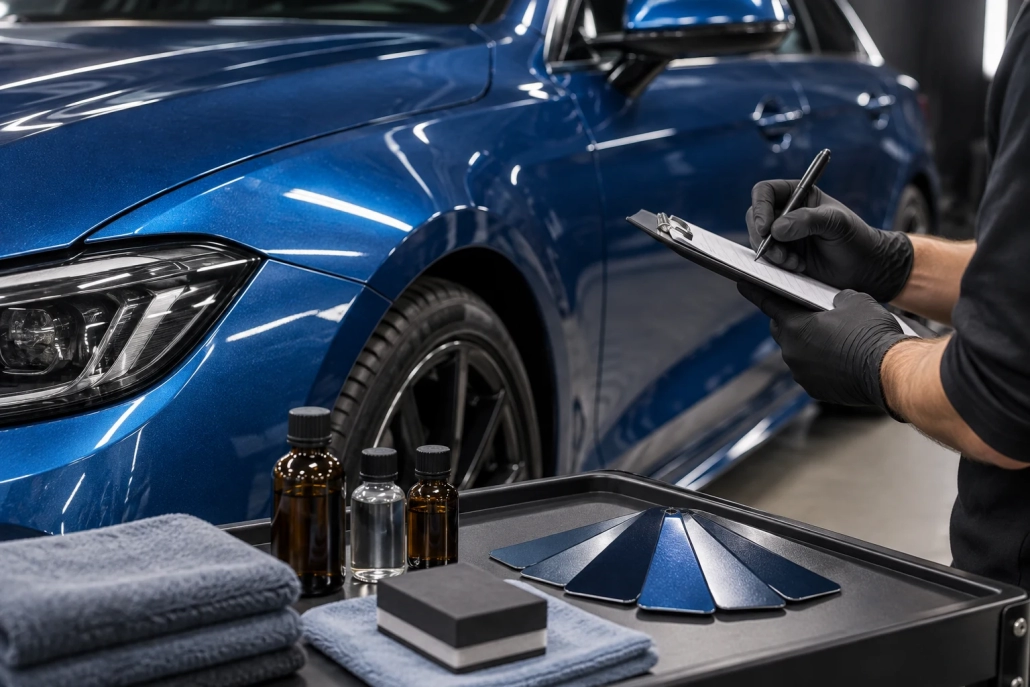
Estimate labour, materials and workshop occupancy from the actual scope, then compare planned and completed work to improve future quotes.

Price inspection and treatment scope by surface zones rather than one undifferentiated vehicle.