






A full polishing range.
From cutting and one-step correction to final finishing.
Specialist chemistry. Expert application.
 QUARTZ99 / CERAMIC BASE COAT
The foundation of your coating system.
A layerable quartz base coat designed for mechanical protection. Pair it with a suitable top coat to create the final finish.
For application by NANOLAB certified installers only.
Four formulas. Extended working time. Find the coating for your finish.
Explore the BEAST family of ceramic coatings.
Find the coating for each exterior surface.
 PPF & VINYLGLOSSProtection for glossy films and wraps.Discover
 MATTE & SATINMATTEProtection that respects the finish.Discover
 GLASSWINDOWSExplore dedicated glass protection.Discover
 WHEEL PROTECTIONWHEELSA dedicated coating for your wheels.Discover
 TRIM PROTECTIONPLASTICProtection for plastic surfaces.Discover
Dedicated care for the surfaces inside.
 LEATHER SURFACESLEATHERDiscover NANOLAB leather protection.Discover PLASTIC SURFACESPLASTICProtection for interior plastic surfaces.Discover TEXTILE SURFACESFABRICExplore the latest fabric formulation.Discover
Spray protection, maintenance and upcoming wash products.
 MAINTENANCEBEAST 365Explore the BEAST maintenance range.Discover
Next in washing, cleaning & care.
Ceramic protection for boats and yachts.
An easy-to-apply ceramic coating with an established track record on boats and yachts around the world.
Results vary with surface preparation, exposure and maintenance.
Read 50 MARINE guides →Explore MARINEProtection for the surfaces you live with.
A look at what we’re developing.
From cutting and one-step correction to final finishing.
A wider range for professional vehicle care.
Taking shape alongside BEAST & MATRIX.
Practical guidance for your next coating project.
Explore all guides →
Use dated demand scenarios to discuss replenishment without inventing supplier lead times.
Updated · NANOLAB Knowledge
Seasonal coating demand creates a planning problem: ordering too late can interrupt supply, while ordering too early may create stock that the business cannot use as intended. A practical plan uses dated scenarios and confirmed supplier information rather than treating last season's sales as a guaranteed forecast.
List confirmed customer orders, planned demonstrations, samples and forecast sales separately. Identify which assumptions depend on a launch, exhibition or local selling season. A forecast should show its basis and review date so another person can understand why the quantity was chosen.
Confirm lead times, packaging readiness and the product's current storage guidance with the supplier. Track usable stock rather than gross stock alone; reserved, damaged or otherwise unavailable units should be visible. Do not invent a universal safety-stock percentage for every product and market.
For example, compare a conservative launch scenario with a stronger-demand scenario and identify when the next order would need to be discussed. If labels are the constraint, ordering liquid earlier may not solve the real bottleneck. Assign an owner to update the plan when demand, packaging or supplier information changes. The goal is a traceable replenishment decision, not a spreadsheet that looks precise while its inputs remain unverified.
Create low, expected and high demand scenarios using your own sales history or explicitly labelled assumptions. For each scenario, show expected usage, stock already available, supplier-confirmed lead time and the point at which you will review a reorder.
Keep shelf-life and storage information product-specific. Do not solve uncertain demand simply by buying the largest discounted quantity. If a seasonal promotion is cancelled, packaging and finished stock may need a different plan. Agree who can revise the forecast and how that change reaches the supplier. The practical output is a purchasing calendar with decision dates, not a single optimistic annual volume that every team interprets as guaranteed demand.
Explore NANOLAB’s private-label options. For supporting information, review the current product documentation and the private-label guides.

Define the users, surfaces, application workflow and packaging requirements for a private label ceramic coating project with NANOLAB.
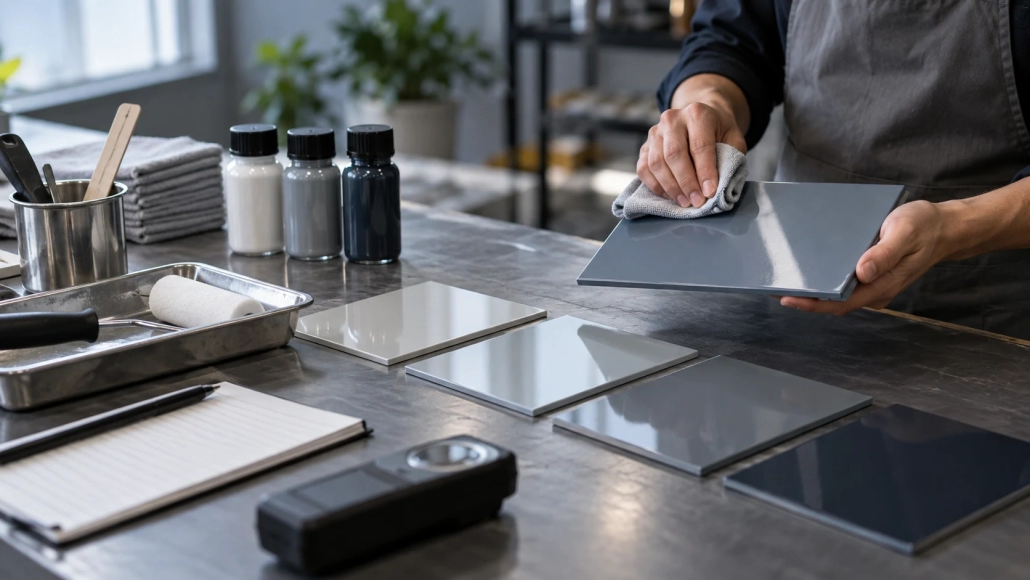
Compare private label coating samples using consistent preparation, application notes, finish checks and aftercare observations.

Sequence formulation, bottle and artwork decisions to reduce avoidable packaging rework.