






A full polishing range.
From cutting and one-step correction to final finishing.
Specialist chemistry. Expert application.
 QUARTZ99 / CERAMIC BASE COAT
The foundation of your coating system.
A layerable quartz base coat designed for mechanical protection. Pair it with a suitable top coat to create the final finish.
For application by NANOLAB certified installers only.
Four formulas. Extended working time. Find the coating for your finish.
Explore the BEAST family of ceramic coatings.
Find the coating for each exterior surface.
 PPF & VINYLGLOSSProtection for glossy films and wraps.Discover
 MATTE & SATINMATTEProtection that respects the finish.Discover
 GLASSWINDOWSExplore dedicated glass protection.Discover
 WHEEL PROTECTIONWHEELSA dedicated coating for your wheels.Discover
 TRIM PROTECTIONPLASTICProtection for plastic surfaces.Discover
Dedicated care for the surfaces inside.
 LEATHER SURFACESLEATHERDiscover NANOLAB leather protection.Discover PLASTIC SURFACESPLASTICProtection for interior plastic surfaces.Discover TEXTILE SURFACESFABRICExplore the latest fabric formulation.Discover
Spray protection, maintenance and upcoming wash products.
 MAINTENANCEBEAST 365Explore the BEAST maintenance range.Discover
Next in washing, cleaning & care.
Ceramic protection for boats and yachts.
An easy-to-apply ceramic coating with an established track record on boats and yachts around the world.
Results vary with surface preparation, exposure and maintenance.
Read 50 MARINE guides →Explore MARINEProtection for the surfaces you live with.
A look at what we’re developing.
From cutting and one-step correction to final finishing.
A wider range for professional vehicle care.
Taking shape alongside BEAST & MATRIX.
Practical guidance for your next coating project.
Explore all guides →
Investigate a polishing callback using the original scope, inspection conditions and wash history before deciding that the vehicle needs more correction.
Updated · NANOLAB Knowledge
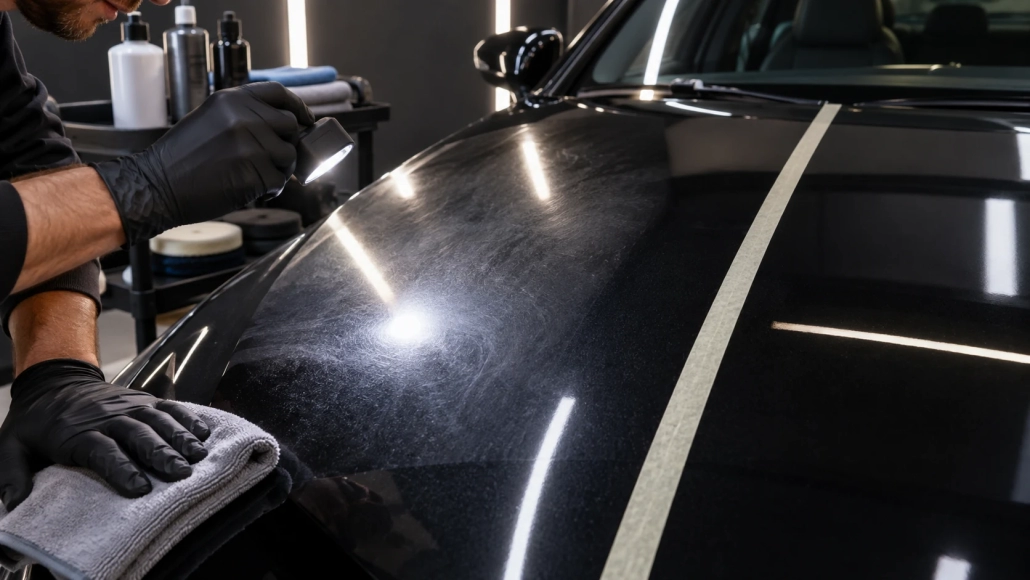
A customer reporting marks after polishing deserves a specific investigation. Repeating the entire correction process before understanding the complaint can remove more finish while leaving the cause unchanged.
Read the original scope, test-area result, photographs and exclusions. Identify the complained-of panel and ask when the marks became visible, which lighting revealed them and what washing or other work occurred after collection.
Keep the customer’s description and your observations separate. A report that scratches returned is useful history; it is not yet proof that the polish filled defects or that new damage occurred.
Inspect the vehicle after suitable cleaning and compare the original reference angles. Photograph the current surface with stable surrounding features visible. Then use additional lighting to characterise the reported pattern without replacing the original comparison.
Distinguish directional wiping marks, uniform haze, deeper excluded defects and contamination. Review any protective treatment added after polishing because residue or its appearance can complicate inspection. Do not use an unapproved solvent challenge simply to force a diagnosis.
If the issue is unclear, test an appropriate cleaning or inspection method on a small area first. If further abrasive work is justified, confirm the paint condition and establish a limited correction test with a defined stopping point.
Record the remedy and its result, including anything left unchanged for preservation. Explain the outcome using matching photographs and the agreed service scope. A callback becomes a useful quality record when it identifies the observed issue and corrective action without assigning a chemical or customer-error cause prematurely.
Use the inspection-wipe test for possible contact marks and the exclusion map before authorising another machine pass.

 Polishing Compound Consumption: Weigh Before and After