






A full polishing range.
From cutting and one-step correction to final finishing.
Specialist chemistry. Expert application.
 QUARTZ99 / CERAMIC BASE COAT
The foundation of your coating system.
A layerable quartz base coat designed for mechanical protection. Pair it with a suitable top coat to create the final finish.
For application by NANOLAB certified installers only.
Four formulas. Extended working time. Find the coating for your finish.
Explore the BEAST family of ceramic coatings.
Find the coating for each exterior surface.
 PPF & VINYLGLOSSProtection for glossy films and wraps.Discover
 MATTE & SATINMATTEProtection that respects the finish.Discover
 GLASSWINDOWSExplore dedicated glass protection.Discover
 WHEEL PROTECTIONWHEELSA dedicated coating for your wheels.Discover
 TRIM PROTECTIONPLASTICProtection for plastic surfaces.Discover
Dedicated care for the surfaces inside.
 LEATHER SURFACESLEATHERDiscover NANOLAB leather protection.Discover PLASTIC SURFACESPLASTICProtection for interior plastic surfaces.Discover TEXTILE SURFACESFABRICExplore the latest fabric formulation.Discover
Spray protection, maintenance and upcoming wash products.
 MAINTENANCEBEAST 365Explore the BEAST maintenance range.Discover
Next in washing, cleaning & care.
Ceramic protection for boats and yachts.
An easy-to-apply ceramic coating with an established track record on boats and yachts around the world.
Results vary with surface preparation, exposure and maintenance.
Read 50 MARINE guides →Explore MARINEProtection for the surfaces you live with.
A look at what we’re developing.
From cutting and one-step correction to final finishing.
A wider range for professional vehicle care.
Taking shape alongside BEAST & MATRIX.
Practical guidance for your next coating project.
Explore all guides →
Separate towel-induced marks from finishing-polish haze with adjacent inspection cells, clean towels and a compatible residue-removal method.
Updated · NANOLAB Knowledge
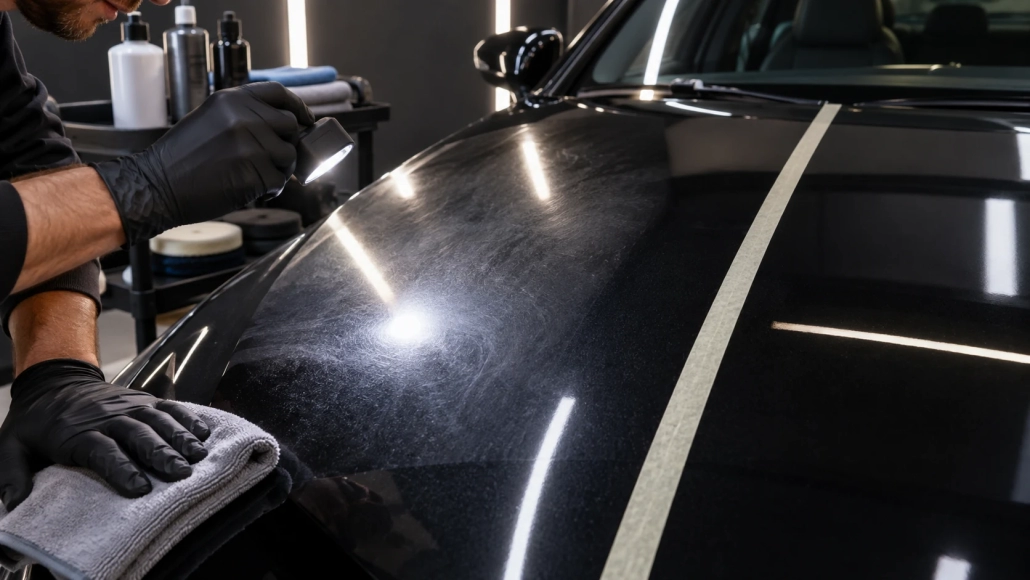
If paint looks clear after polishing but develops fine marks during inspection, another abrasive cycle may repeat the wrong problem. A two-towel test can help identify whether the wiping process is introducing damage.
Use a representative test area that has received the same polishing process. Divide it into two cells on a diagram. Allocate one clean, inspected towel type to each cell. Keep the residue-removal product and its approved application method constant.
Photograph the surface before wiping under consistent directional light. Inspect both towel faces for debris, stiff residue, worn edges and contamination. A towel is unsuitable merely because it feels soft if its contact face contains hardened material.
Remove residue according to the liquid manufacturer’s instructions. Use clean towel faces and avoid dry scrubbing. Keep the number and direction of wipes comparable, without forcing an identical motion when a different weave needs a different approved technique.
Inspect from the same angle after each cell settles. If fresh marks follow the wiping direction in one cell, repeat that observation with another clean example of each towel. One contaminated towel does not establish that every towel of that weave is unsuitable.
Uniform haze present in both cells may come from the abrasive stage, remaining residue or the inspection cleaner. Directional marks limited to one wiping process warrant closer investigation of that process. A change visible only in a photograph may reflect lighting or exposure differences.
Record the towel type, laundering history, cleaner, surface and observed pattern. Replace the problematic consumable or method before polishing the whole vehicle again. Finish the test by confirming an acceptable correction and inspection sequence together.
The polish selection guide explains why correction and final appearance need separate evaluation. For a specific manufacturer’s residue-removal example, see Menzerna’s finishing instructions; they are product-specific, not a universal cleaner recipe.

 Heavy Cut Trials: Measure Total Labour, Not Cut Speed