






A full polishing range.
From cutting and one-step correction to final finishing.
Specialist chemistry. Expert application.
 QUARTZ99 / CERAMIC BASE COAT
The foundation of your coating system.
A layerable quartz base coat designed for mechanical protection. Pair it with a suitable top coat to create the final finish.
For application by NANOLAB certified installers only.
Four formulas. Extended working time. Find the coating for your finish.
Explore the BEAST family of ceramic coatings.
Find the coating for each exterior surface.
 PPF & VINYLGLOSSProtection for glossy films and wraps.Discover
 MATTE & SATINMATTEProtection that respects the finish.Discover
 GLASSWINDOWSExplore dedicated glass protection.Discover
 WHEEL PROTECTIONWHEELSA dedicated coating for your wheels.Discover
 TRIM PROTECTIONPLASTICProtection for plastic surfaces.Discover
Dedicated care for the surfaces inside.
 LEATHER SURFACESLEATHERDiscover NANOLAB leather protection.Discover PLASTIC SURFACESPLASTICProtection for interior plastic surfaces.Discover TEXTILE SURFACESFABRICExplore the latest fabric formulation.Discover
Spray protection, maintenance and upcoming wash products.
 MAINTENANCEBEAST 365Explore the BEAST maintenance range.Discover
Next in washing, cleaning & care.
Ceramic protection for boats and yachts.
An easy-to-apply ceramic coating with an established track record on boats and yachts around the world.
Results vary with surface preparation, exposure and maintenance.
Read 50 MARINE guides →Explore MARINEProtection for the surfaces you live with.
A look at what we’re developing.
From cutting and one-step correction to final finishing.
A wider range for professional vehicle care.
Taking shape alongside BEAST & MATRIX.
Practical guidance for your next coating project.
Explore all guides →
Agree a repeatable visual acceptance method for fine cut polish. Keep lighting, viewing positions and residue removal consistent across the job.
Updated · NANOLAB Knowledge
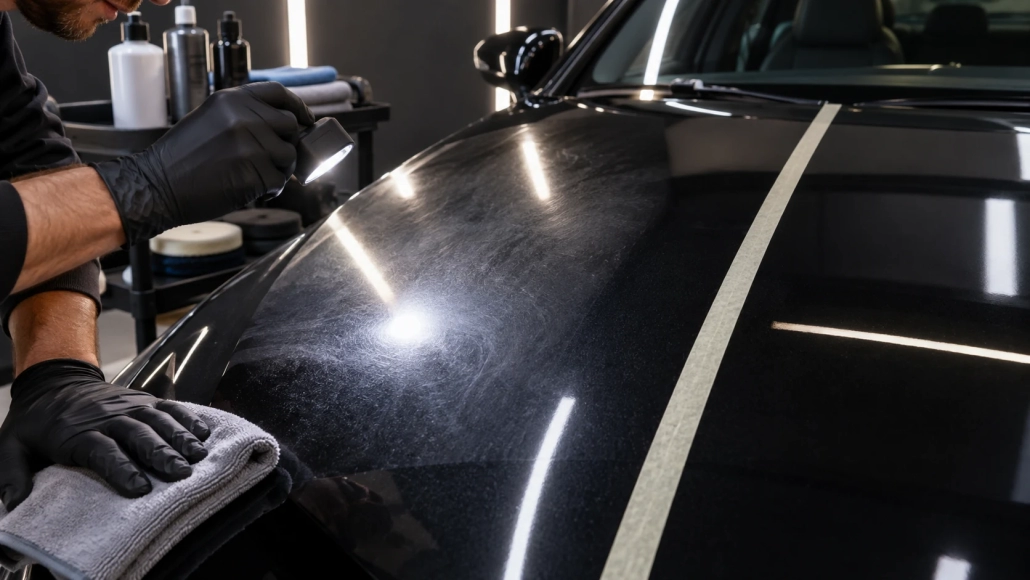
A finishing instruction such as make it glossy leaves too much room for disagreement. For fine cut work after compounding, define how residual haze will be assessed before the team begins the whole vehicle.
Prepare a representative test area using the complete approved process, including residue removal. Inspect it under the intended directional light and from the normal viewing positions used at handover. Agree whether that result meets the service brief.
Photograph the accepted patch with the light position and neighbouring panel features visible. The photograph supports the record; it does not replace direct inspection, because camera exposure and processing can hide or exaggerate haze.
Record the liquid, pad, machine movement and inspection method. A team member checking another section should reproduce those inspection conditions. If a resprayed panel responds differently, establish a separate accepted test for that paint rather than forcing an unsuitable universal procedure.
Compare clarity and remaining target defects separately. A fine cut stage may improve haze while leaving deeper isolated scratches intentionally. These should not be reclassified as finishing failures after the scope has already excluded their removal.
When a section fails, check for remaining residue, wiping marks, pad contamination and a changed paint response before ordering another full correction pass. Re-test a small area and inspect after the same preparation sequence.
If the standard cannot be achieved within the assessed limits of the finish, document that limitation and revise the service outcome with the customer. Do not keep increasing abrasion merely because the workshop wrote an unrealistic acceptance statement.
The inspection-wipe comparison helps separate wiping damage from abrasive haze. Use the reversed-order finishing trial when comparing alternative fine cut routes.

 Compound Packaging: Test the Last Quarter of a Bottle