






A full polishing range.
From cutting and one-step correction to final finishing.
Specialist chemistry. Expert application.
 QUARTZ99 / CERAMIC BASE COAT
The foundation of your coating system.
A layerable quartz base coat designed for mechanical protection. Pair it with a suitable top coat to create the final finish.
For application by NANOLAB certified installers only.
Four formulas. Extended working time. Find the coating for your finish.
Explore the BEAST family of ceramic coatings.
Find the coating for each exterior surface.
 PPF & VINYLGLOSSProtection for glossy films and wraps.Discover
 MATTE & SATINMATTEProtection that respects the finish.Discover
 GLASSWINDOWSExplore dedicated glass protection.Discover
 WHEEL PROTECTIONWHEELSA dedicated coating for your wheels.Discover
 TRIM PROTECTIONPLASTICProtection for plastic surfaces.Discover
Dedicated care for the surfaces inside.
 LEATHER SURFACESLEATHERDiscover NANOLAB leather protection.Discover PLASTIC SURFACESPLASTICProtection for interior plastic surfaces.Discover TEXTILE SURFACESFABRICExplore the latest fabric formulation.Discover
Spray protection, maintenance and upcoming wash products.
 MAINTENANCEBEAST 365Explore the BEAST maintenance range.Discover
Next in washing, cleaning & care.
Ceramic protection for boats and yachts.
An easy-to-apply ceramic coating with an established track record on boats and yachts around the world.
Results vary with surface preparation, exposure and maintenance.
Read 50 MARINE guides →Explore MARINEProtection for the surfaces you live with.
A look at what we’re developing.
From cutting and one-step correction to final finishing.
A wider range for professional vehicle care.
Taking shape alongside BEAST & MATRIX.
Practical guidance for your next coating project.
Explore all guides →
Evaluate stored car polish against a traceable fresh sample. Separate product history, preparation and pad condition before judging a change.
Updated · NANOLAB Knowledge
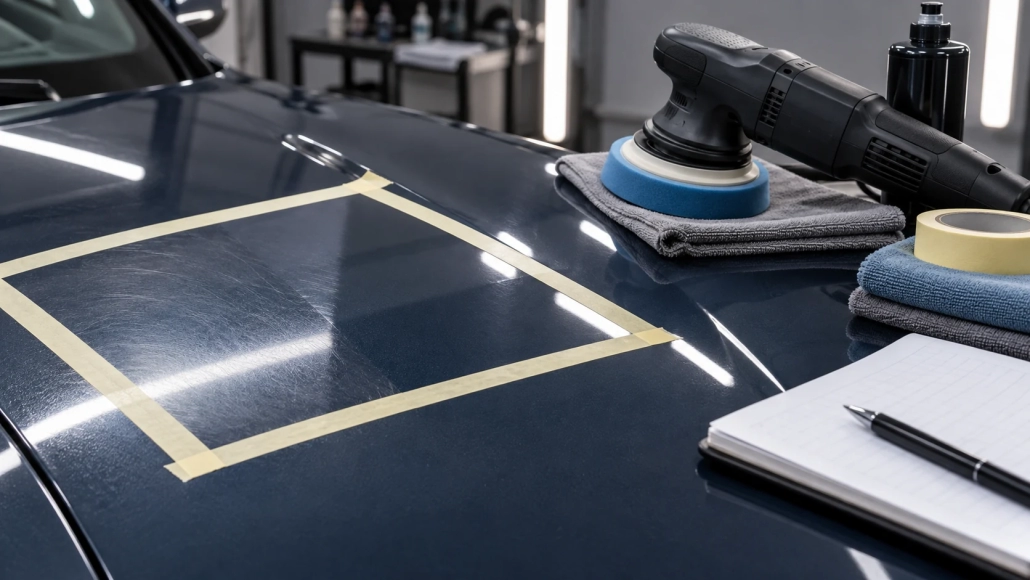
An older compound behaving differently does not automatically mean the formula has failed. Storage, incomplete redistribution and a changed polishing setup can all affect a workshop comparison. Start with traceable samples and an appropriate product-history check.
Record the exact product, batch, opening date and known storage conditions. Confirm whether the manufacturer provides a shelf-life or opened-bottle instruction. An unmarked decanted sample cannot establish how a sealed retail bottle of known history behaves.
Inspect the packaging and liquid using the manufacturer’s criteria. Follow its shaking or redistribution instructions. Do not improvise recovery by adding water, solvent or another compound. Ask the supplier about an unusual condition rather than putting an uncertain material directly onto customer paint.
Use suitable test panels or a carefully selected representative area. Allocate equivalent clean pads to the samples. Follow the approved procedure and keep lighting, defect condition and residue removal comparable. Alternate the testing order on a second area to reduce the influence of changing conditions.
Record dispensing consistency, working behaviour, useful correction and the final finish. Keep these observations separate: a thicker appearance alone does not prove a loss of correction, while an attractive oily reflection does not prove equivalent finishing.
If the stored sample repeatedly behaves differently, send the supplier its history and test record. Keep a small retained portion only where the product’s storage instructions support doing so. A trial can identify a practical difference; it cannot identify the chemical cause or establish a new universal expiry date.
Before returning it to normal stock, resolve whether the bottle remains suitable. Rotate accepted stock by its documented age and opening history. For the evaluation sequence, use the car polish guide and the pad-and-liquid comparison method.

 Polishing Pad Life: Track Workload Instead of Car Count