






A full polishing range.
From cutting and one-step correction to final finishing.
Specialist chemistry. Expert application.
 QUARTZ99 / CERAMIC BASE COAT
The foundation of your coating system.
A layerable quartz base coat designed for mechanical protection. Pair it with a suitable top coat to create the final finish.
For application by NANOLAB certified installers only.
Four formulas. Extended working time. Find the coating for your finish.
Explore the BEAST family of ceramic coatings.
Find the coating for each exterior surface.
 PPF & VINYLGLOSSProtection for glossy films and wraps.Discover
 MATTE & SATINMATTEProtection that respects the finish.Discover
 GLASSWINDOWSExplore dedicated glass protection.Discover
 WHEEL PROTECTIONWHEELSA dedicated coating for your wheels.Discover
 TRIM PROTECTIONPLASTICProtection for plastic surfaces.Discover
Dedicated care for the surfaces inside.
 LEATHER SURFACESLEATHERDiscover NANOLAB leather protection.Discover PLASTIC SURFACESPLASTICProtection for interior plastic surfaces.Discover TEXTILE SURFACESFABRICExplore the latest fabric formulation.Discover
Spray protection, maintenance and upcoming wash products.
 MAINTENANCEBEAST 365Explore the BEAST maintenance range.Discover
Next in washing, cleaning & care.
Ceramic protection for boats and yachts.
An easy-to-apply ceramic coating with an established track record on boats and yachts around the world.
Results vary with surface preparation, exposure and maintenance.
Read 50 MARINE guides →Explore MARINEProtection for the surfaces you live with.
A look at what we’re developing.
From cutting and one-step correction to final finishing.
A wider range for professional vehicle care.
Taking shape alongside BEAST & MATRIX.
Practical guidance for your next coating project.
Explore all guides →
A pad used on one difficult correction job may see more work than several enhancement jobs. Track condition and workload before setting replacement rules.
Updated · NANOLAB Knowledge
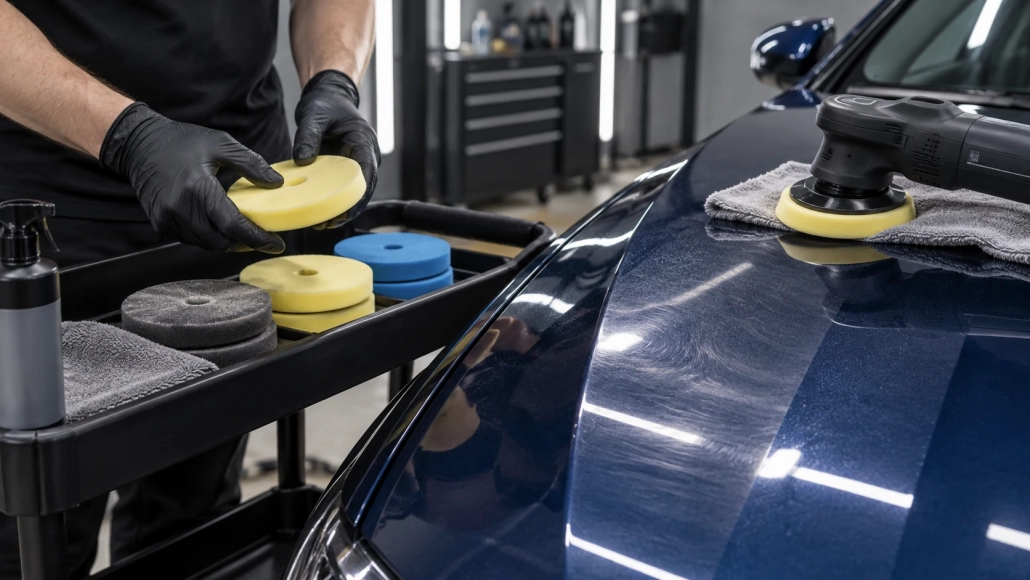
Counting completed cars is a poor stand-alone measure of polishing-pad wear. A pad used briefly for finishing has a different workload from one repeatedly used for heavy cutting. Track the work it actually performs.
Give reusable pads a traceable storage position or identifier that does not alter their working or attachment surfaces. Record the approved machine movement, liquid family and role: cutting, intermediate refinement or finishing. Avoid changing roles silently when supplies run low.
For each use, note approximate machine-working time, cleaning interruptions, unusual loading and any incident such as a fall. This need not become a stopwatch exercise on every section. A consistent, practical record is more useful than precise-looking values nobody maintains.
Check the face, edge, backing and attachment before work, during changes and after cleaning. Record distortion, torn material, shedding, separation or stubborn residue. Follow the pad maker’s cleaning and drying instructions so the inspection is not confused by a deliberately damp pad or an unsuitable cleaner.
Compare the pad’s working result with an accepted clean reference when performance changes. A worn pad may behave differently, but a hotter panel, incorrect centring or a different compound can produce a similar complaint.
Remove damaged or otherwise unsuitable pads from service according to the manufacturer’s criteria. Use workload records to estimate how many acceptable replacements the workshop needs, not to override a failed inspection because a pad has not reached its planned number of cars.
For example, a pad with low total use but damaged backing should not receive another heavy correction job. An intact pad with a clear history still needs inspection before each job. Review manufacturer pad-system guidance and the vibration diagnostic guide when condition and performance disagree.

 Polishing Spot Repairs: Preserve a Defect Reference