






A full polishing range.
From cutting and one-step correction to final finishing.
Specialist chemistry. Expert application.
 QUARTZ99 / CERAMIC BASE COAT
The foundation of your coating system.
A layerable quartz base coat designed for mechanical protection. Pair it with a suitable top coat to create the final finish.
For application by NANOLAB certified installers only.
Four formulas. Extended working time. Find the coating for your finish.
Explore the BEAST family of ceramic coatings.
Find the coating for each exterior surface.
 PPF & VINYLGLOSSProtection for glossy films and wraps.Discover
 MATTE & SATINMATTEProtection that respects the finish.Discover
 GLASSWINDOWSExplore dedicated glass protection.Discover
 WHEEL PROTECTIONWHEELSA dedicated coating for your wheels.Discover
 TRIM PROTECTIONPLASTICProtection for plastic surfaces.Discover
Dedicated care for the surfaces inside.
 LEATHER SURFACESLEATHERDiscover NANOLAB leather protection.Discover PLASTIC SURFACESPLASTICProtection for interior plastic surfaces.Discover TEXTILE SURFACESFABRICExplore the latest fabric formulation.Discover
Spray protection, maintenance and upcoming wash products.
 MAINTENANCEBEAST 365Explore the BEAST maintenance range.Discover
Next in washing, cleaning & care.
Ceramic protection for boats and yachts.
An easy-to-apply ceramic coating with an established track record on boats and yachts around the world.
Results vary with surface preparation, exposure and maintenance.
Read 50 MARINE guides →Explore MARINEProtection for the surfaces you live with.
A look at what we’re developing.
From cutting and one-step correction to final finishing.
A wider range for professional vehicle care.
Taking shape alongside BEAST & MATRIX.
Practical guidance for your next coating project.
Explore all guides →
Diagnose patchy clarity through residue, missed areas, pad changes and repair history before repeating a complete polishing stage.
Updated · NANOLAB Knowledge
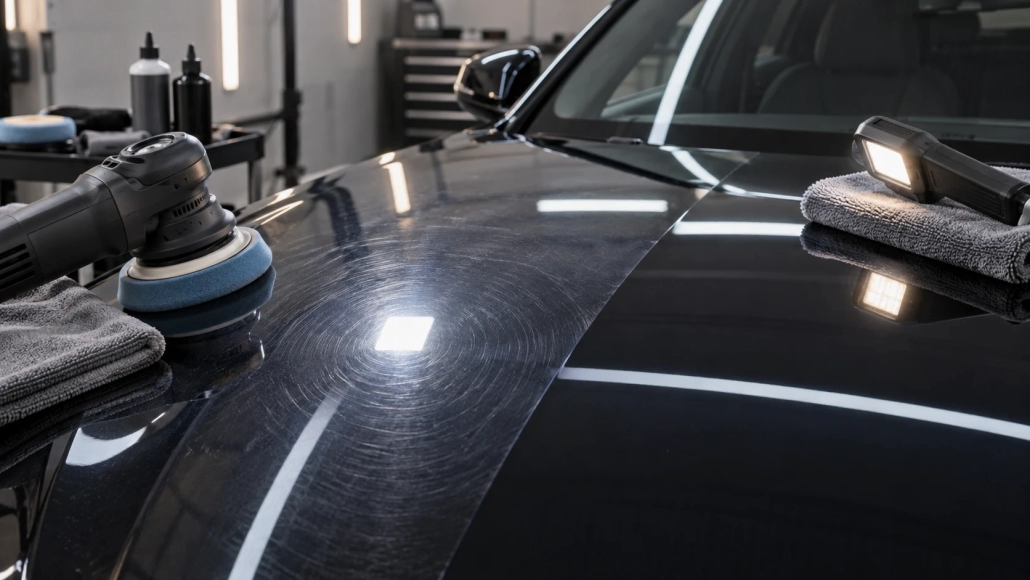
Uneven gloss can come from several stages of a polishing job. Residue, inconsistent coverage, different paint response and local repair history can all contribute. First make the surface comparable before deciding that the whole panel needs more correction.
Clean the area with the compatible method and inspect it dry under consistent light. Move around the panel so a reflection angle does not masquerade as a gloss difference.
Check whether one area still carries residue or protective material. Comparing unlike surface conditions gives an unreliable diagnosis.
Look for missed strips, heavily overlapped boundaries and areas treated with different pads. A centre-to-edge difference may reflect contact or coverage rather than a different liquid requirement.
Record where pads were changed or a technician handed over the job. Those transitions can help locate a process change.
A repaired area can respond differently from neighbouring original paint. If the same documented method behaves differently, perform a fresh representative test rather than forcing uniform settings.
Texture differences can also affect reflections. Additional polish cannot be assumed to solve a difference originating beneath the surface.
If residue is the issue, improve removal. If coverage was incomplete, address the relevant section within the paint assessment. If the cutting stage left varying haze, test a consistent refining process.
Avoid a full aggressive restart unless evidence justifies it. Local diagnosis can preserve material and reduce rework.
Complete a final panel-wide inspection before protection and document any inherent differences that remain. A coherent finish comes from consistent preparation, controlled coverage and appropriate response to surface variation, not from applying the same number of passes everywhere regardless of what the paint actually does.
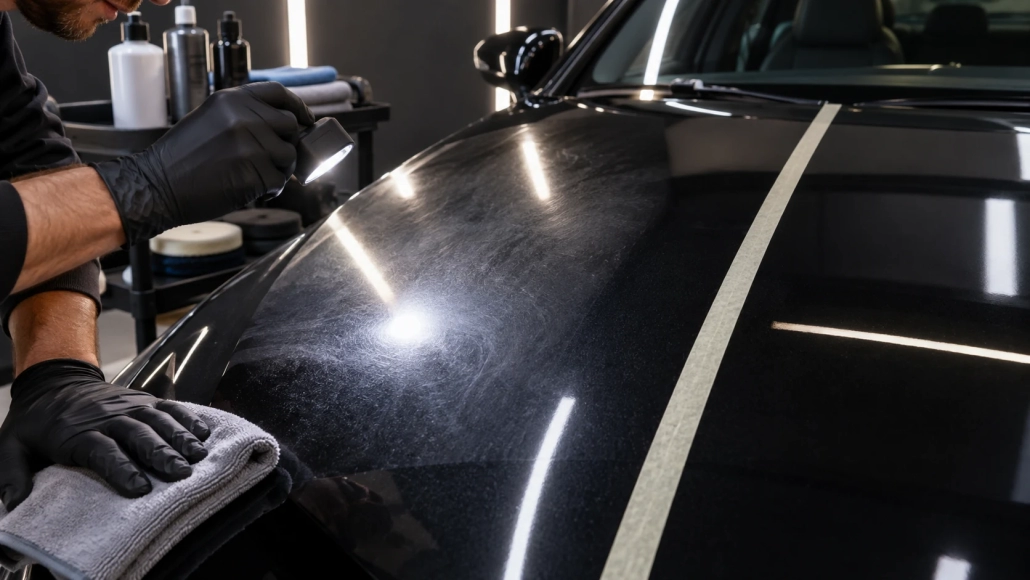
Check defect identity, pad condition, machine movement and correction limits in a useful order before choosing a stronger compound.
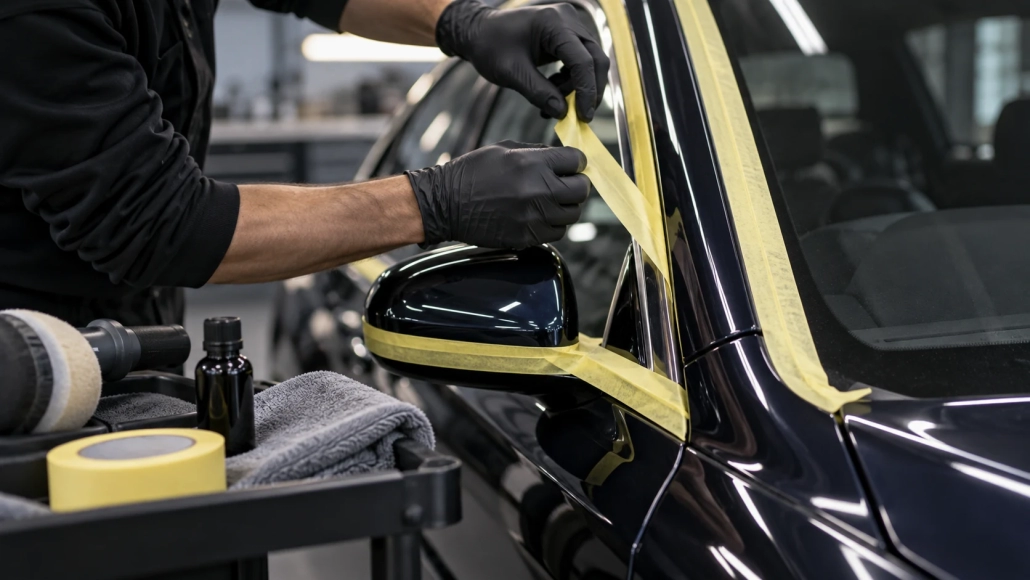
Protect sensitive trim during polishing and remove residue using a compatible method without treating unpainted plastic like the adjacent paint.
Set a paint-correction stopping point that balances appearance, remaining defects, paint condition and the customer's intended use.

 Compound Residue on Plastic Trim: Prevention and Careful Cleanup