






A full polishing range.
From cutting and one-step correction to final finishing.
Specialist chemistry. Expert application.
 QUARTZ99 / CERAMIC BASE COAT
The foundation of your coating system.
A layerable quartz base coat designed for mechanical protection. Pair it with a suitable top coat to create the final finish.
For application by NANOLAB certified installers only.
Four formulas. Extended working time. Find the coating for your finish.
Explore the BEAST family of ceramic coatings.
Find the coating for each exterior surface.
 PPF & VINYLGLOSSProtection for glossy films and wraps.Discover
 MATTE & SATINMATTEProtection that respects the finish.Discover
 GLASSWINDOWSExplore dedicated glass protection.Discover
 WHEEL PROTECTIONWHEELSA dedicated coating for your wheels.Discover
 TRIM PROTECTIONPLASTICProtection for plastic surfaces.Discover
Dedicated care for the surfaces inside.
 LEATHER SURFACESLEATHERDiscover NANOLAB leather protection.Discover PLASTIC SURFACESPLASTICProtection for interior plastic surfaces.Discover TEXTILE SURFACESFABRICExplore the latest fabric formulation.Discover
Spray protection, maintenance and upcoming wash products.
 MAINTENANCEBEAST 365Explore the BEAST maintenance range.Discover
Next in washing, cleaning & care.
Ceramic protection for boats and yachts.
An easy-to-apply ceramic coating with an established track record on boats and yachts around the world.
Results vary with surface preparation, exposure and maintenance.
Read 50 MARINE guides →Explore MARINEProtection for the surfaces you live with.
A look at what we’re developing.
From cutting and one-step correction to final finishing.
A wider range for professional vehicle care.
Taking shape alongside BEAST & MATRIX.
Practical guidance for your next coating project.
Explore all guides →
Distinguish surface deposits from etched damage before choosing abrasion and avoid treating every visible water mark as a polishing problem.
Updated · NANOLAB Knowledge
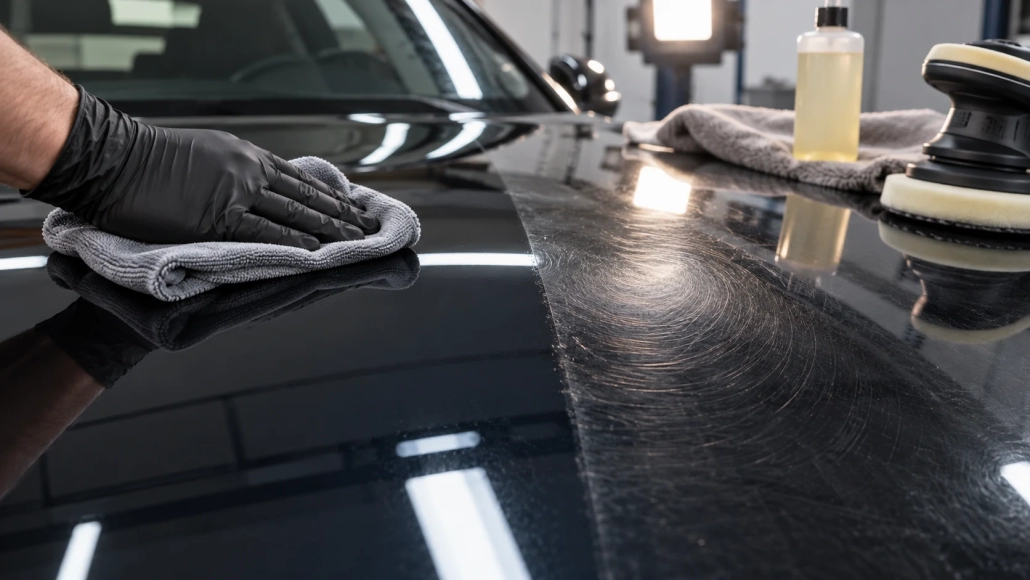
A visible water spot may include a deposit above the finish, damage within it, or both. Compound is not automatically the first response. Establish what remains after suitable cleaning before deciding whether paint correction is justified.
Identify the surface and any existing coating or film. Choose cleaning products approved for that system and follow their instructions.
Do not use an improvised strong acid or solvent mixture because a spot looks stubborn. Product compatibility and material identification remain necessary.
Dry and inspect the area under consistent light. If the deposit has gone but a mark remains, document its appearance before any abrasive test.
A cleaner that removes mineral residue cannot necessarily reverse etching. Conversely, polishing through removable deposits can introduce unnecessary abrasion.
On suitable sound glossy paint, a conservative supported polish test may show whether the remaining appearance can be improved. Evaluate the cleaned result and the effect on any existing protective system.
Do not chase complete removal without considering defect depth and paint condition. A persistent mark may exceed the correction scope even when surrounding gloss improves.
Ask where the water exposure comes from: irrigation, washing, drainage or storage. Correcting the finish while leaving the exposure unchanged invites another round of damage and abrasion.
A coating can assist maintenance within its capabilities, but it does not make mineral-laden water unable to leave deposits.
Record the successful cleaning method, any correction performed and marks deliberately retained. This creates a sensible future response: begin with diagnosis and compatible cleaning, then consider local correction only when necessary. The owner should not reach automatically for heavy compound each time a dried water outline becomes visible.
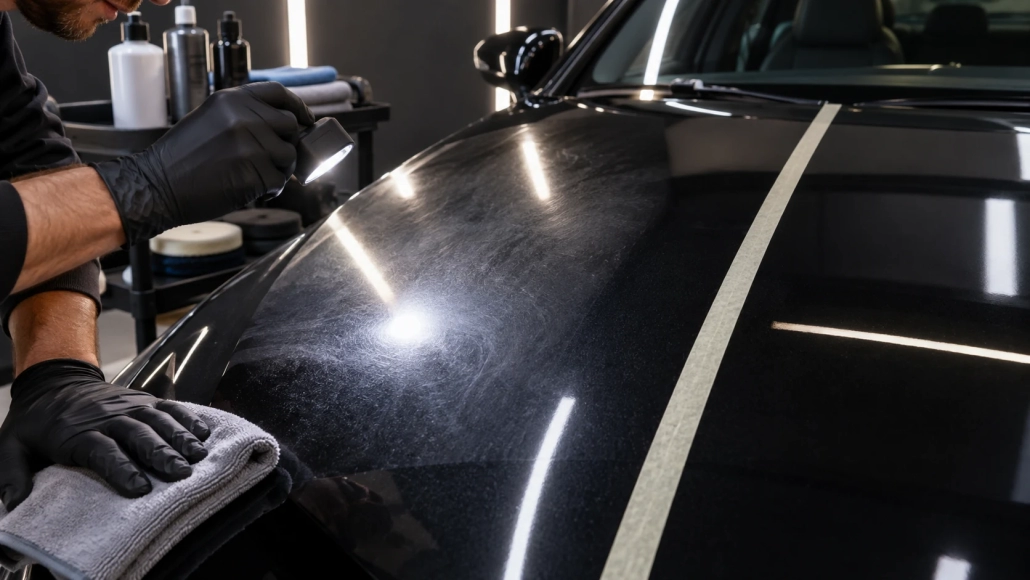
Check defect identity, pad condition, machine movement and correction limits in a useful order before choosing a stronger compound.
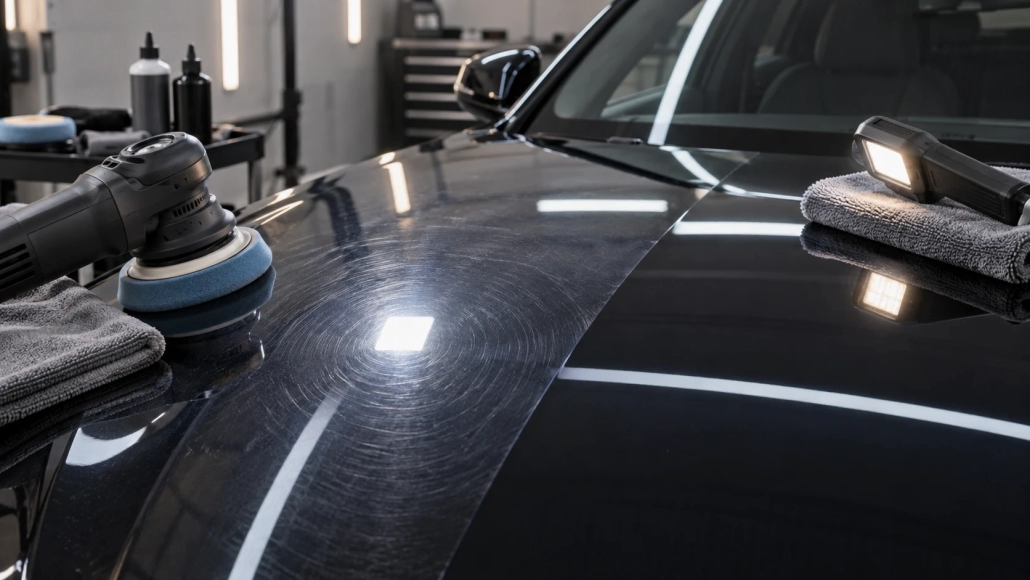
Separate material sitting on the paint from damage within it and use a small compatible cleaning test before planning abrasive correction.
Inspect corrected paint after suitable residue removal to distinguish lasting defect improvement from temporary masking by polishing residue.

 Paint Transfer or a Scratch? Diagnose Before Compounding