






A full polishing range.
From cutting and one-step correction to final finishing.
Specialist chemistry. Expert application.
 QUARTZ99 / CERAMIC BASE COAT
The foundation of your coating system.
A layerable quartz base coat designed for mechanical protection. Pair it with a suitable top coat to create the final finish.
For application by NANOLAB certified installers only.
Four formulas. Extended working time. Find the coating for your finish.
Explore the BEAST family of ceramic coatings.
Find the coating for each exterior surface.
 PPF & VINYLGLOSSProtection for glossy films and wraps.Discover
 MATTE & SATINMATTEProtection that respects the finish.Discover
 GLASSWINDOWSExplore dedicated glass protection.Discover
 WHEEL PROTECTIONWHEELSA dedicated coating for your wheels.Discover
 TRIM PROTECTIONPLASTICProtection for plastic surfaces.Discover
Dedicated care for the surfaces inside.
 LEATHER SURFACESLEATHERDiscover NANOLAB leather protection.Discover PLASTIC SURFACESPLASTICProtection for interior plastic surfaces.Discover TEXTILE SURFACESFABRICExplore the latest fabric formulation.Discover
Spray protection, maintenance and upcoming wash products.
 MAINTENANCEBEAST 365Explore the BEAST maintenance range.Discover
Next in washing, cleaning & care.
Ceramic protection for boats and yachts.
An easy-to-apply ceramic coating with an established track record on boats and yachts around the world.
Results vary with surface preparation, exposure and maintenance.
Read 50 MARINE guides →Explore MARINEProtection for the surfaces you live with.
A look at what we’re developing.
From cutting and one-step correction to final finishing.
A wider range for professional vehicle care.
Taking shape alongside BEAST & MATRIX.
Practical guidance for your next coating project.
Explore all guides →
Investigate dusting through working conditions, pad loading and cycle length, and include cleanup in the evaluation of a compound system.
Updated · NANOLAB Knowledge
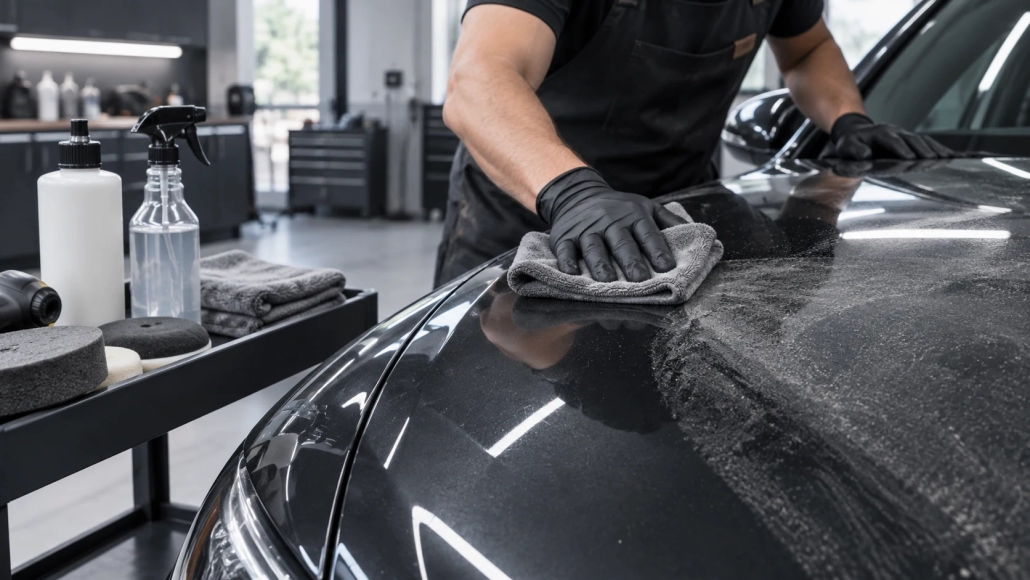
Compound dusting affects visibility, cleanup and the cleanliness of later stages. Some residue behaviour is product-specific, but unexpected or excessive dusting deserves a process review. Do not assume it proves either strong cutting or a defective formula.
Check the liquid’s working instructions, pad pairing and surface conditions. A low-dusting claim does not mean any setup can be run indefinitely without residue.
Examine cycle length and whether the film is being worked beyond its useful condition. Also inspect the pad for accumulation from earlier sections.
Maintain the pad using the manufacturer’s method. A heavily loaded face can change both correction and residue release.
Keep cleaning operations away from completed sections and clean consumables. Moving dust from the pad onto a coating-preparation area creates additional work.
Separate active cutting from final inspection where practical. Protect nearby sensitive components appropriately and remove loose residue using compatible methods before further contact.
Do not wipe dry accumulated debris across finished paint as though it were ordinary polish film. Follow a cleaning method suited to the material and contamination.
When comparing compounds, record useful cut, finish, pad maintenance and cleanup time. A product that looks fast during the machine stage may require substantial work afterward.
Make one supported adjustment at a time, such as correcting pad condition or section size, and inspect the result. Do not add an improvised liquid to suppress dust unless the manufacturer supports that use.
Dust management belongs in the service plan, especially before ceramic coating. The accepted result includes clean surrounding areas and a surface ready for its next preparation step. A strong reflection on the middle of the panel does not mean the correction stage is fully finished.
Organise a polishing job into clear decision points for surface assessment, correction, refinement and preparation for protection.
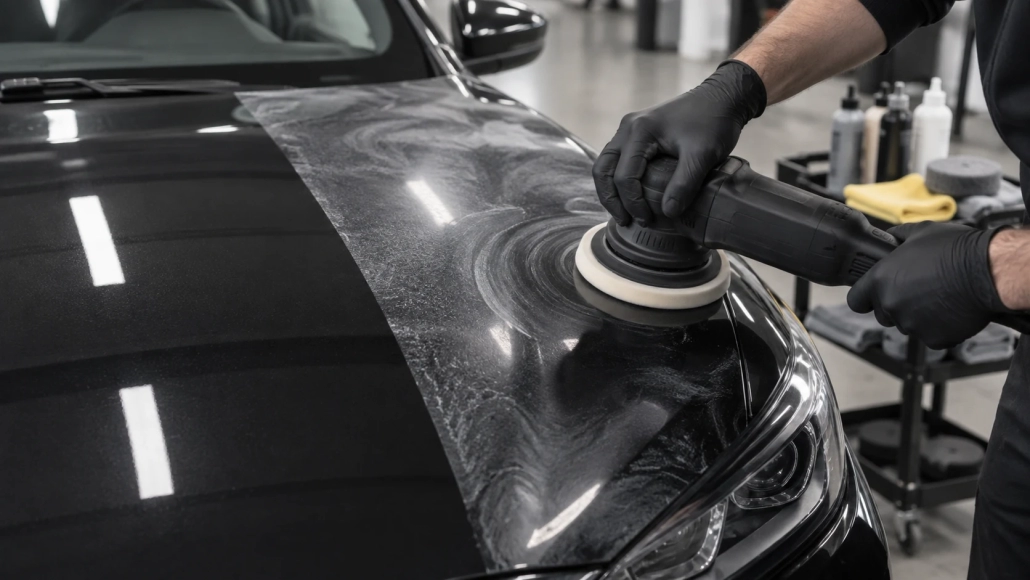
Control product distribution, tool startup and pad loading to reduce splatter while maintaining the working film required by the polishing system.
Remove polishing dust from seams, trim and the work area before final panel preparation and ceramic coating application.
 Preventing Compound Splatter Without Starving the Pad