






A full polishing range.
From cutting and one-step correction to final finishing.
Specialist chemistry. Expert application.
 QUARTZ99 / CERAMIC BASE COAT
The foundation of your coating system.
A layerable quartz base coat designed for mechanical protection. Pair it with a suitable top coat to create the final finish.
For application by NANOLAB certified installers only.
Four formulas. Extended working time. Find the coating for your finish.
Explore the BEAST family of ceramic coatings.
Find the coating for each exterior surface.
 PPF & VINYLGLOSSProtection for glossy films and wraps.Discover
 MATTE & SATINMATTEProtection that respects the finish.Discover
 GLASSWINDOWSExplore dedicated glass protection.Discover
 WHEEL PROTECTIONWHEELSA dedicated coating for your wheels.Discover
 TRIM PROTECTIONPLASTICProtection for plastic surfaces.Discover
Dedicated care for the surfaces inside.
 LEATHER SURFACESLEATHERDiscover NANOLAB leather protection.Discover PLASTIC SURFACESPLASTICProtection for interior plastic surfaces.Discover TEXTILE SURFACESFABRICExplore the latest fabric formulation.Discover
Spray protection, maintenance and upcoming wash products.
 MAINTENANCEBEAST 365Explore the BEAST maintenance range.Discover
Next in washing, cleaning & care.
Ceramic protection for boats and yachts.
An easy-to-apply ceramic coating with an established track record on boats and yachts around the world.
Results vary with surface preparation, exposure and maintenance.
Read 50 MARINE guides →Explore MARINEProtection for the surfaces you live with.
A look at what we’re developing.
From cutting and one-step correction to final finishing.
A wider range for professional vehicle care.
Taking shape alongside BEAST & MATRIX.
Practical guidance for your next coating project.
Explore all guides →
Distinguish pencil hardness from abrasion resistance when comparing ceramic coatings, and read the test method, substrate and failure measure behind each claim.
Updated · NANOLAB Knowledge
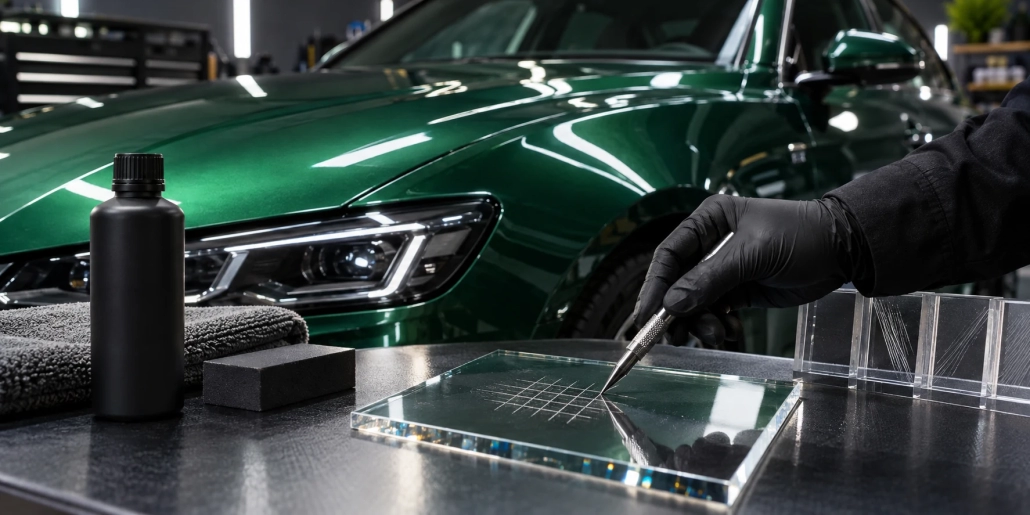
Pencil hardness and abrasion resistance describe different test observations. A high pencil rating should not be treated as proof that a coating will resist every repeated rubbing process, prevent wash marks or survive a specified number of real-world washes.
ASTM D3363 addresses film hardness using pencil leads under a defined procedure. ASTM D4060 evaluates abrasion resistance using a Taber Abraser on suitable coated specimens. These methods do not ask the same question and should not be used as interchangeable marketing scores.
Ask whether the method is appropriate for the particular thin coating and substrate. The laboratory should explain the specimen preparation and any limitations.
For abrasion results, identify the test conditions, number of cycles and measured outcome. For pencil hardness, check the substrate, cure and reported procedure. Different panels or conditions can make headline numbers difficult to compare.
Do not rank two coatings from isolated figures when their test methods and specimen systems differ materially.
Possible evaluation outcomes include mass loss, appearance change, exposed substrate or another specified criterion. A surface can retain some water repellency while showing visible wear, so the acceptance rule must reflect the intended use.
For a detailing product, ordinary wash practices still matter. Contaminated tools and abrasive contact are not made harmless by a hardness number.
Avoid improvised scratch or scouring tests on customer property. Use authorised specimens and appropriate procedures for comparative claims. Explain that a laboratory result supports a particular property under stated conditions, not invulnerability. A useful ceramic coating comparison keeps hardness, abrasion, gloss retention and maintenance requirements separate enough for buyers to understand what protection is actually supported.
Discuss your application with NANOLAB or explore private label coating development.
Learn how to interpret a pencil-hardness claim, why it differs from mineral hardness, and what it cannot tell you about real-world vehicle scratches.
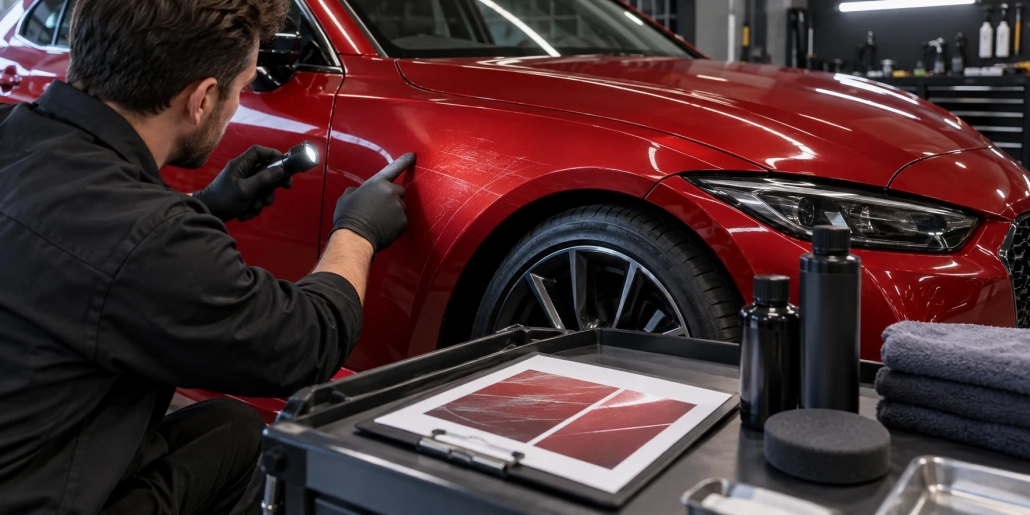
Assess new marks without assuming they are limited to the coating, and plan correction around paint preservation and the affected area.
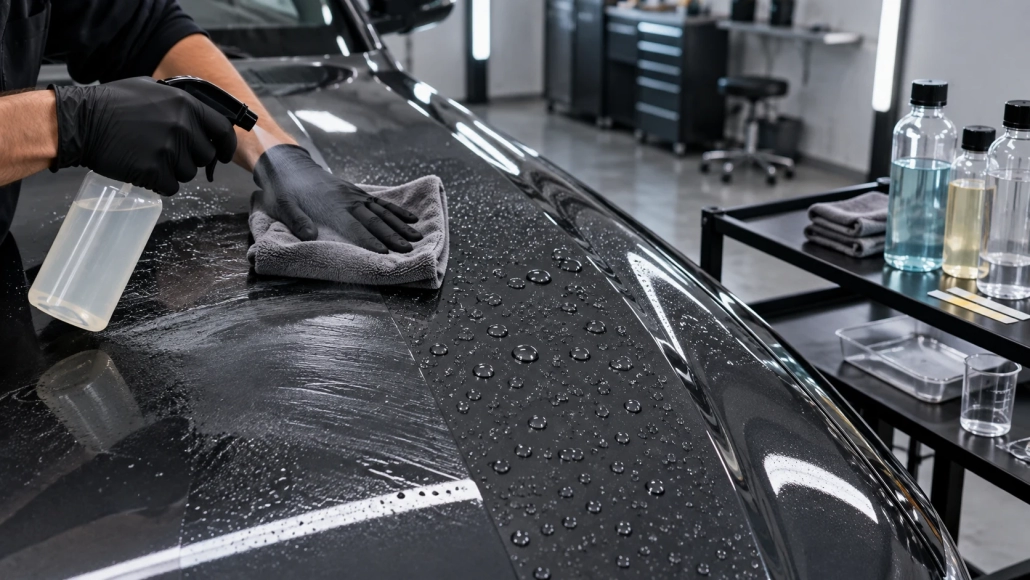
Distinguish spot, wipe and immersion tests when reading ceramic coating chemical-resistance claims, with attention to concentration, time and failure criteria.

 Nano Coating Gloss, Haze and Reflection Clarity