






A full polishing range.
From cutting and one-step correction to final finishing.
Specialist chemistry. Expert application.
 QUARTZ99 / CERAMIC BASE COAT
The foundation of your coating system.
A layerable quartz base coat designed for mechanical protection. Pair it with a suitable top coat to create the final finish.
For application by NANOLAB certified installers only.
Four formulas. Extended working time. Find the coating for your finish.
Explore the BEAST family of ceramic coatings.
Find the coating for each exterior surface.
 PPF & VINYLGLOSSProtection for glossy films and wraps.Discover
 MATTE & SATINMATTEProtection that respects the finish.Discover
 GLASSWINDOWSExplore dedicated glass protection.Discover
 WHEEL PROTECTIONWHEELSA dedicated coating for your wheels.Discover
 TRIM PROTECTIONPLASTICProtection for plastic surfaces.Discover
Dedicated care for the surfaces inside.
 LEATHER SURFACESLEATHERDiscover NANOLAB leather protection.Discover PLASTIC SURFACESPLASTICProtection for interior plastic surfaces.Discover TEXTILE SURFACESFABRICExplore the latest fabric formulation.Discover
Spray protection, maintenance and upcoming wash products.
 MAINTENANCEBEAST 365Explore the BEAST maintenance range.Discover
Next in washing, cleaning & care.
Ceramic protection for boats and yachts.
An easy-to-apply ceramic coating with an established track record on boats and yachts around the world.
Results vary with surface preparation, exposure and maintenance.
Read 50 MARINE guides →Explore MARINEProtection for the surfaces you live with.
A look at what we’re developing.
From cutting and one-step correction to final finishing.
A wider range for professional vehicle care.
Taking shape alongside BEAST & MATRIX.
Practical guidance for your next coating project.
Explore all guides →
Coordinate a chrome replating job with later ceramic coating, including final-finish approval, handling instructions and a clear preparation record.
Updated · NANOLAB Knowledge

Freshly replated chrome should first be accepted as a finished restoration. Adding a ceramic coating too early in the handover can blur responsibility for appearance changes or hide the baseline condition. The sensible sequence is to inspect the replating, obtain its care requirements and then evaluate the additional treatment.
Agree on the viewing conditions used to accept the finish. Check accessible edges, recesses and transitions, and document any limitations discussed with the plating shop. Photograph the part before installation where practical, since mounting hardware may later obstruct inspection.
Ask which final surface is exposed and whether polishing compounds, oils or temporary protection remain. Do not assume that all replated parts leave the workshop with the same final cleaning process.
The plating shop should specify permitted cleaning and handling for its work. The coating supplier should confirm suitability for the exposed finish and describe the required preparation. Resolve any conflict before applying a solvent, polish or coating.
There is no useful universal waiting period that can be assigned from the words replated chrome alone. Any curing or waiting requirement must relate to the actual finishing system, including additional clear layers where present. Keep the written instructions with the job record.
A spare component or matching sample can reveal changes in reflection and wipe-off behaviour without risking the restored show surface. Record the cleaner, coating, applicator and application conditions. Inspect after the instructed cure and after an approved maintenance clean.
If no representative sample is available, discuss an inconspicuous area with the owner and restorer. Do not silently convert an uncertain compatibility check into a full-part application.
List the surfaces treated, any exclusions, the coating date and the first permitted wash. Keep plating and coating documents together but distinguish the scope of each service. A later complaint about a pit, haze or lifting edge should be investigated against that record; it should not be assigned automatically to whichever process happened last.
For your exact finish and service conditions, ask NANOLAB about coating suitability and consult the current product documentation.
Understand why ceramic coating cannot repair pitted chrome, how to distinguish deposits from plating damage and when restoration should come first.
Plan ceramic coating for chrome-plated bumpers, including plating inspection, access around mounting points, preparation and practical aftercare.
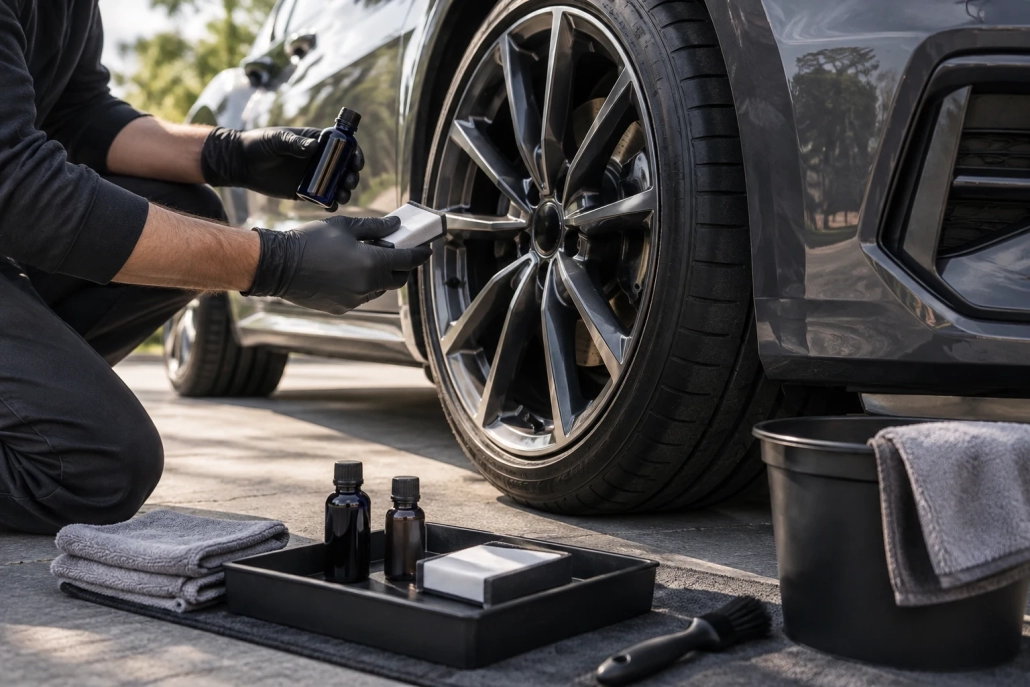
Assess chrome wheel plating, spoke recesses and cleaning requirements before choosing a ceramic coating and planning wheel maintenance.

 Ceramic Coating Chrome-Plated Plastic Grilles