






A full polishing range.
From cutting and one-step correction to final finishing.
Specialist chemistry. Expert application.
 QUARTZ99 / CERAMIC BASE COAT
The foundation of your coating system.
A layerable quartz base coat designed for mechanical protection. Pair it with a suitable top coat to create the final finish.
For application by NANOLAB certified installers only.
Four formulas. Extended working time. Find the coating for your finish.
Explore the BEAST family of ceramic coatings.
Find the coating for each exterior surface.
 PPF & VINYLGLOSSProtection for glossy films and wraps.Discover
 MATTE & SATINMATTEProtection that respects the finish.Discover
 GLASSWINDOWSExplore dedicated glass protection.Discover
 WHEEL PROTECTIONWHEELSA dedicated coating for your wheels.Discover
 TRIM PROTECTIONPLASTICProtection for plastic surfaces.Discover
Dedicated care for the surfaces inside.
 LEATHER SURFACESLEATHERDiscover NANOLAB leather protection.Discover PLASTIC SURFACESPLASTICProtection for interior plastic surfaces.Discover TEXTILE SURFACESFABRICExplore the latest fabric formulation.Discover
Spray protection, maintenance and upcoming wash products.
 MAINTENANCEBEAST 365Explore the BEAST maintenance range.Discover
Next in washing, cleaning & care.
Ceramic protection for boats and yachts.
An easy-to-apply ceramic coating with an established track record on boats and yachts around the world.
Results vary with surface preparation, exposure and maintenance.
Read 50 MARINE guides →Explore MARINEProtection for the surfaces you live with.
A look at what we’re developing.
From cutting and one-step correction to final finishing.
A wider range for professional vehicle care.
Taking shape alongside BEAST & MATRIX.
Practical guidance for your next coating project.
Explore all guides →
Plan preparation and coating where protected film ends midway across a painted panel, keeping the boundary clean and inspectable.
Updated · NANOLAB Knowledge
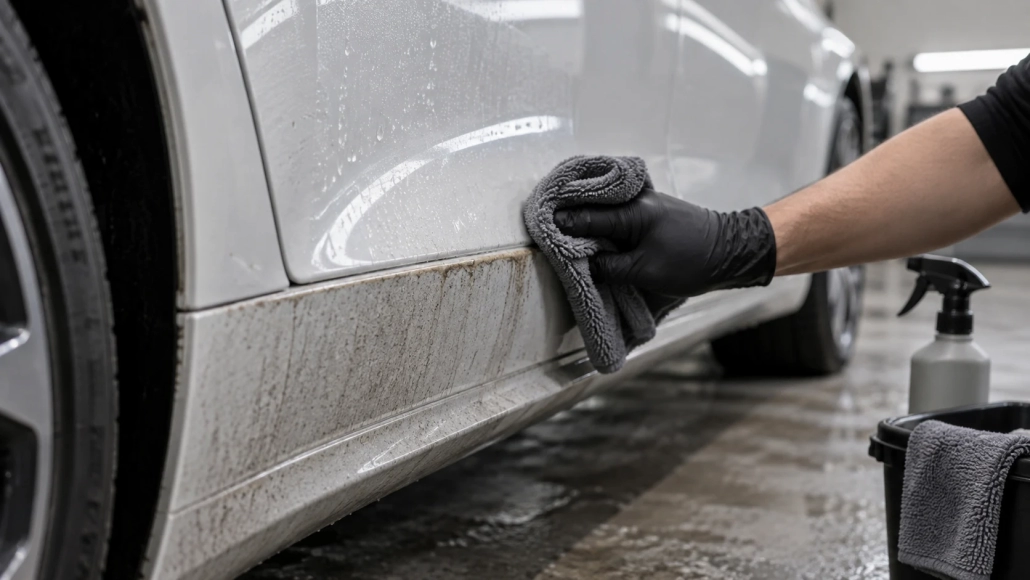
A partial PPF installation creates a boundary between film and exposed paint. Both surfaces may be coated, but their preparation and product requirements need to be considered separately. The line itself should remain free of accumulated cleaner and excess material.
Identify the film product, paint condition and existing protection. Inspect the edge for lifting, contamination or damage before starting. Do not coat over an unresolved adhesion issue or treat the line as a scratch to polish away.
Choose preparation products approved for the surfaces they may contact. Cleaning the exposed paint with a product that runs over the film edge also creates exposure on the film, so plan application control accordingly.
Arrange the coating sequence so each side can be finished and inspected within its instructions. Avoid repeatedly rubbing across the edge with a loaded towel. Do not push product under the film or leave a visible ridge along the boundary.
For compatible glossy film, NANOLAB GLOSS is one product to assess. The neighbouring paint may use a different approved system. Record that distinction rather than assuming both sides must receive the same bottle.
View the boundary under angled light and check for residue or trapped water. At handover, explain that the physical film edge remains visible; ceramic coating does not remove it.
Give the owner a cleaning method that respects the edge and keeps accumulated dirt from becoming a reason for aggressive scrubbing. If the line later changes, inspect film condition and contamination separately before renewing any surface protection.
Assess a dark line at a partial PPF boundary and clean gently without picking at the edge or forcing contaminants underneath it.
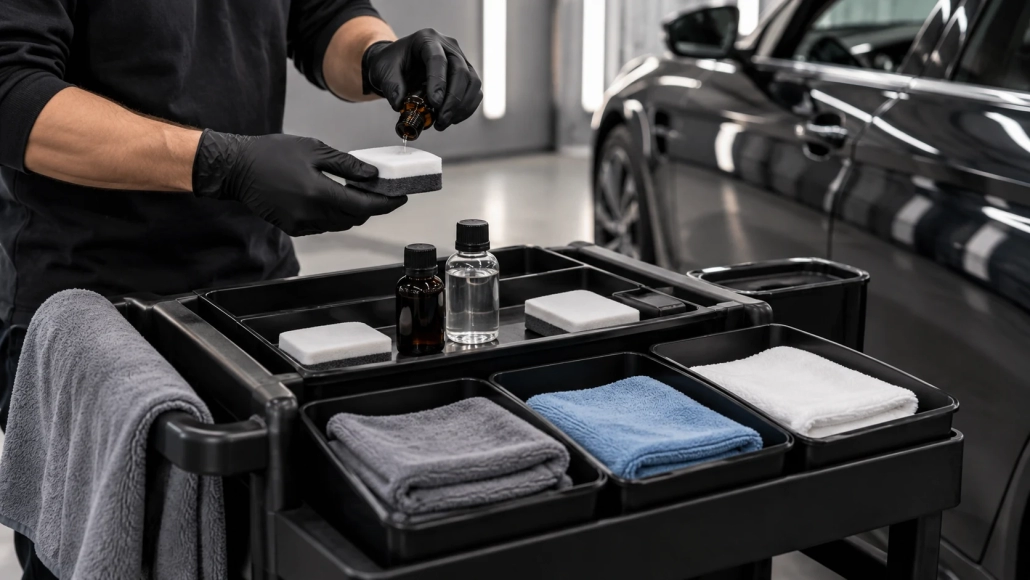
Define accessible wrap returns and preparation limits when coating door shuts on a wrapped vehicle.
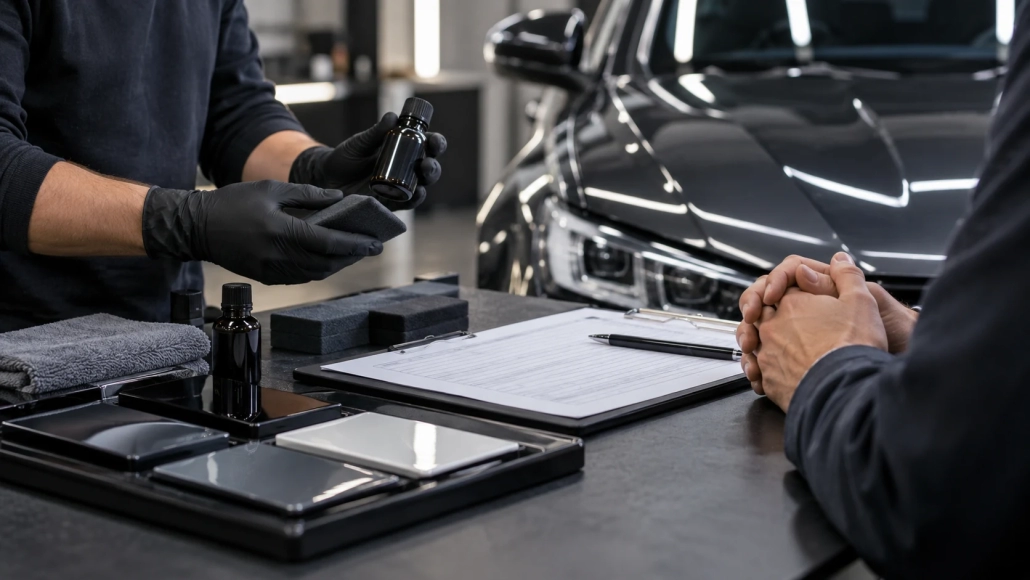
Keep film and coating identities, installation dates and care instructions together when adding ceramic protection to PPF.

 Ceramic Coating on Wrapped Door Shuts and Returns