






A full polishing range.
From cutting and one-step correction to final finishing.
Specialist chemistry. Expert application.
 QUARTZ99 / CERAMIC BASE COAT
The foundation of your coating system.
A layerable quartz base coat designed for mechanical protection. Pair it with a suitable top coat to create the final finish.
For application by NANOLAB certified installers only.
Four formulas. Extended working time. Find the coating for your finish.
Explore the BEAST family of ceramic coatings.
Find the coating for each exterior surface.
 PPF & VINYLGLOSSProtection for glossy films and wraps.Discover
 MATTE & SATINMATTEProtection that respects the finish.Discover
 GLASSWINDOWSExplore dedicated glass protection.Discover
 WHEEL PROTECTIONWHEELSA dedicated coating for your wheels.Discover
 TRIM PROTECTIONPLASTICProtection for plastic surfaces.Discover
Dedicated care for the surfaces inside.
 LEATHER SURFACESLEATHERDiscover NANOLAB leather protection.Discover PLASTIC SURFACESPLASTICProtection for interior plastic surfaces.Discover TEXTILE SURFACESFABRICExplore the latest fabric formulation.Discover
Spray protection, maintenance and upcoming wash products.
 MAINTENANCEBEAST 365Explore the BEAST maintenance range.Discover
Next in washing, cleaning & care.
Ceramic protection for boats and yachts.
An easy-to-apply ceramic coating with an established track record on boats and yachts around the world.
Results vary with surface preparation, exposure and maintenance.
Read 50 MARINE guides →Explore MARINEProtection for the surfaces you live with.
A look at what we’re developing.
From cutting and one-step correction to final finishing.
A wider range for professional vehicle care.
Taking shape alongside BEAST & MATRIX.
Practical guidance for your next coating project.
Explore all guides →
Assess texture, sheen and residue removal before considering ceramic coating on carbon-look or patterned vinyl wrap.
Updated · NANOLAB Knowledge
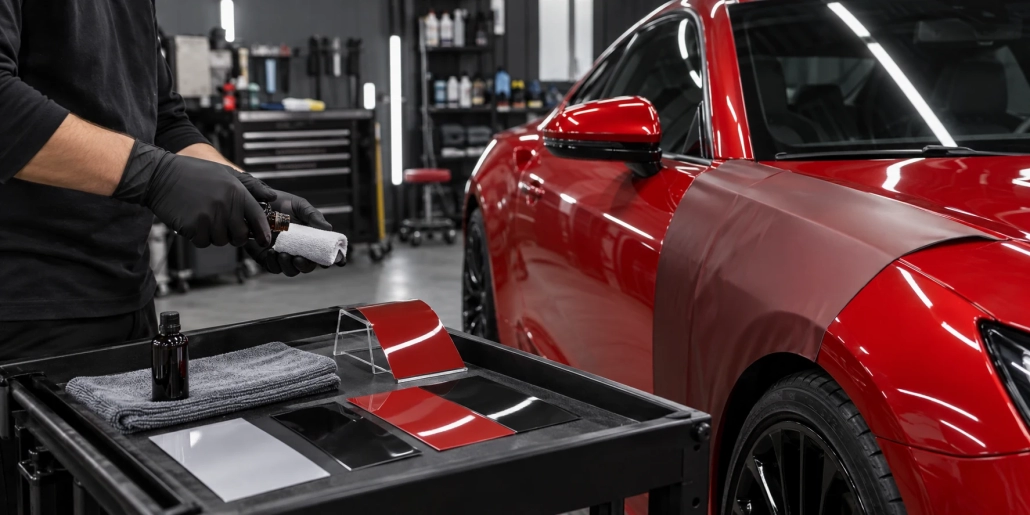
Carbon-look vinyl is not the same substrate as clear-coated carbon fibre. Its visible pattern may include a physical texture and a specific sheen. Ceramic coating selection should preserve that intended appearance and follow the film manufacturer’s treatment guidance.
Obtain the wrap product information and installation history. Inspect raised details, seams and worn areas before cleaning. Do not assume that a product suitable for smooth glossy vinyl can be worked identically across a textured finish.
Define the expected result with the owner. Darkening or increased gloss may be undesirable even when water behaviour improves. Photographs of the original clean, dry surface provide a useful comparison.
Use a discreet representative area that includes the real texture. Follow approved cleaning and final-preparation instructions. Avoid abrasive polishing that could change the pattern or sheen.
Check whether the coating can be applied and finished without leaving excess in grooves. If residue cannot be removed through the approved process, stop rather than flooding the texture with more product. A smooth test edge does not demonstrate success on the textured centre.
Send NANOLAB support the film identity, photographs and test requirements when suitability is unclear. Keep the exact coating decision tied to that film instead of describing all carbon-look wraps as one material.
After treatment, provide a compatible cleaning method and inspect the texture during maintenance. Separate surface contamination from actual film damage. A coating supports care of a suitable wrap; it does not restore worn embossing, repair seams or turn decorative vinyl into a structural carbon-fibre component.
Evaluate wrap finish, condition and cleaning requirements before coating, and protect seams and edges during ongoing maintenance.
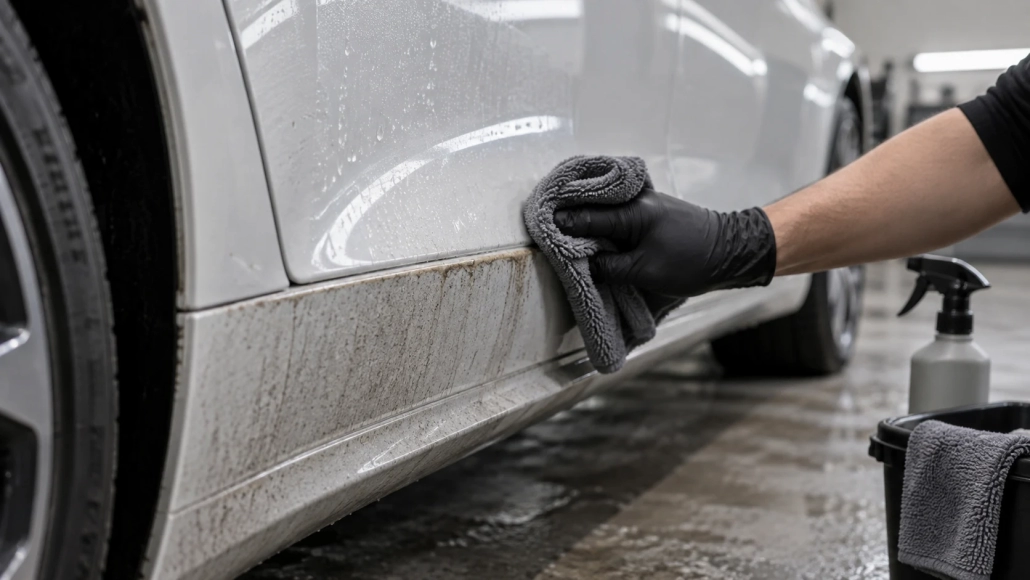
Plan preparation and coating where protected film ends midway across a painted panel, keeping the boundary clean and inspectable.
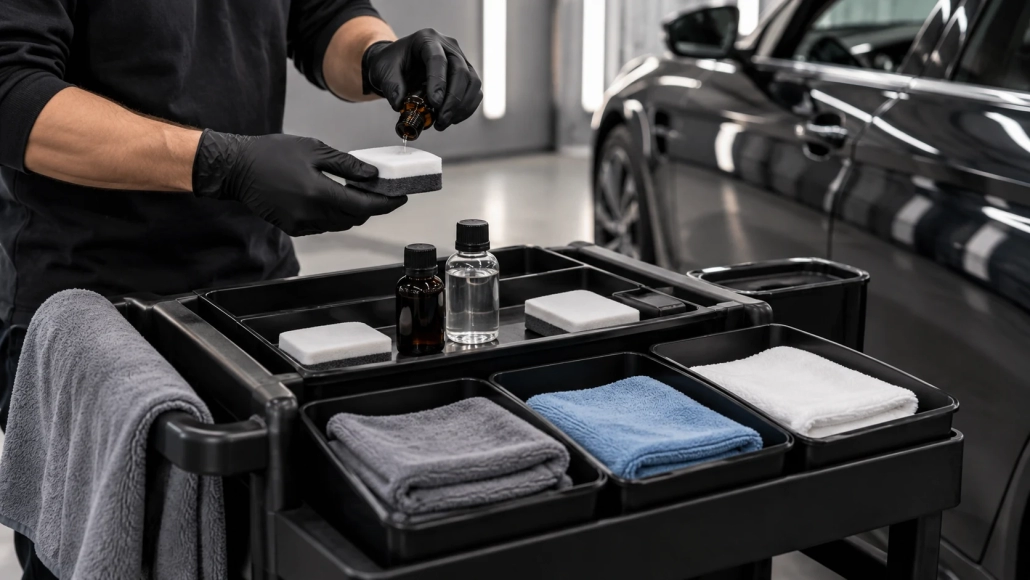
Define accessible wrap returns and preparation limits when coating door shuts on a wrapped vehicle.

 Ceramic Coating Around a Partial PPF Line