






A full polishing range.
From cutting and one-step correction to final finishing.
Specialist chemistry. Expert application.
 QUARTZ99 / CERAMIC BASE COAT
The foundation of your coating system.
A layerable quartz base coat designed for mechanical protection. Pair it with a suitable top coat to create the final finish.
For application by NANOLAB certified installers only.
Four formulas. Extended working time. Find the coating for your finish.
Explore the BEAST family of ceramic coatings.
Find the coating for each exterior surface.
 PPF & VINYLGLOSSProtection for glossy films and wraps.Discover
 MATTE & SATINMATTEProtection that respects the finish.Discover
 GLASSWINDOWSExplore dedicated glass protection.Discover
 WHEEL PROTECTIONWHEELSA dedicated coating for your wheels.Discover
 TRIM PROTECTIONPLASTICProtection for plastic surfaces.Discover
Dedicated care for the surfaces inside.
 LEATHER SURFACESLEATHERDiscover NANOLAB leather protection.Discover PLASTIC SURFACESPLASTICProtection for interior plastic surfaces.Discover TEXTILE SURFACESFABRICExplore the latest fabric formulation.Discover
Spray protection, maintenance and upcoming wash products.
 MAINTENANCEBEAST 365Explore the BEAST maintenance range.Discover
Next in washing, cleaning & care.
Ceramic protection for boats and yachts.
An easy-to-apply ceramic coating with an established track record on boats and yachts around the world.
Results vary with surface preparation, exposure and maintenance.
Read 50 MARINE guides →Explore MARINEProtection for the surfaces you live with.
A look at what we’re developing.
From cutting and one-step correction to final finishing.
A wider range for professional vehicle care.
Taking shape alongside BEAST & MATRIX.
Practical guidance for your next coating project.
Explore all guides →
Check screen-specific care requirements before applying a ceramic coating or preparation cleaner to an automotive display.
Updated · NANOLAB Knowledge
An infotainment screen is not ordinary vehicle glass. Its surface may incorporate anti-reflective, anti-glare or other functional treatments. A ceramic coating approved for exterior windows or painted panels should not automatically be applied to a display.
Identify the permitted cleaning method and any restrictions on chemical products. Keep liquid away from edges and controls as directed. Do not use panel wipe, glass polish or exterior coating simply because fingerprints remain after a dry cloth.
Inspect for an existing screen protector and determine which surface is exposed. A treatment that is compatible with one removable protector may still be unsuitable for the original display beneath it.
If protection is requested, obtain explicit compatibility information for the screen and proposed product. Describe the vehicle, display type and desired outcome. General statements such as ‘works on glass’ are insufficient when optical and touch functions are involved.
Avoid a visible trial that could alter the display. A small test is not automatically appropriate on an expensive functional surface without an approved procedure. If compatibility remains uncertain, exclude the screen and use the manufacturer’s cleaning routine.
Provide the owner with a list of surfaces that were actually coated. Separate leather, plastic, exterior glass and display care so future cleaning does not combine their products. Do not claim a complete ceramic-coated cabin when functional surfaces were deliberately left untreated.
Contact NANOLAB for product-specific questions and use the vehicle’s screen guidance as the starting point. The right decision may be careful routine cleaning, with no additional coating applied to the display.
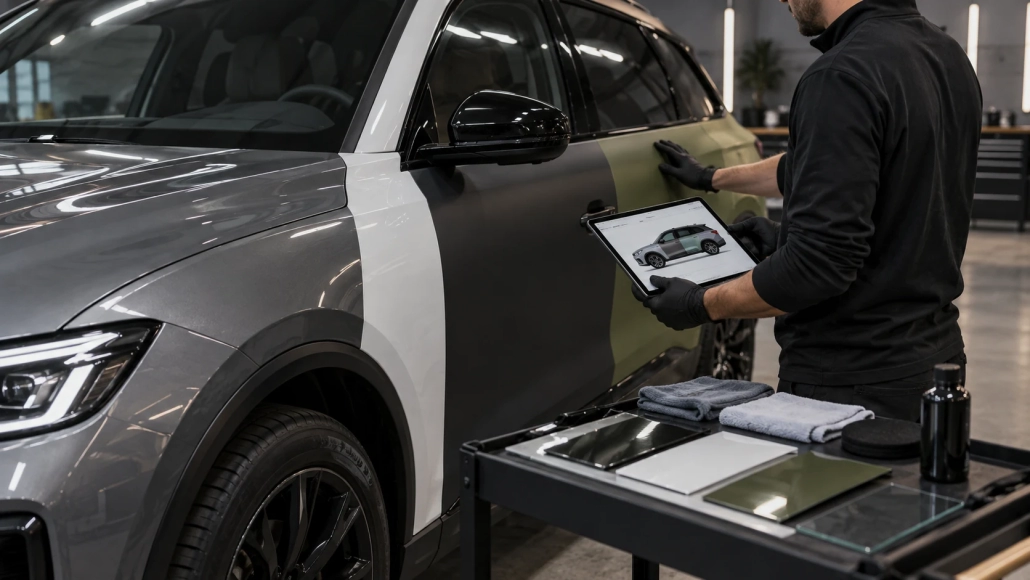
Create a surface map for vehicles combining paint, PPF, vinyl, glass and trim so every area receives a suitable NANOLAB system.
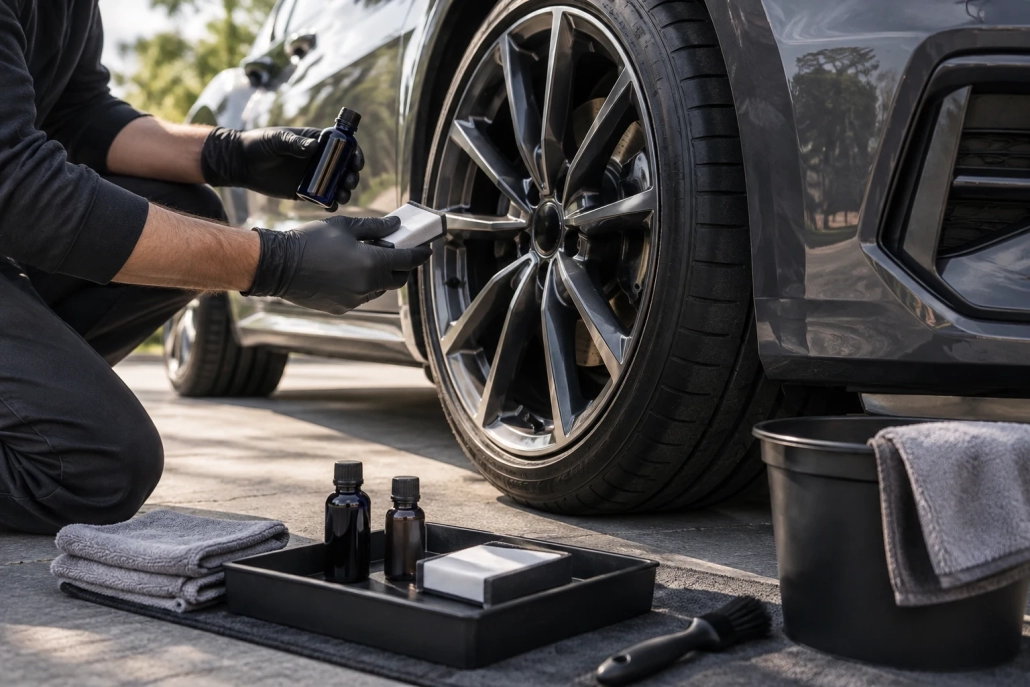
Separate compatible caliper finishes from braking friction surfaces and plan qualified access before applying a dedicated coating.
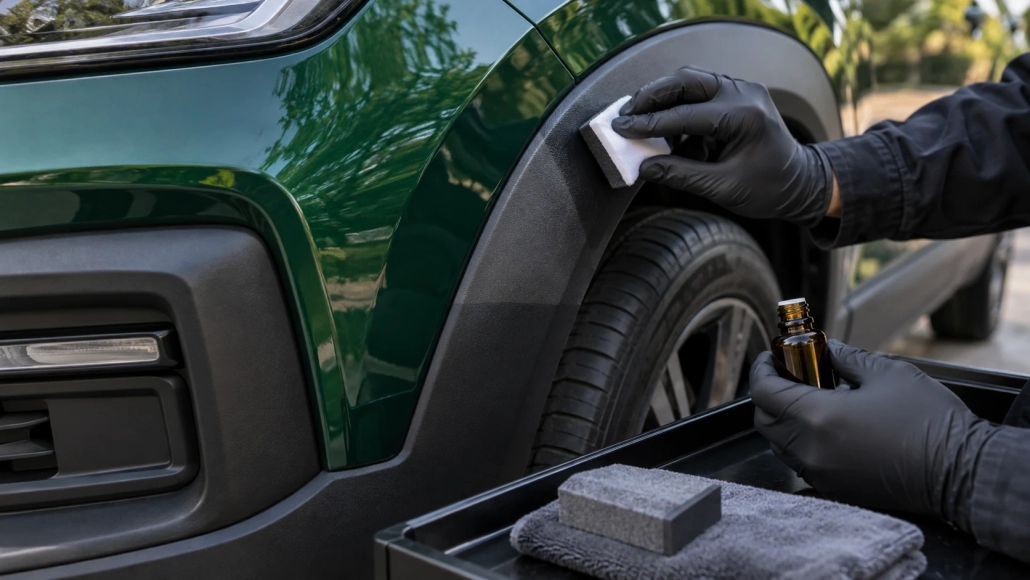
Assess grille material, cleaning access and levelling before applying ceramic coating to a vehicle's honeycomb or mesh-style trim.

 Windscreen Wiper Judder After Ceramic Glass Coating