






A full polishing range.
From cutting and one-step correction to final finishing.
Specialist chemistry. Expert application.
 QUARTZ99 / CERAMIC BASE COAT
The foundation of your coating system.
A layerable quartz base coat designed for mechanical protection. Pair it with a suitable top coat to create the final finish.
For application by NANOLAB certified installers only.
Four formulas. Extended working time. Find the coating for your finish.
Explore the BEAST family of ceramic coatings.
Find the coating for each exterior surface.
 PPF & VINYLGLOSSProtection for glossy films and wraps.Discover
 MATTE & SATINMATTEProtection that respects the finish.Discover
 GLASSWINDOWSExplore dedicated glass protection.Discover
 WHEEL PROTECTIONWHEELSA dedicated coating for your wheels.Discover
 TRIM PROTECTIONPLASTICProtection for plastic surfaces.Discover
Dedicated care for the surfaces inside.
 LEATHER SURFACESLEATHERDiscover NANOLAB leather protection.Discover PLASTIC SURFACESPLASTICProtection for interior plastic surfaces.Discover TEXTILE SURFACESFABRICExplore the latest fabric formulation.Discover
Spray protection, maintenance and upcoming wash products.
 MAINTENANCEBEAST 365Explore the BEAST maintenance range.Discover
Next in washing, cleaning & care.
Ceramic protection for boats and yachts.
An easy-to-apply ceramic coating with an established track record on boats and yachts around the world.
Results vary with surface preparation, exposure and maintenance.
Read 50 MARINE guides →Explore MARINEProtection for the surfaces you live with.
A look at what we’re developing.
From cutting and one-step correction to final finishing.
A wider range for professional vehicle care.
Taking shape alongside BEAST & MATRIX.
Practical guidance for your next coating project.
Explore all guides →
Separate compatible caliper finishes from braking friction surfaces and plan qualified access before applying a dedicated coating.
Updated · NANOLAB Knowledge
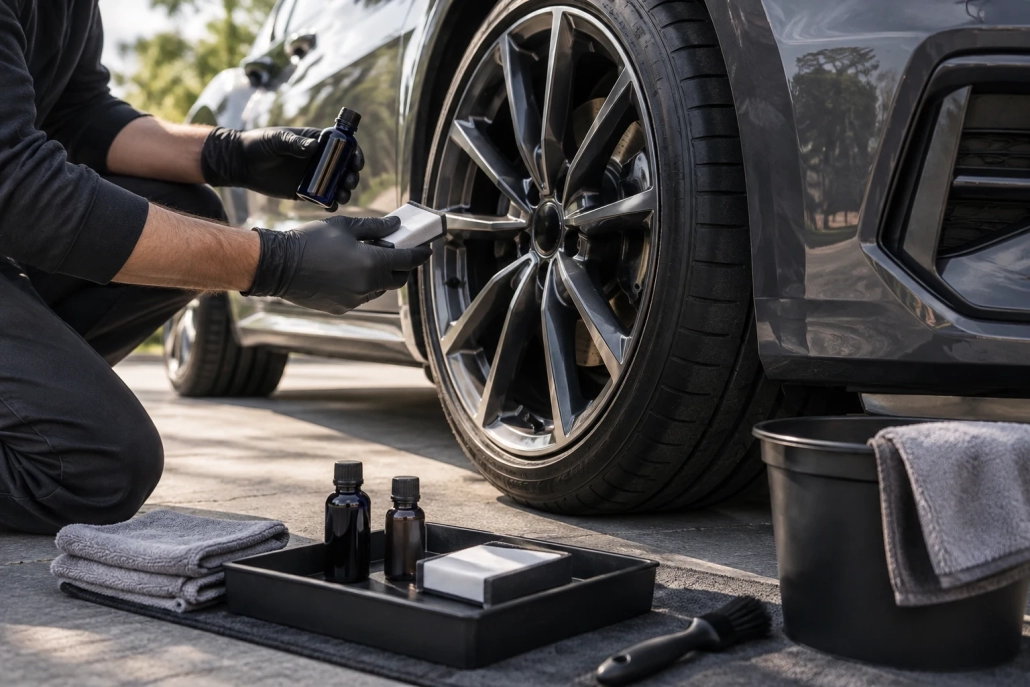
Brake calipers sit close to components where a cosmetic coating does not belong. Any ceramic coating project in this area needs a clearly defined scope, correct access and product-specific suitability. Protection for a caliper’s exterior finish is a different task from treating a braking system.
Confirm whether the caliper exterior is painted, powder-coated or another finish. Inspect for damage and obtain any refinisher’s care requirements. Do not use coating to conceal a leak, corrosion concern or mechanical defect; those require appropriate service assessment.
Review NANOLAB WHEELS for its stated wheel and caliper applications, then confirm the exact finish and process. A general mention of calipers is not permission to coat every adjoining component.
Braking friction surfaces, pads, discs and other unsupported components must remain outside the treatment. Have wheel removal, lifting and refitting handled through the correct service procedure by someone qualified for the work. Do not improvise access beneath an inadequately supported vehicle.
Plan controlled cleaning and application so product does not drift, run or transfer onto excluded areas. If contamination reaches a braking component, stop and obtain proper service guidance rather than attempting an undocumented cosmetic wipe.
Check the accessible coated finish for residue and document the treated boundaries. Follow the coating’s curing requirements before use and any vehicle-service checks associated with the work.
Explain that the treatment supports care of compatible exterior finishes; it does not improve braking performance or replace mechanical maintenance. A precise scope and qualified handling are part of a successful caliper-coating job, not optional details added after the cosmetic work.
Check wheel finish and product compatibility, prepare intricate areas carefully and keep coating away from components that require friction.
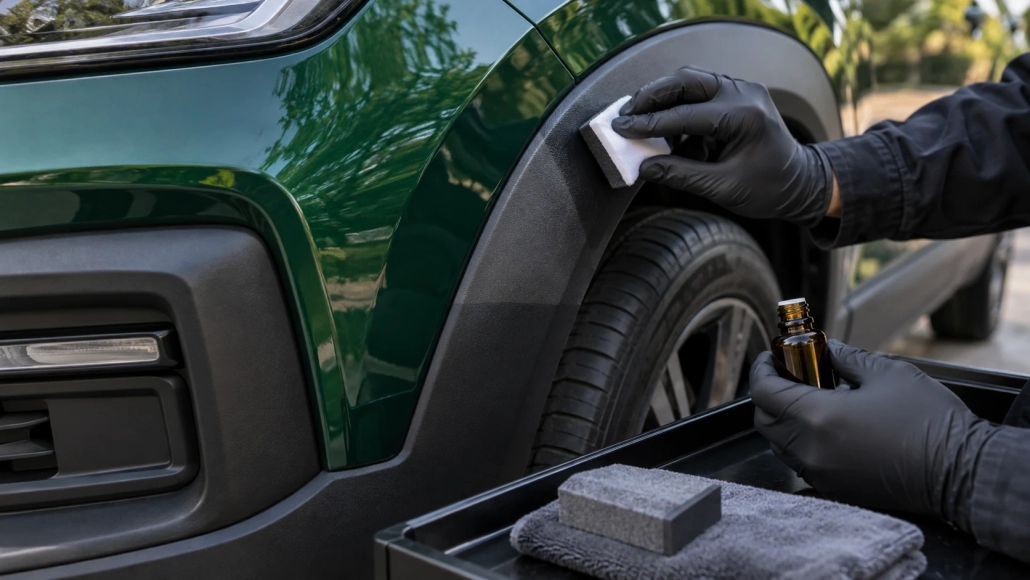
Assess grille material, cleaning access and levelling before applying ceramic coating to a vehicle's honeycomb or mesh-style trim.
Identify the exposed finish and existing damage before choosing ceramic coating for diamond-cut or machined wheel designs.

 Ceramic Coating Contact Angle vs Sliding Angle