






A full polishing range.
From cutting and one-step correction to final finishing.
Specialist chemistry. Expert application.
 QUARTZ99 / CERAMIC BASE COAT
The foundation of your coating system.
A layerable quartz base coat designed for mechanical protection. Pair it with a suitable top coat to create the final finish.
For application by NANOLAB certified installers only.
Four formulas. Extended working time. Find the coating for your finish.
Explore the BEAST family of ceramic coatings.
Find the coating for each exterior surface.
 PPF & VINYLGLOSSProtection for glossy films and wraps.Discover
 MATTE & SATINMATTEProtection that respects the finish.Discover
 GLASSWINDOWSExplore dedicated glass protection.Discover
 WHEEL PROTECTIONWHEELSA dedicated coating for your wheels.Discover
 TRIM PROTECTIONPLASTICProtection for plastic surfaces.Discover
Dedicated care for the surfaces inside.
 LEATHER SURFACESLEATHERDiscover NANOLAB leather protection.Discover PLASTIC SURFACESPLASTICProtection for interior plastic surfaces.Discover TEXTILE SURFACESFABRICExplore the latest fabric formulation.Discover
Spray protection, maintenance and upcoming wash products.
 MAINTENANCEBEAST 365Explore the BEAST maintenance range.Discover
Next in washing, cleaning & care.
Ceramic protection for boats and yachts.
An easy-to-apply ceramic coating with an established track record on boats and yachts around the world.
Results vary with surface preparation, exposure and maintenance.
Read 50 MARINE guides →Explore MARINEProtection for the surfaces you live with.
A look at what we’re developing.
From cutting and one-step correction to final finishing.
A wider range for professional vehicle care.
Taking shape alongside BEAST & MATRIX.
Practical guidance for your next coating project.
Explore all guides →
Check wheel finish and product compatibility, prepare intricate areas carefully and keep coating away from components that require friction.
Updated · NANOLAB Knowledge
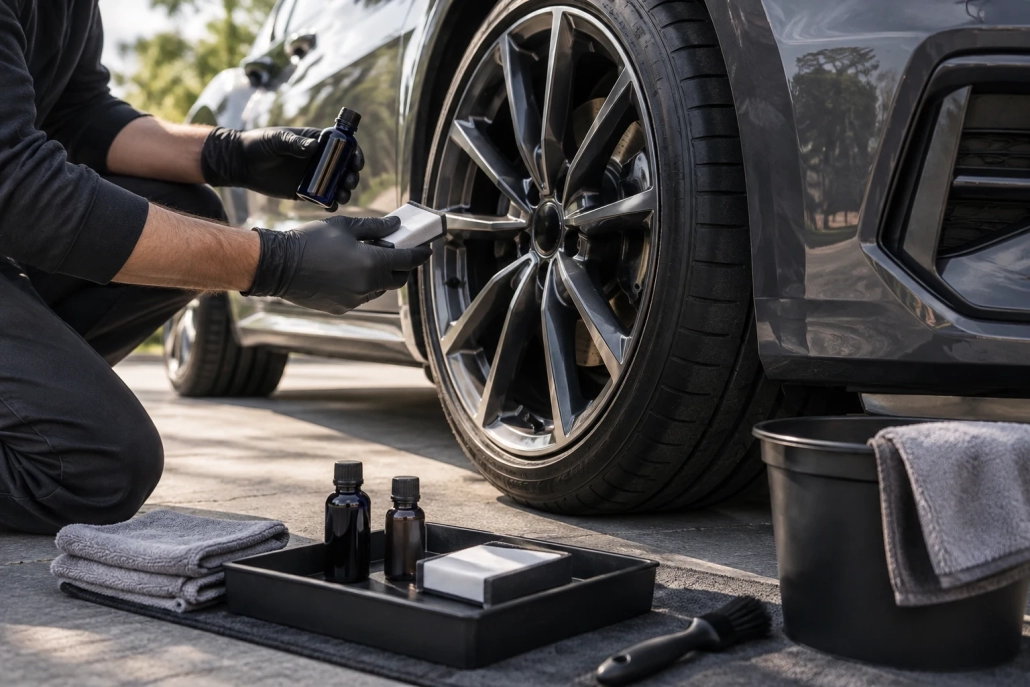
Painted, powder-coated, polished, anodised and other wheel finishes may need different treatment. Inspect for damage and confirm compatibility with both cleaning and coating products. Do not infer suitability solely from a product’s use on body paint.
Plan whether the work covers only the wheel face or also accessible inner areas. Wheel removal, where needed, should be handled with appropriate equipment and expertise.
Remove contamination with suitable products, rinse thoroughly and dry crevices before coating. Apply and level carefully around spokes, recesses and valve areas so excess material does not remain.
Keep coating and slippery maintenance products away from brake discs, pads, tyre tread and other surfaces where friction is essential. Follow product restrictions for adjacent components.
Use separate wheel tools so abrasive brake contamination does not reach paint. Clean regularly with compatible chemistry and avoid treating persistent deposits with excessive force. Inspect damaged finishes before stronger treatment. A coating can support easier wheel maintenance, but it does not remove the need for washing or guarantee immunity to heat, impact or chemical damage.
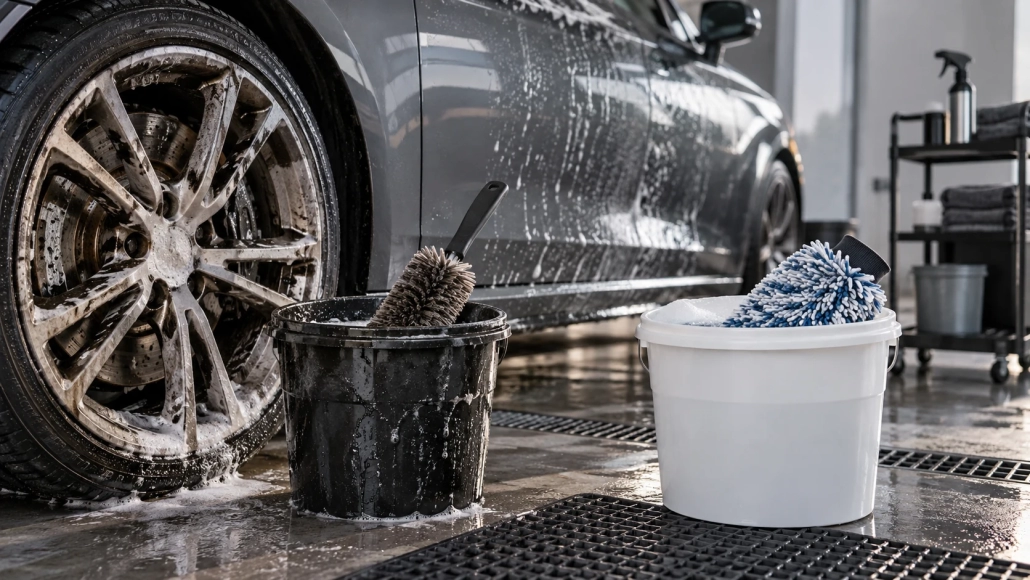
Prevent brake dust and road grit from moving onto coated paint by organising wheel brushes, buckets and towels separately.
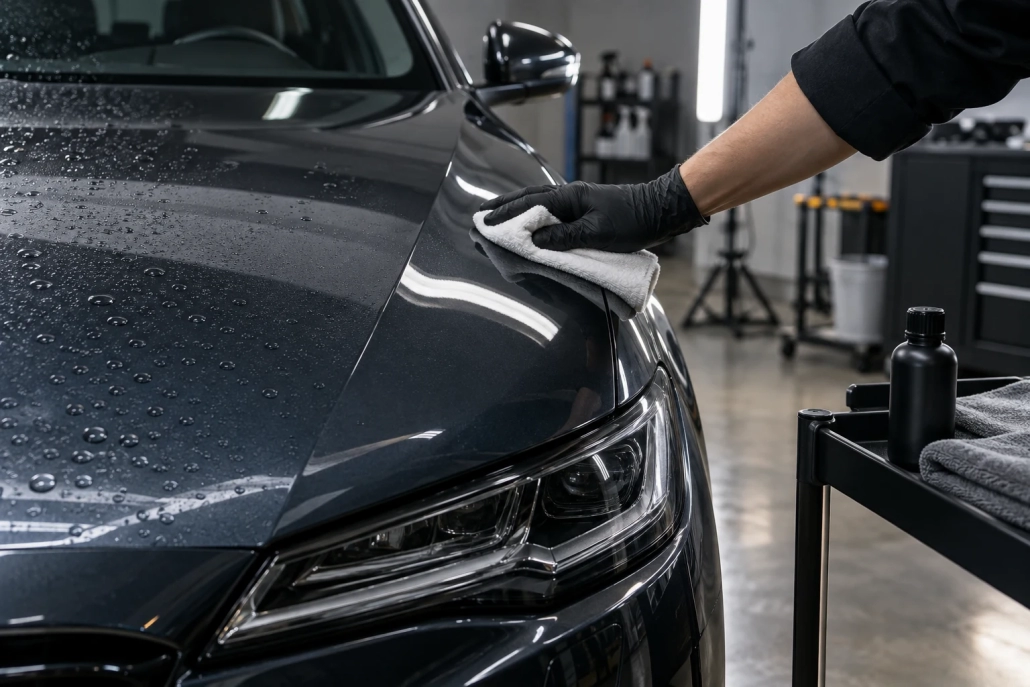
Find the seams and components that retain water after washing, and prevent late drips from interrupting preparation or fresh coating application.
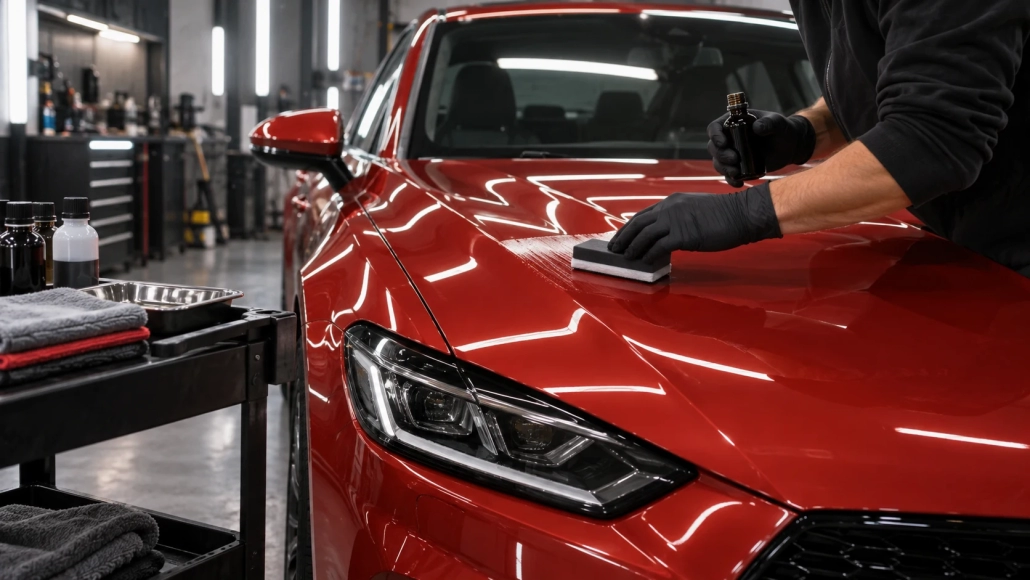
Learn how to remove excess coating, recognise streaks and high spots, and use clean towels without confusing hard wiping with effective levelling.

 Hard Water and Ceramic Coatings: Reducing Mineral Spots