






A full polishing range.
From cutting and one-step correction to final finishing.
Specialist chemistry. Expert application.
 QUARTZ99 / CERAMIC BASE COAT
The foundation of your coating system.
A layerable quartz base coat designed for mechanical protection. Pair it with a suitable top coat to create the final finish.
For application by NANOLAB certified installers only.
Four formulas. Extended working time. Find the coating for your finish.
Explore the BEAST family of ceramic coatings.
Find the coating for each exterior surface.
 PPF & VINYLGLOSSProtection for glossy films and wraps.Discover
 MATTE & SATINMATTEProtection that respects the finish.Discover
 GLASSWINDOWSExplore dedicated glass protection.Discover
 WHEEL PROTECTIONWHEELSA dedicated coating for your wheels.Discover
 TRIM PROTECTIONPLASTICProtection for plastic surfaces.Discover
Dedicated care for the surfaces inside.
 LEATHER SURFACESLEATHERDiscover NANOLAB leather protection.Discover PLASTIC SURFACESPLASTICProtection for interior plastic surfaces.Discover TEXTILE SURFACESFABRICExplore the latest fabric formulation.Discover
Spray protection, maintenance and upcoming wash products.
 MAINTENANCEBEAST 365Explore the BEAST maintenance range.Discover
Next in washing, cleaning & care.
Ceramic protection for boats and yachts.
An easy-to-apply ceramic coating with an established track record on boats and yachts around the world.
Results vary with surface preparation, exposure and maintenance.
Read 50 MARINE guides →Explore MARINEProtection for the surfaces you live with.
A look at what we’re developing.
From cutting and one-step correction to final finishing.
A wider range for professional vehicle care.
Taking shape alongside BEAST & MATRIX.
Practical guidance for your next coating project.
Explore all guides →
Plan cleaning after sustained road spray by separating loose dirt, traffic film and bonded contamination on ceramic-coated paint.
Updated · NANOLAB Knowledge
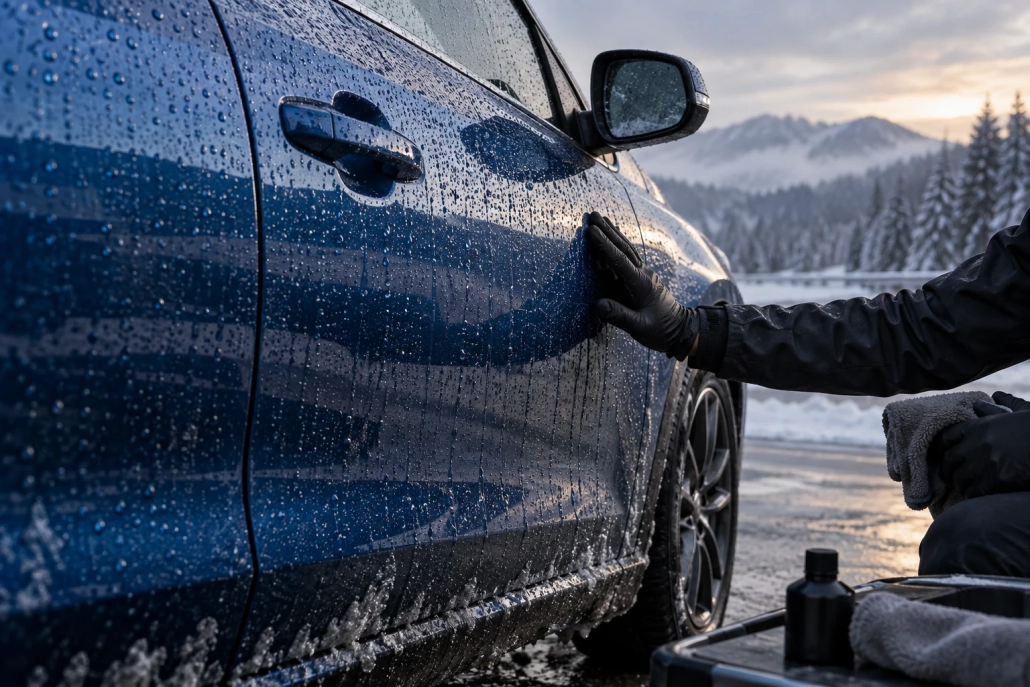
Sustained road spray can leave a coated car with more than loose dust. Lower panels and the rear may carry an uneven mixture of dirt and traffic film. Ceramic coating can assist maintenance, but the surface still needs a cleaning process matched to what is present.
Inspect the lower doors, sills, rear bumper and wheels before contact washing. Start with an appropriate pre-rinse to remove loose material. Keep wheel equipment separate and avoid dragging heavy lower-panel contamination onto cleaner upper surfaces.
Choose a compatible pre-wash or wash product based on its stated use. Follow dilution and dwell instructions rather than assuming a stronger mixture is always better. Work where products can be rinsed before drying.
Rinse and dry carefully, then check for remaining roughness or staining. Some contamination may need a targeted process, while an apparent greasy film may reflect incomplete cleaning or product residue. Do not diagnose coating failure from dirty-panel beading.
If iron contamination is identified, NANOLAB IRON is a product to assess for its supported surfaces and current directions. It should not be used merely because the vehicle travelled on a wet road; different contamination requires different treatment.
A vehicle repeatedly driven on wet roads may need more frequent condition checks than one stored clean indoors. Base the interval on observed contamination and the recommended care programme rather than a universal mileage rule.
Record recurring areas so the next wash gives them enough attention without overworking the rest of the car. Inspect seams for later dirty drips and finish with controlled drying. Add a maintenance product only after the surface is clean and the need is established.
Manage road film, wet conditions and seasonal contamination with a suitable wash routine and proper drying whenever conditions allow.
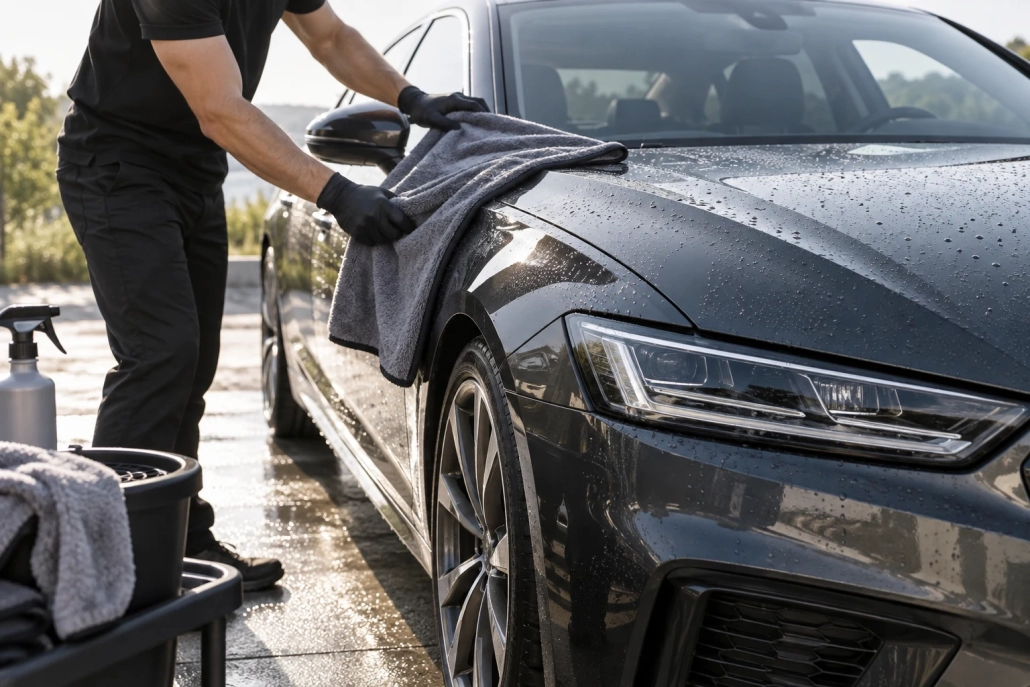
Prepare enough water and a workable stop plan before a maintenance wash, and respond carefully if the rinse supply fails.
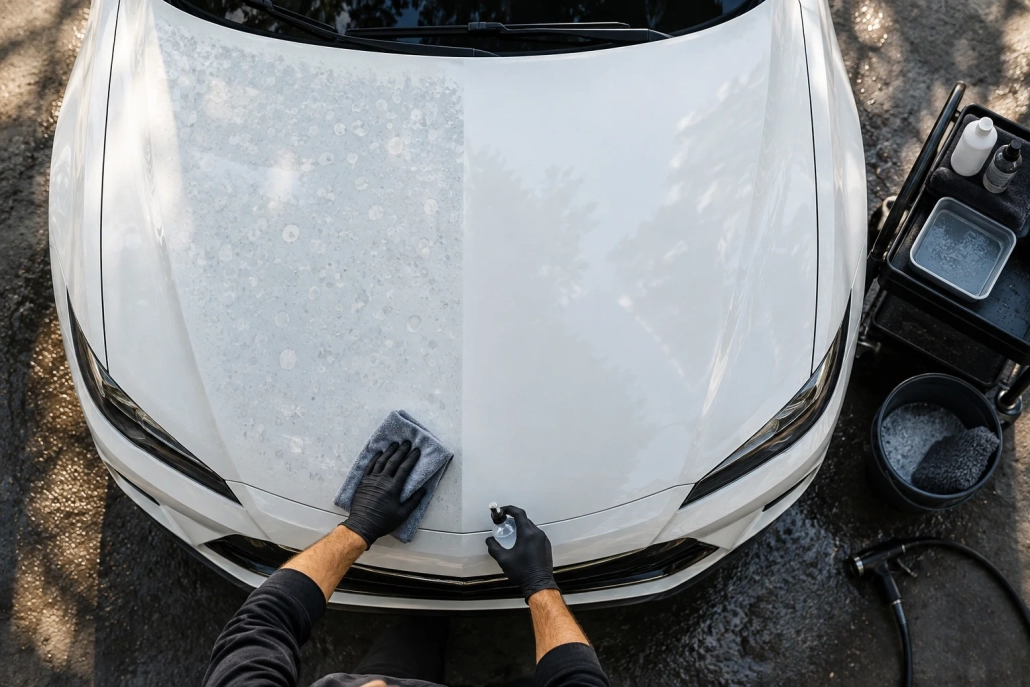
Understand why softened water and deionised rinse water are different when planning washing and drying for a ceramic-coated car.

 Ceramic Coating Care When the Hose Supply Is Interrupted