






A full polishing range.
From cutting and one-step correction to final finishing.
Specialist chemistry. Expert application.
 QUARTZ99 / CERAMIC BASE COAT
The foundation of your coating system.
A layerable quartz base coat designed for mechanical protection. Pair it with a suitable top coat to create the final finish.
For application by NANOLAB certified installers only.
Four formulas. Extended working time. Find the coating for your finish.
Explore the BEAST family of ceramic coatings.
Find the coating for each exterior surface.
 PPF & VINYLGLOSSProtection for glossy films and wraps.Discover
 MATTE & SATINMATTEProtection that respects the finish.Discover
 GLASSWINDOWSExplore dedicated glass protection.Discover
 WHEEL PROTECTIONWHEELSA dedicated coating for your wheels.Discover
 TRIM PROTECTIONPLASTICProtection for plastic surfaces.Discover
Dedicated care for the surfaces inside.
 LEATHER SURFACESLEATHERDiscover NANOLAB leather protection.Discover PLASTIC SURFACESPLASTICProtection for interior plastic surfaces.Discover TEXTILE SURFACESFABRICExplore the latest fabric formulation.Discover
Spray protection, maintenance and upcoming wash products.
 MAINTENANCEBEAST 365Explore the BEAST maintenance range.Discover
Next in washing, cleaning & care.
Ceramic protection for boats and yachts.
An easy-to-apply ceramic coating with an established track record on boats and yachts around the world.
Results vary with surface preparation, exposure and maintenance.
Read 50 MARINE guides →Explore MARINEProtection for the surfaces you live with.
A look at what we’re developing.
From cutting and one-step correction to final finishing.
A wider range for professional vehicle care.
Taking shape alongside BEAST & MATRIX.
Practical guidance for your next coating project.
Explore all guides →
Isolate dressing contamination, reset affected preparation tools and inspect paint before continuing a ceramic coating installation.
Updated · NANOLAB Knowledge
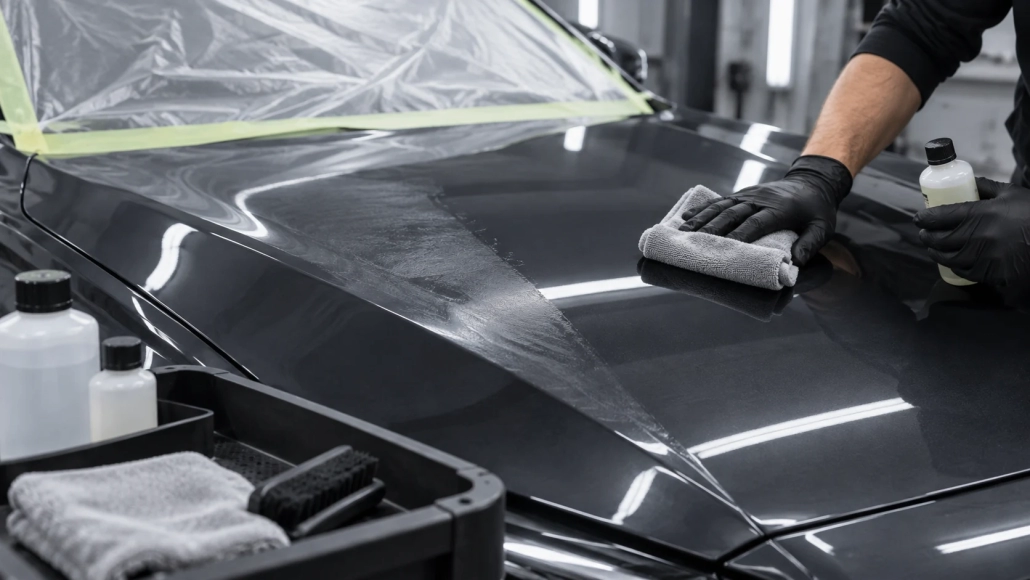
A tyre dressing spill near a ceramic coating job creates a contamination problem that can extend beyond the visible splash. Hands, gloves, towels and trolley handles may transfer residue to prepared paint. Identify that route before restarting the application.
Pause the coating stage and record which panels were exposed. Distinguish paint, wheels, plastic and rubber because the appropriate cleaning process may differ. Keep the spill away from clean applicators and towels, and manage it according to the dressing’s instructions.
If a coating section was already treated, note its stage before attempting cleanup. Cleaning a prepared but uncoated panel is a different decision from working on fresh coating. Seek the selected coating’s recovery guidance where necessary.
Remove affected consumables from the clean workflow. Inspect bottles and touch points before putting them back into service. Simply changing the towel while continuing to use contaminated gloves or a coated bottle exterior can restart the transfer.
Clean the exposed finish with a compatible process designed to remove the particular residue. Do not assume water alone or one hurried wipe is sufficient. Equally, avoid an aggressive solvent chosen without regard to paint, film or adjacent trim.
After cleaning and drying, carry out the specified final preparation. NANOLAB PREP is a relevant product to assess for compatible surfaces and polishing or oily residue, following its current instructions. Its use does not remove the need to identify and clean the original spill correctly.
Inspect the finish under good lighting and perform an appropriate test section before extending the coating. Update the work sequence so tyre dressing is handled in a way that prevents repeated contact with prepared panels. That change addresses the cause, rather than merely adding another cleaning step to every future job.
Control tyre and trim dressing transfer during preparation so clean paint, towels and applicators remain ready for coating.
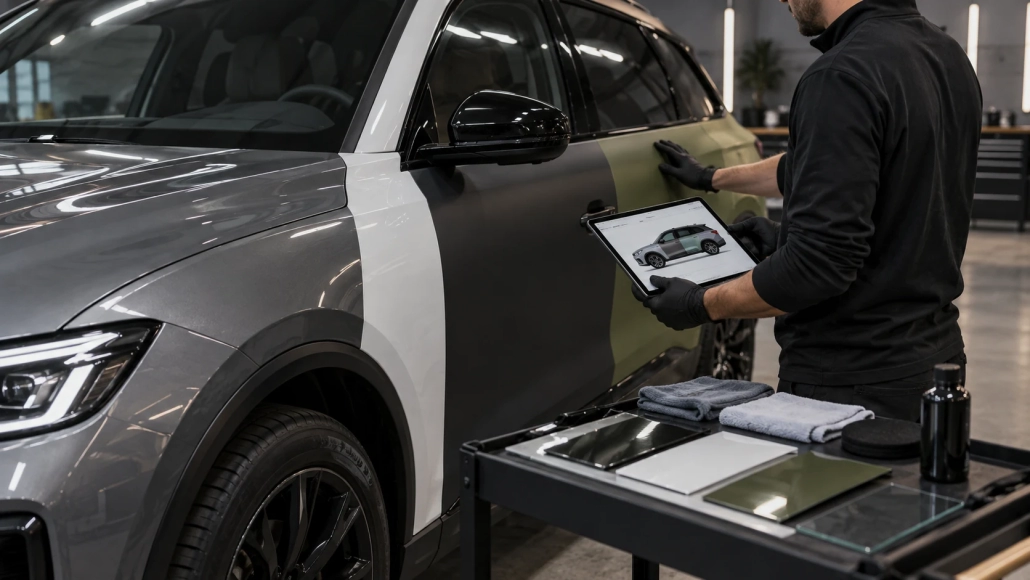
Map glossy, matte, painted and wrapped sections on a two-tone vehicle before selecting preparation methods and ceramic coatings.
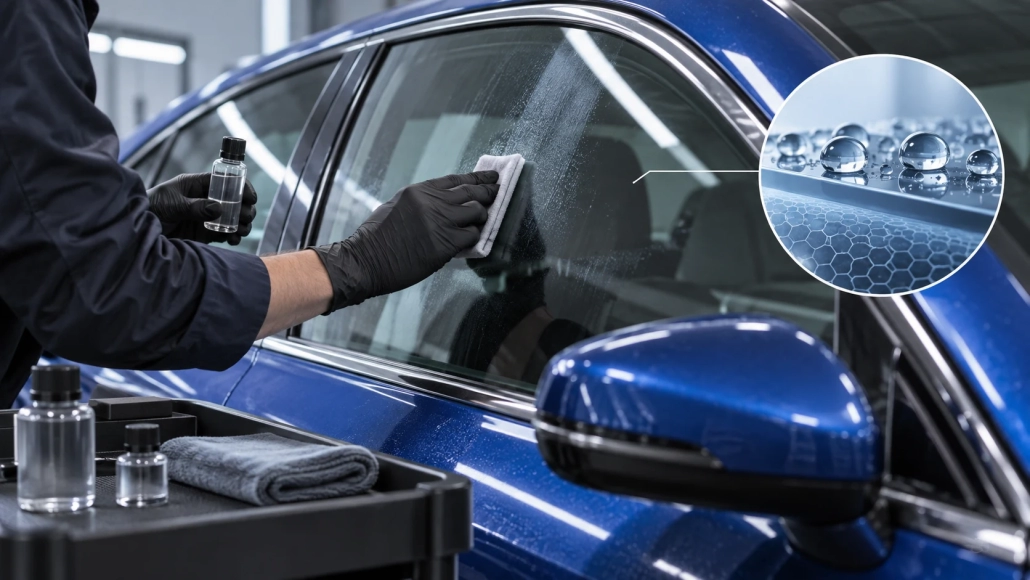
Clean and assess exterior automotive glass after sticker removal before applying a compatible ceramic glass coating.

 Ceramic Coating on a Two-Tone Vehicle: A Preparation Map