






A full polishing range.
From cutting and one-step correction to final finishing.
Specialist chemistry. Expert application.
 QUARTZ99 / CERAMIC BASE COAT
The foundation of your coating system.
A layerable quartz base coat designed for mechanical protection. Pair it with a suitable top coat to create the final finish.
For application by NANOLAB certified installers only.
Four formulas. Extended working time. Find the coating for your finish.
Explore the BEAST family of ceramic coatings.
Find the coating for each exterior surface.
 PPF & VINYLGLOSSProtection for glossy films and wraps.Discover
 MATTE & SATINMATTEProtection that respects the finish.Discover
 GLASSWINDOWSExplore dedicated glass protection.Discover
 WHEEL PROTECTIONWHEELSA dedicated coating for your wheels.Discover
 TRIM PROTECTIONPLASTICProtection for plastic surfaces.Discover
Dedicated care for the surfaces inside.
 LEATHER SURFACESLEATHERDiscover NANOLAB leather protection.Discover PLASTIC SURFACESPLASTICProtection for interior plastic surfaces.Discover TEXTILE SURFACESFABRICExplore the latest fabric formulation.Discover
Spray protection, maintenance and upcoming wash products.
 MAINTENANCEBEAST 365Explore the BEAST maintenance range.Discover
Next in washing, cleaning & care.
Ceramic protection for boats and yachts.
An easy-to-apply ceramic coating with an established track record on boats and yachts around the world.
Results vary with surface preparation, exposure and maintenance.
Read 50 MARINE guides →Explore MARINEProtection for the surfaces you live with.
A look at what we’re developing.
From cutting and one-step correction to final finishing.
A wider range for professional vehicle care.
Taking shape alongside BEAST & MATRIX.
Practical guidance for your next coating project.
Explore all guides →
Assess grille material, cleaning access and levelling before applying ceramic coating to a vehicle's honeycomb or mesh-style trim.
Updated · NANOLAB Knowledge
A honeycomb grille contains many small faces, corners and recessed edges. Ceramic coating can only be considered after the material and finish are identified. Painted plastic, unpainted plastic, plated trim and metal mesh should not be treated as interchangeable surfaces.
Inspect the grille in good light and distinguish visible exterior faces from deeper components behind it. Keep cameras, sensors, moving shutters and other functional components outside the treatment unless their manufacturer explicitly permits the exact process. A coating intended for trim is not general approval for every item in the opening.
Agree whether the job covers the accessible front face or includes dismantling. Removal and refitting require the correct service procedure and should be handled by someone qualified for that work. Do not disassemble parts merely to avoid documenting an access limitation.
Remove contamination using compatible methods, then inspect the corners for retained cleaner and water. A clean outer edge can hide a dirty recess. Carry out a small suitability check that includes the intended finish and the available levelling access.
NANOLAB PLASTIC provides a starting point for compatible plastic and rubber surfaces. Confirm the actual grille substrate against the current product instructions. Do not substitute a spray-everywhere approach when controlled application is required.
Divide the grille into recognisable zones and work only as far as you can finish within the stated process. Check corners for accumulated material and inspect from both sides of the viewing angle. Avoid filling openings or leaving residue around adjoining painted panels.
Record any material or inaccessible region left untreated. At maintenance visits, clean the grille separately enough to prevent trapped dirt from being dragged onto the bonnet. Consistent care and honest coverage information are more useful than claiming that every hidden edge received an identical coating layer.
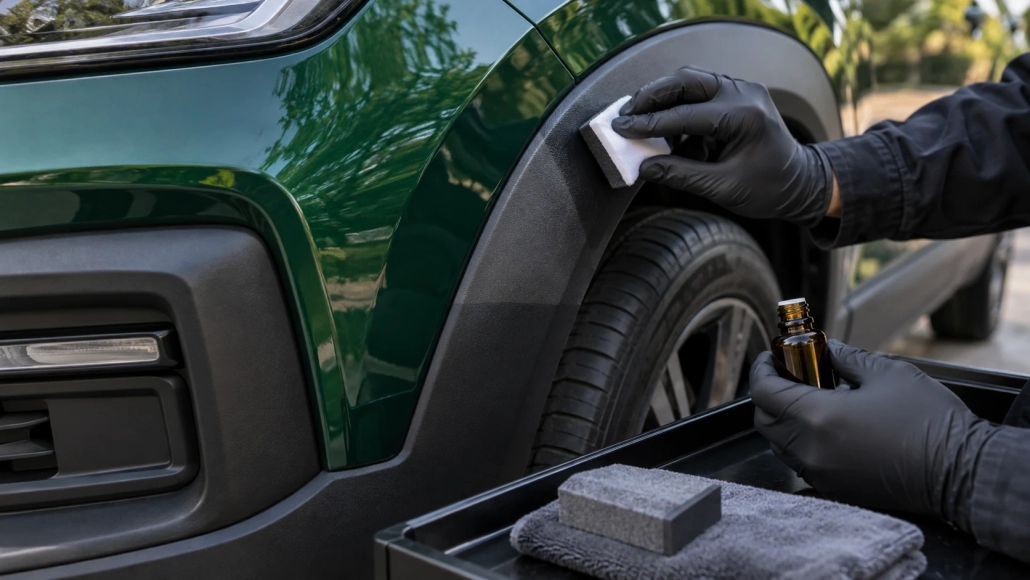
Assess plastic type and condition, remove old dressing appropriately and test for even appearance before coating textured trim.
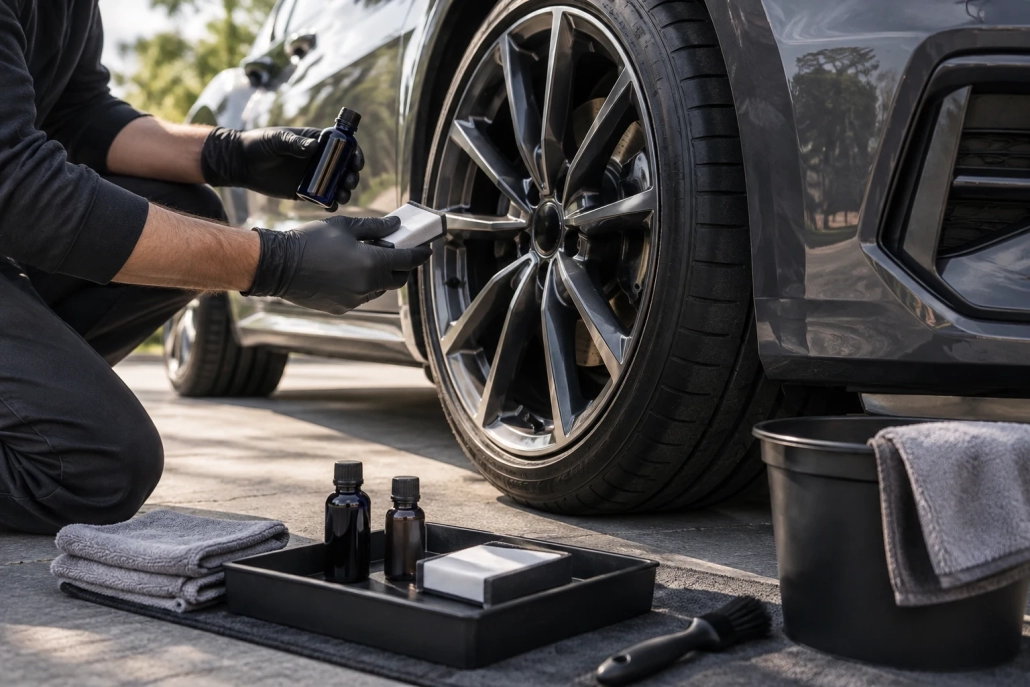
Identify the exposed finish and existing damage before choosing ceramic coating for diamond-cut or machined wheel designs.
Assess gloss, texture and refinishing instructions before applying ceramic coating to powder-coated wheels.

 Ceramic Coating Rocker Panels and Lower Sills