






A full polishing range.
From cutting and one-step correction to final finishing.
Specialist chemistry. Expert application.
 QUARTZ99 / CERAMIC BASE COAT
The foundation of your coating system.
A layerable quartz base coat designed for mechanical protection. Pair it with a suitable top coat to create the final finish.
For application by NANOLAB certified installers only.
Four formulas. Extended working time. Find the coating for your finish.
Explore the BEAST family of ceramic coatings.
Find the coating for each exterior surface.
 PPF & VINYLGLOSSProtection for glossy films and wraps.Discover
 MATTE & SATINMATTEProtection that respects the finish.Discover
 GLASSWINDOWSExplore dedicated glass protection.Discover
 WHEEL PROTECTIONWHEELSA dedicated coating for your wheels.Discover
 TRIM PROTECTIONPLASTICProtection for plastic surfaces.Discover
Dedicated care for the surfaces inside.
 LEATHER SURFACESLEATHERDiscover NANOLAB leather protection.Discover PLASTIC SURFACESPLASTICProtection for interior plastic surfaces.Discover TEXTILE SURFACESFABRICExplore the latest fabric formulation.Discover
Spray protection, maintenance and upcoming wash products.
 MAINTENANCEBEAST 365Explore the BEAST maintenance range.Discover
Next in washing, cleaning & care.
Ceramic protection for boats and yachts.
An easy-to-apply ceramic coating with an established track record on boats and yachts around the world.
Results vary with surface preparation, exposure and maintenance.
Read 50 MARINE guides →Explore MARINEProtection for the surfaces you live with.
A look at what we’re developing.
From cutting and one-step correction to final finishing.
A wider range for professional vehicle care.
Taking shape alongside BEAST & MATRIX.
Practical guidance for your next coating project.
Explore all guides →
Check solar-module factory coatings and cleaning instructions before proposing another layer or claiming an electrical-output benefit.
Updated · NANOLAB Knowledge
Solar-module glass is part of an optical and electrical assembly, often with a factory surface treatment. A coating approved for windows or vehicle paint should not be assumed suitable for it. Any added treatment needs approval for the specific module and evidence relevant to its output and service conditions.
Obtain the module model and current cleaning instructions. Manufacturer requirements can differ by product and factory coating. JinkoSolar's published material illustrates both existing glass-coating care restrictions and purpose-designed factory surface technologies; those do not authorize unrelated aftermarket products.
Do not treat all shiny glass as the same substrate. A layer that changes reflection, transmission or dirt behaviour can affect the system differently from an ordinary window.
Cleaning removes contamination through an approved process. Adding a new coating modifies the surface. A clean-looking panel or stronger water beading does not prove improved electrical output. Output comparisons also need to account for irradiance, temperature, shading and system condition.
Avoid claims of a percentage energy gain from a simple before-and-after photograph or one day's meter reading. A meaningful study requires a suitable design and representative operating data.
Do not apply products to damaged modules or improvise cleaning around exposed electrical components. Use the module manufacturer's procedure and appropriately qualified access and maintenance services. Roof work and electrical equipment create requirements beyond ordinary glass detailing.
For a NANOLAB inquiry, provide the exact module and factory-treatment information and request a documented compatibility assessment. Unless the proposed system is explicitly supported, retain the module manufacturer's maintenance routine. The correct objective is preserving the designed optical and electrical performance, not adding a generic “nano” label to a surface that may already be engineered for that purpose.
Technical references: JinkoSolar: Module manual with cleaning requirements; JinkoSolar: Factory-engineered anti-soiling module technologies.
For product-specific application instructions, consult NANOLAB technical documentation or ask about your surface and intended use.
A simple survey can prevent unsuitable products being applied during a home coating project.
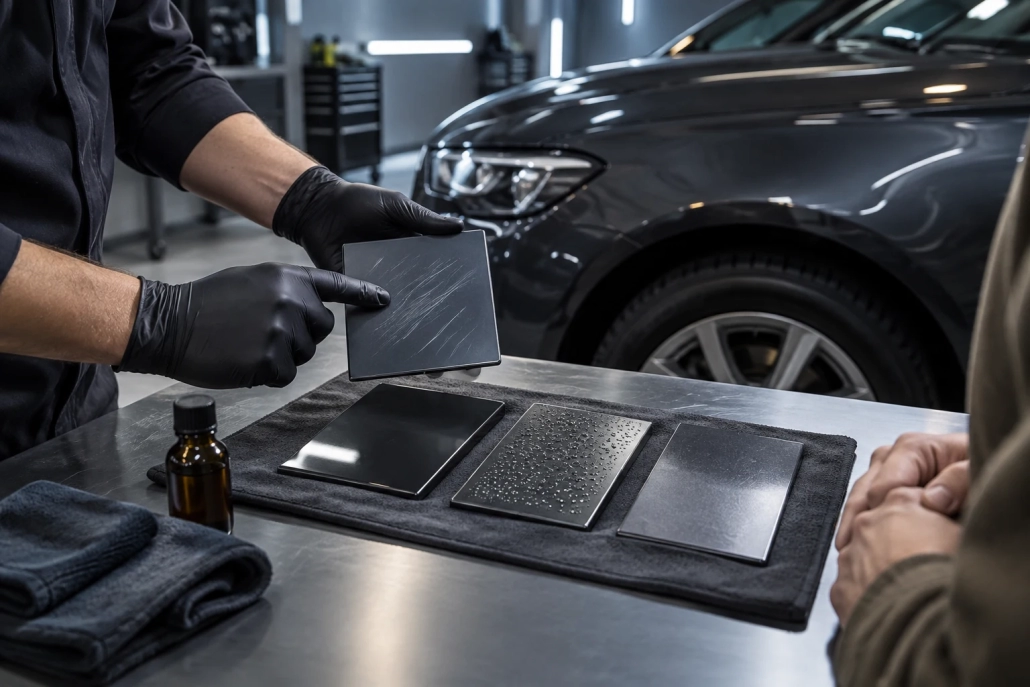
Check whether a laboratory report actually supports a nano coating claim by reviewing sample identity, method, scope, results and the connection to the sold product.
Distinguish laminated smart glass from exposed smart film and confirm surface, edge and electrical-system care before treatment.