






A full polishing range.
From cutting and one-step correction to final finishing.
Specialist chemistry. Expert application.
 QUARTZ99 / CERAMIC BASE COAT
The foundation of your coating system.
A layerable quartz base coat designed for mechanical protection. Pair it with a suitable top coat to create the final finish.
For application by NANOLAB certified installers only.
Four formulas. Extended working time. Find the coating for your finish.
Explore the BEAST family of ceramic coatings.
Find the coating for each exterior surface.
 PPF & VINYLGLOSSProtection for glossy films and wraps.Discover
 MATTE & SATINMATTEProtection that respects the finish.Discover
 GLASSWINDOWSExplore dedicated glass protection.Discover
 WHEEL PROTECTIONWHEELSA dedicated coating for your wheels.Discover
 TRIM PROTECTIONPLASTICProtection for plastic surfaces.Discover
Dedicated care for the surfaces inside.
 LEATHER SURFACESLEATHERDiscover NANOLAB leather protection.Discover PLASTIC SURFACESPLASTICProtection for interior plastic surfaces.Discover TEXTILE SURFACESFABRICExplore the latest fabric formulation.Discover
Spray protection, maintenance and upcoming wash products.
 MAINTENANCEBEAST 365Explore the BEAST maintenance range.Discover
Next in washing, cleaning & care.
Ceramic protection for boats and yachts.
An easy-to-apply ceramic coating with an established track record on boats and yachts around the world.
Results vary with surface preparation, exposure and maintenance.
Read 50 MARINE guides →Explore MARINEProtection for the surfaces you live with.
A look at what we’re developing.
From cutting and one-step correction to final finishing.
A wider range for professional vehicle care.
Taking shape alongside BEAST & MATRIX.
Practical guidance for your next coating project.
Explore all guides →
A trade name can be useful for ordering, but it may not explain the material or exposed finish to the next installer. Keep both the commercial name and the available technical description in the care record.
Updated · NANOLAB Knowledge
A vehicle or furniture range can use different upholstery options under similar marketing language. Future repairs or replacement panels may add another variation. Retaining the exact specification helps technical support identify the relevant instructions and reduces the chance that a familiar-sounding name is treated as a universal material category.
Illustrative example: a workshop records only premium leather on a service sheet. A later technician cannot determine which finish was installed or whether the driver's seat was repaired. Adding the actual upholstery code and repair reference makes the next decision more traceable.
Do not invent a technical classification from a marketing term or a photograph. If the supplier cannot confirm the material, preserve that uncertainty and request an appropriate assessment. A complete record supports a recommendation; it does not itself establish coating suitability.
Ask NANOLAB about the exact product and intended use. Use the current product documentation for formulation-specific instructions.
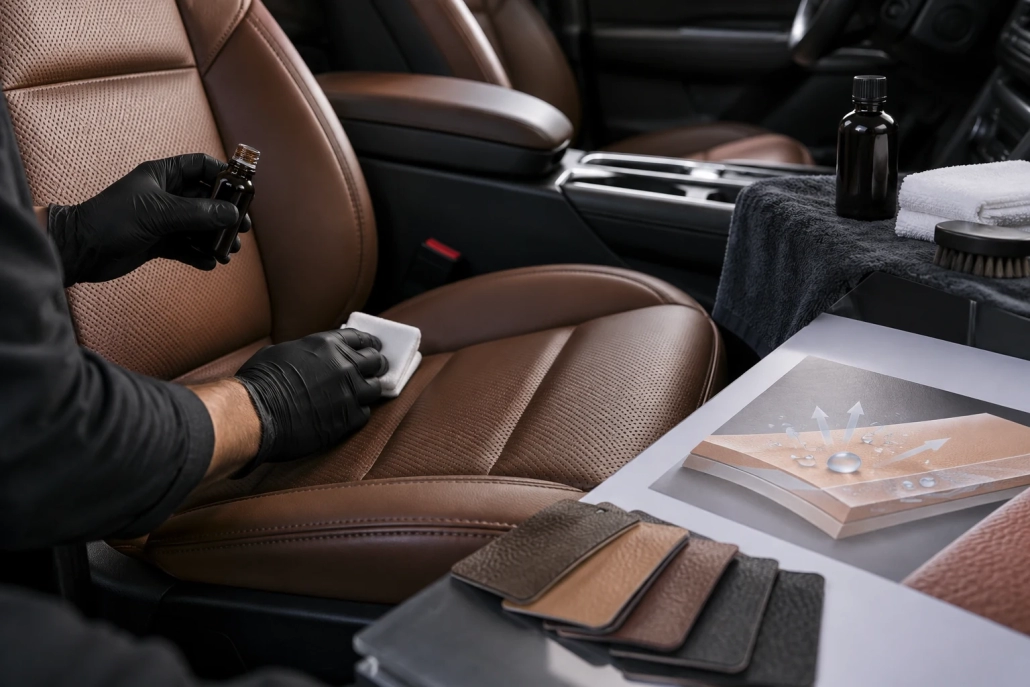
Identify the upholstery finish, clean without over-wetting and test a dedicated interior treatment before applying it across the seats.
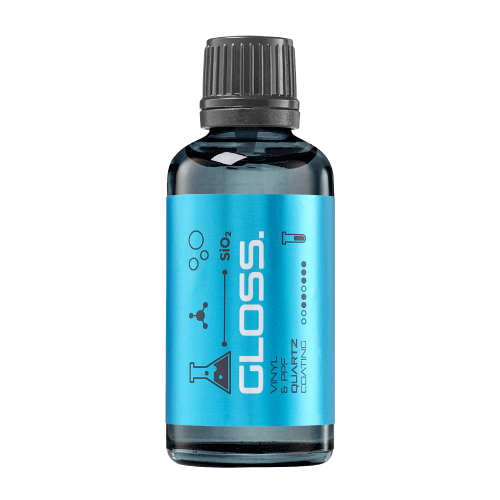
A partially wrapped vehicle contains different substrates within one visual area. Preparation and product selection should respect those boundaries.
A suede-like appearance does not identify a surface as leather or Alcantara. Establish the actual material before choosing a cleaner or protective treatment, because a familiar texture is not a reliable substitute for the manufacturer's care instructions.