






A full polishing range.
From cutting and one-step correction to final finishing.
Specialist chemistry. Expert application.
 QUARTZ99 / CERAMIC BASE COAT
The foundation of your coating system.
A layerable quartz base coat designed for mechanical protection. Pair it with a suitable top coat to create the final finish.
For application by NANOLAB certified installers only.
Four formulas. Extended working time. Find the coating for your finish.
Explore the BEAST family of ceramic coatings.
Find the coating for each exterior surface.
 PPF & VINYLGLOSSProtection for glossy films and wraps.Discover
 MATTE & SATINMATTEProtection that respects the finish.Discover
 GLASSWINDOWSExplore dedicated glass protection.Discover
 WHEEL PROTECTIONWHEELSA dedicated coating for your wheels.Discover
 TRIM PROTECTIONPLASTICProtection for plastic surfaces.Discover
Dedicated care for the surfaces inside.
 LEATHER SURFACESLEATHERDiscover NANOLAB leather protection.Discover PLASTIC SURFACESPLASTICProtection for interior plastic surfaces.Discover TEXTILE SURFACESFABRICExplore the latest fabric formulation.Discover
Spray protection, maintenance and upcoming wash products.
 MAINTENANCEBEAST 365Explore the BEAST maintenance range.Discover
Next in washing, cleaning & care.
Ceramic protection for boats and yachts.
An easy-to-apply ceramic coating with an established track record on boats and yachts around the world.
Results vary with surface preparation, exposure and maintenance.
Read 50 MARINE guides →Explore MARINEProtection for the surfaces you live with.
A look at what we’re developing.
From cutting and one-step correction to final finishing.
A wider range for professional vehicle care.
Taking shape alongside BEAST & MATRIX.
Practical guidance for your next coating project.
Explore all guides →
Test label readability after realistic handling and approved wiping so essential coating information remains usable throughout normal service.
Updated · NANOLAB Knowledge
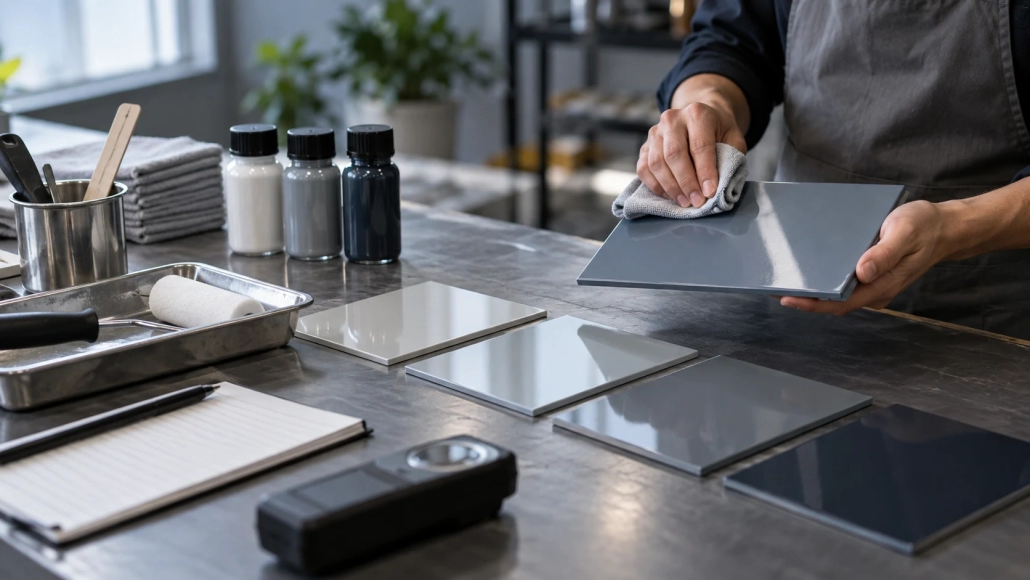
A label approved from a clean artwork proof may become difficult to read after dispensing, handling and wiping. Evaluate the printed label on the final package under the conditions it is expected to encounter.
Identify product name, batch code, directions and required safety information. Include small print and symbols, not only the brand mark. Check the final print size and contrast on the curved bottle.
Use representative packaging and the actual product with appropriate precautions. Specify the handling, incidental contact and permitted wipe method. Do not invent an aggressive solvent test and call it ordinary use unless that exposure is part of the intended requirement.
| Observation | Practical consequence |
|---|---|
| Ink transfer | Characters may disappear or smear |
| Label lifting | Information may detach |
| Surface haze | Contrast may fall |
| Code damage | Traceability may be lost |
Test the actual label stock, ink, finish, adhesive and bottle, including relevant ageing conditions. A change to any component may warrant review. Retain photographs of accepted and failed examples with the method. If decorative printing survives but the batch code becomes unreadable, the package still has a significant usability problem. Correct the specific weakness and verify it before releasing the revised packaging.
Discuss your private-label coating project. For application and care, use the current instructions for the exact product.
Compare private label coating samples using consistent preparation, application notes, finish checks and aftercare observations.
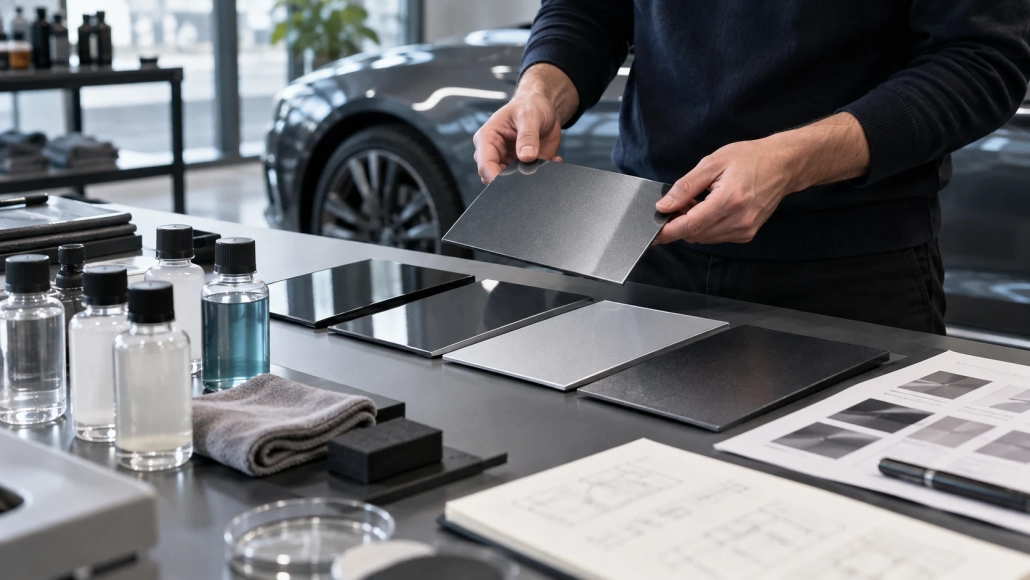
Review product identification, instructions and label contrast on the actual bottle before approving artwork for a coating range.
Check batch-code durability on both bottles and cartons, and verify that the code remains readable after expected handling.
 Batch-Code Rub Checks for Coating Bottles and Outer Cartons