






A full polishing range.
From cutting and one-step correction to final finishing.
Specialist chemistry. Expert application.
 QUARTZ99 / CERAMIC BASE COAT
The foundation of your coating system.
A layerable quartz base coat designed for mechanical protection. Pair it with a suitable top coat to create the final finish.
For application by NANOLAB certified installers only.
Four formulas. Extended working time. Find the coating for your finish.
Explore the BEAST family of ceramic coatings.
Find the coating for each exterior surface.
 PPF & VINYLGLOSSProtection for glossy films and wraps.Discover
 MATTE & SATINMATTEProtection that respects the finish.Discover
 GLASSWINDOWSExplore dedicated glass protection.Discover
 WHEEL PROTECTIONWHEELSA dedicated coating for your wheels.Discover
 TRIM PROTECTIONPLASTICProtection for plastic surfaces.Discover
Dedicated care for the surfaces inside.
 LEATHER SURFACESLEATHERDiscover NANOLAB leather protection.Discover PLASTIC SURFACESPLASTICProtection for interior plastic surfaces.Discover TEXTILE SURFACESFABRICExplore the latest fabric formulation.Discover
Spray protection, maintenance and upcoming wash products.
 MAINTENANCEBEAST 365Explore the BEAST maintenance range.Discover
Next in washing, cleaning & care.
Ceramic protection for boats and yachts.
An easy-to-apply ceramic coating with an established track record on boats and yachts around the world.
Results vary with surface preparation, exposure and maintenance.
Read 50 MARINE guides →Explore MARINEProtection for the surfaces you live with.
A look at what we’re developing.
From cutting and one-step correction to final finishing.
A wider range for professional vehicle care.
Taking shape alongside BEAST & MATRIX.
Practical guidance for your next coating project.
Explore all guides →
Compare drying towels by measured water pickup per dry mass, accepted finish and handling rather than towel weight or size alone.
Updated · NANOLAB Knowledge
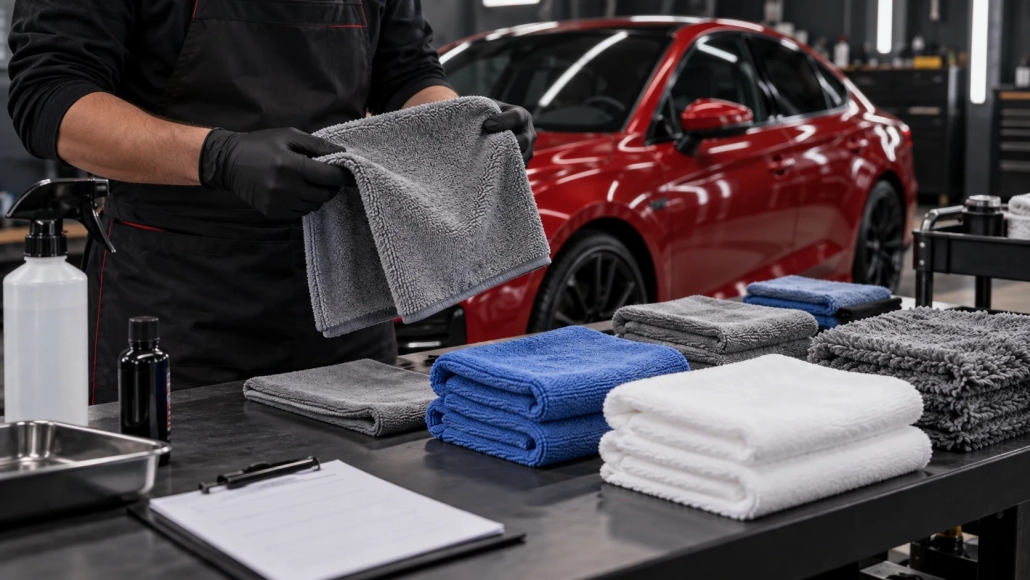
A larger or heavier towel may hold more water in total without being more efficient for a particular drying task. Measure both total pickup and pickup relative to dry towel mass, then check how the towel performs on the actual surface.
Condition towels consistently after an appropriate wash and dry process. Record dry mass, expose them to a defined water-pickup procedure, then weigh promptly using the same draining or handling rule. Avoid comparing one dripping towel with another that has been allowed to drain.
Water pickup = wet mass − dry mass.
Pickup ratio = water pickup / dry mass.
| Illustrative towel | Dry mass | Wet mass | Pickup ratio |
|---|---|---|---|
| A | 200 g | 800 g | 3.0 g water/g towel |
| B | 300 g | 1,050 g | 2.5 g water/g towel |
B holds more water in total in this example, while A holds more relative to its dry mass. Neither result alone identifies the better towel for a vehicle.
Assess residual streaks, number of passes, ease of handling and whether the towel remains suitable around contours. Use a clean compatible surface and gentle technique. Do not drag added weights across paint to simulate pressure.
Compare towels after consistent laundering cycles and storage. A new-towel result may not represent workshop service. Keep coating-application towels and contaminated cleaning cloths out of the drying-towel trial.
A smaller towel with good pickup may suit tight areas, while another format may suit large panels. The useful decision includes the number of towels needed per accepted vehicle, laundry burden and replacement rate.
Report the test method with the numbers. Without a consistent wetting and weighing procedure, a water-capacity figure is mainly a description of how the test was performed.
Ask NANOLAB about your surface and intended use. For application and care, use the current instructions for the exact product.
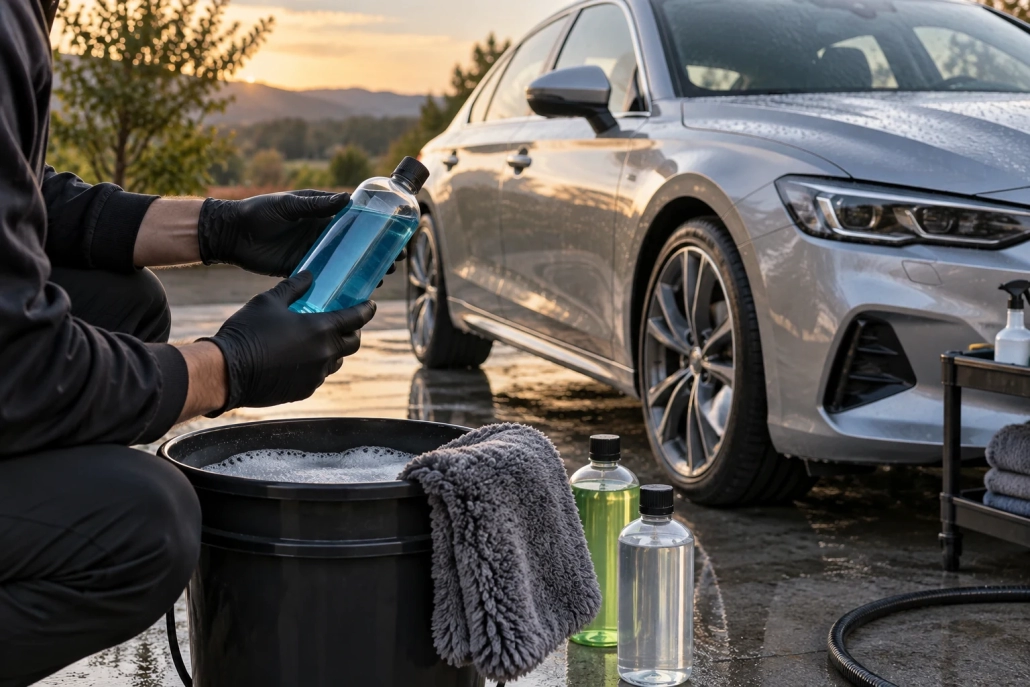
Choose a compatible wash product, use its dilution correctly and avoid judging cleaning suitability from a ceramic label or foam thickness alone.
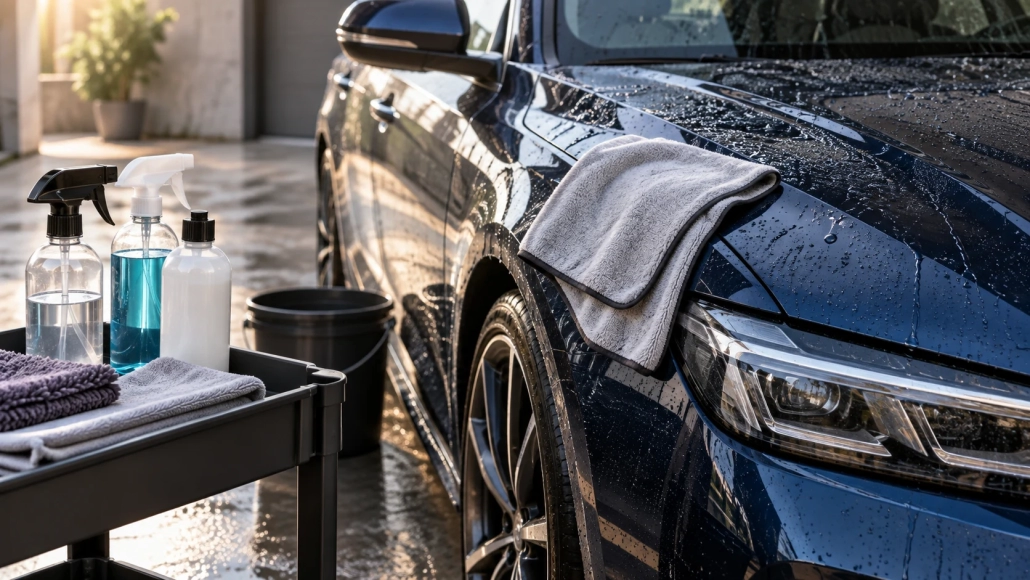
Distinguish towel residue, incomplete rinsing and drying-aid buildup before assuming that streaks mean a problem with the ceramic coating.
Investigate a change in microfiber performance with a small laundry comparison that separates washing, drying and storage variables.

 A Microfiber Laundry Trial: Find Whether the Wash or Drying Stage Changed