






A full polishing range.
From cutting and one-step correction to final finishing.
Specialist chemistry. Expert application.
 QUARTZ99 / CERAMIC BASE COAT
The foundation of your coating system.
A layerable quartz base coat designed for mechanical protection. Pair it with a suitable top coat to create the final finish.
For application by NANOLAB certified installers only.
Four formulas. Extended working time. Find the coating for your finish.
Explore the BEAST family of ceramic coatings.
Find the coating for each exterior surface.
 PPF & VINYLGLOSSProtection for glossy films and wraps.Discover
 MATTE & SATINMATTEProtection that respects the finish.Discover
 GLASSWINDOWSExplore dedicated glass protection.Discover
 WHEEL PROTECTIONWHEELSA dedicated coating for your wheels.Discover
 TRIM PROTECTIONPLASTICProtection for plastic surfaces.Discover
Dedicated care for the surfaces inside.
 LEATHER SURFACESLEATHERDiscover NANOLAB leather protection.Discover PLASTIC SURFACESPLASTICProtection for interior plastic surfaces.Discover TEXTILE SURFACESFABRICExplore the latest fabric formulation.Discover
Spray protection, maintenance and upcoming wash products.
 MAINTENANCEBEAST 365Explore the BEAST maintenance range.Discover
Next in washing, cleaning & care.
Ceramic protection for boats and yachts.
An easy-to-apply ceramic coating with an established track record on boats and yachts around the world.
Results vary with surface preparation, exposure and maintenance.
Read 50 MARINE guides →Explore MARINEProtection for the surfaces you live with.
A look at what we’re developing.
From cutting and one-step correction to final finishing.
A wider range for professional vehicle care.
Taking shape alongside BEAST & MATRIX.
Practical guidance for your next coating project.
Explore all guides →
Use clean glass witness panels to screen rinse-water and drying residue while recognising that they do not prove every vehicle surface is clean.
Updated · NANOLAB Knowledge
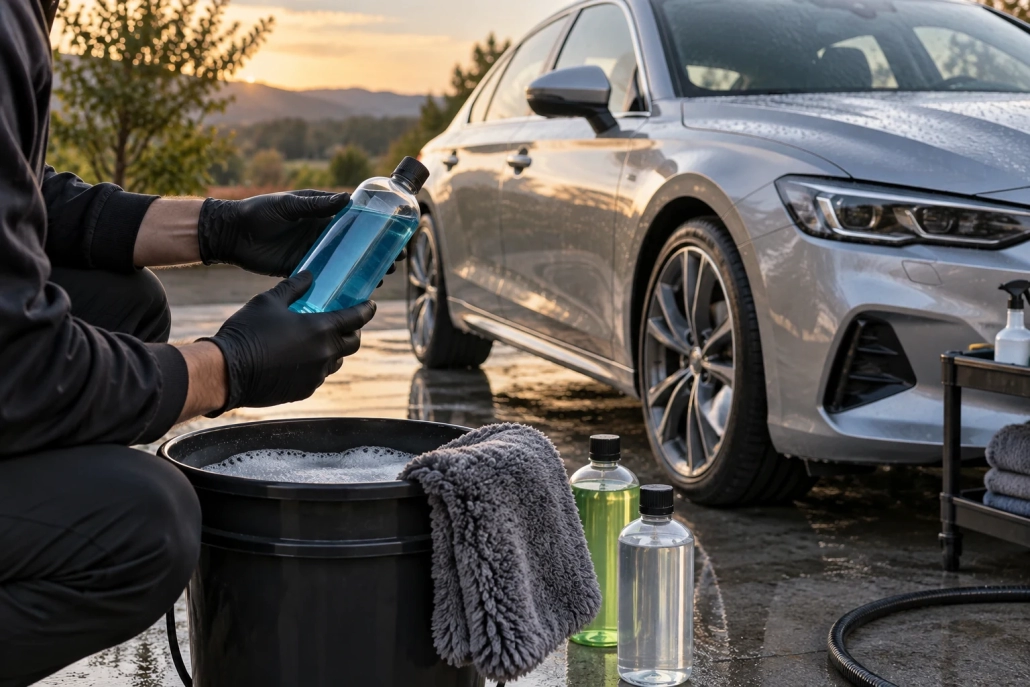
A clean glass witness panel can make rinse and drying residues easier to observe. It is a screening tool for the wash process, not a universal cleanliness certificate for paint, film or trim.
Use suitable plain glass with a known preparation method and no unknown treatment. Confirm its baseline appearance under fixed lighting. Keep one prepared reference protected and expose another sample to the rinse or drying stage being investigated.
| Screening question | Comparison |
|---|---|
| Does the rinse source leave visible residue? | Controlled water exposure and drying |
| Does the towel transfer material? | Matched panels with different documented towels |
| Is the hose path involved? | Source sample versus delivered water sample |
Keep volume, panel orientation, waiting time and viewing conditions comparable. Handle the glass safely and avoid touching the evaluated area.
If one panel develops a film while the protected reference remains clear, the exposed process deserves review. The observation does not identify the residue’s chemical composition. Use the process record to decide whether water, containers, hoses or tools are the next variable to isolate.
No visible mark does not prove the absence of all residue. The method has a visual detection limit and may not reproduce interactions with the actual coating or contamination. It should complement, not replace, inspection of the vehicle.
For illustration, clean glass may reveal a towel smear that was difficult to see on a light-coloured car. Repeating the comparison with a verified clean towel can strengthen the diagnosis without experimenting on customer paint.
Photograph the panels under the same light and record the stage, materials and date. Replace or reprepare witness panels consistently so an old residue does not become the baseline for the next test.
The benefit is a controlled, low-complexity check that narrows an investigation. It should answer a specific rinse or drying question rather than support a broad claim of chemical purity.
Ask NANOLAB about your surface and intended use. For application and care, use the current instructions for the exact product.
Choose a compatible wash product, use its dilution correctly and avoid judging cleaning suitability from a ceramic label or foam thickness alone.
Water quality at the treatment outlet does not by itself describe water after storage and delivery. If a detailing operation uses a tank, include that stage in the sampling plan when investigating inconsistent rinse results.
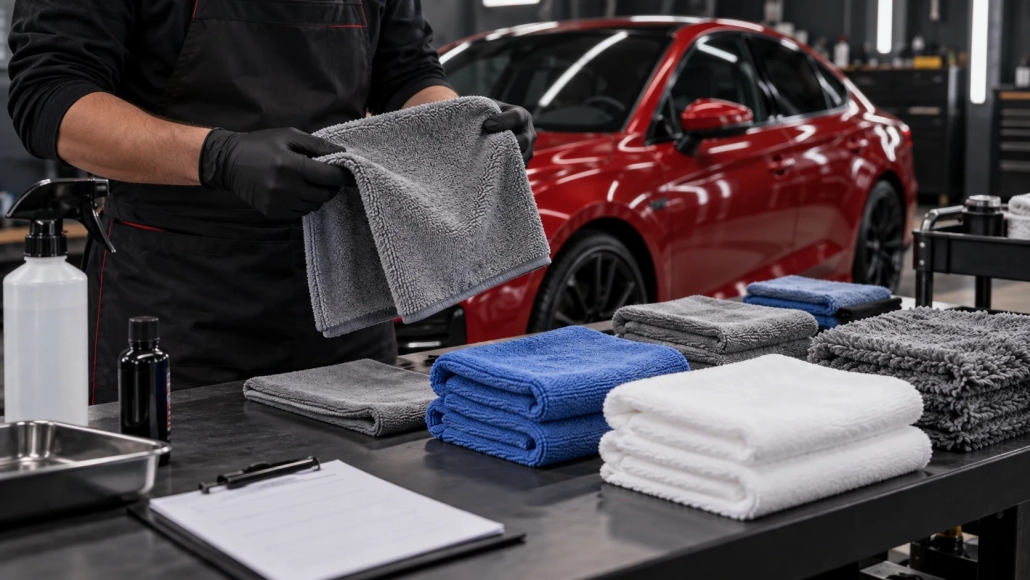
Compare drying towels by measured water pickup per dry mass, accepted finish and handling rather than towel weight or size alone.

 Drying Towel Comparison: Measure Water Pickup per Dry Towel Mass