






A full polishing range.
From cutting and one-step correction to final finishing.
Specialist chemistry. Expert application.
 QUARTZ99 / CERAMIC BASE COAT
The foundation of your coating system.
A layerable quartz base coat designed for mechanical protection. Pair it with a suitable top coat to create the final finish.
For application by NANOLAB certified installers only.
Four formulas. Extended working time. Find the coating for your finish.
Explore the BEAST family of ceramic coatings.
Find the coating for each exterior surface.
 PPF & VINYLGLOSSProtection for glossy films and wraps.Discover
 MATTE & SATINMATTEProtection that respects the finish.Discover
 GLASSWINDOWSExplore dedicated glass protection.Discover
 WHEEL PROTECTIONWHEELSA dedicated coating for your wheels.Discover
 TRIM PROTECTIONPLASTICProtection for plastic surfaces.Discover
Dedicated care for the surfaces inside.
 LEATHER SURFACESLEATHERDiscover NANOLAB leather protection.Discover PLASTIC SURFACESPLASTICProtection for interior plastic surfaces.Discover TEXTILE SURFACESFABRICExplore the latest fabric formulation.Discover
Spray protection, maintenance and upcoming wash products.
 MAINTENANCEBEAST 365Explore the BEAST maintenance range.Discover
Next in washing, cleaning & care.
Ceramic protection for boats and yachts.
An easy-to-apply ceramic coating with an established track record on boats and yachts around the world.
Results vary with surface preparation, exposure and maintenance.
Read 50 MARINE guides →Explore MARINEProtection for the surfaces you live with.
A look at what we’re developing.
From cutting and one-step correction to final finishing.
A wider range for professional vehicle care.
Taking shape alongside BEAST & MATRIX.
Practical guidance for your next coating project.
Explore all guides →
Diagnose streaks and residue after increasing shampoo concentration by checking dose, rinsing, water and drying tools separately.
Updated · NANOLAB Knowledge
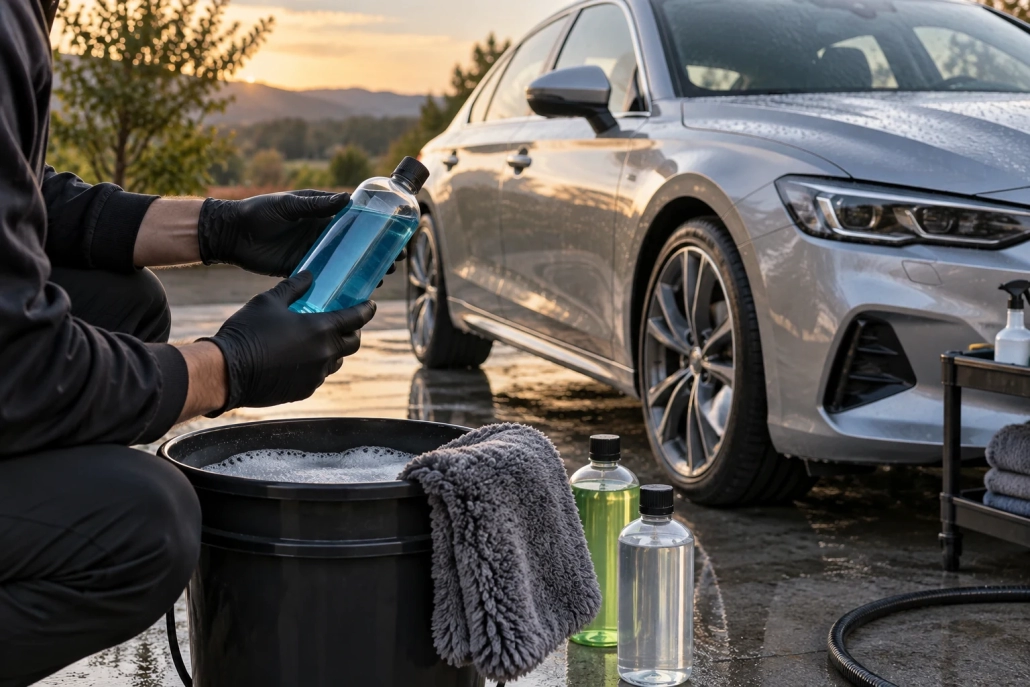
When a wash leaves streaks, adding more shampoo can make the result worse. The problem may be incomplete rinsing or product residue rather than insufficient cleaning power. Diagnose the stage that failed before changing concentration again.
Check the label’s dilution definition and measure both product and water. Confirm whether the instruction refers to concentrate-to-water ratio, final volume or equipment-delivered concentration. A familiar capful is not a reliable measurement when caps or products change.
| Observation | Useful check |
|---|---|
| Contamination remains in specific areas | Whether a suitable targeted cleaner is needed |
| Broad smearing after drying | Rinse completeness and product carryover |
| Marks follow towel movement | Towel condition and laundry residue |
| Spots remain after evaporation | Water supply and drying method |
Trial the recommended concentration with controlled rinsing and a clean suitable drying towel. Compare with the previous process on representative areas. If you change dose, water supply and towel simultaneously, a better result will not reveal which change mattered.
A stronger mixture appears to improve foam but increases the rinse time needed for an acceptable finish. The workshop previously judged only the wash stage. Recording the final dry result shows that the higher dose did not improve the complete task.
This does not mean every streak is excess shampoo. Some products intentionally deposit protective material, and some contamination needs a different process. Product purpose and compatibility remain part of the diagnosis.
Do not improvise acid, alkali or solvent additions to “balance” a shampoo mixture. Choose a suitable product and approved method for the identified contamination. Confirm surface compatibility, especially on matte finishes, film and sensitive trim.
The best dose is the one specified for an effective, compatible process. More concentrate is useful only when the complete cleaning result supports it.
Ask NANOLAB about your surface and intended use. For application and care, use the current instructions for the exact product.
Choose a compatible wash product, use its dilution correctly and avoid judging cleaning suitability from a ceramic label or foam thickness alone.
Understand the difference between a shampoo that maintains a ceramic coating and a ceramic shampoo designed to leave a protective effect after washing.
Use clean glass witness panels to screen rinse-water and drying residue while recognising that they do not prove every vehicle surface is clean.
 A Rinse-Quality Test Using Clean Glass Witness Panels