






A full polishing range.
From cutting and one-step correction to final finishing.
Specialist chemistry. Expert application.
 QUARTZ99 / CERAMIC BASE COAT
The foundation of your coating system.
A layerable quartz base coat designed for mechanical protection. Pair it with a suitable top coat to create the final finish.
For application by NANOLAB certified installers only.
Four formulas. Extended working time. Find the coating for your finish.
Explore the BEAST family of ceramic coatings.
Find the coating for each exterior surface.
 PPF & VINYLGLOSSProtection for glossy films and wraps.Discover
 MATTE & SATINMATTEProtection that respects the finish.Discover
 GLASSWINDOWSExplore dedicated glass protection.Discover
 WHEEL PROTECTIONWHEELSA dedicated coating for your wheels.Discover
 TRIM PROTECTIONPLASTICProtection for plastic surfaces.Discover
Dedicated care for the surfaces inside.
 LEATHER SURFACESLEATHERDiscover NANOLAB leather protection.Discover PLASTIC SURFACESPLASTICProtection for interior plastic surfaces.Discover TEXTILE SURFACESFABRICExplore the latest fabric formulation.Discover
Spray protection, maintenance and upcoming wash products.
 MAINTENANCEBEAST 365Explore the BEAST maintenance range.Discover
Next in washing, cleaning & care.
Ceramic protection for boats and yachts.
An easy-to-apply ceramic coating with an established track record on boats and yachts around the world.
Results vary with surface preparation, exposure and maintenance.
Read 50 MARINE guides →Explore MARINEProtection for the surfaces you live with.
A look at what we’re developing.
From cutting and one-step correction to final finishing.
A wider range for professional vehicle care.
Taking shape alongside BEAST & MATRIX.
Practical guidance for your next coating project.
Explore all guides →
Plan coating work around the product's environmental requirements and check panel temperature, airflow and changing conditions.
Updated · NANOLAB Knowledge
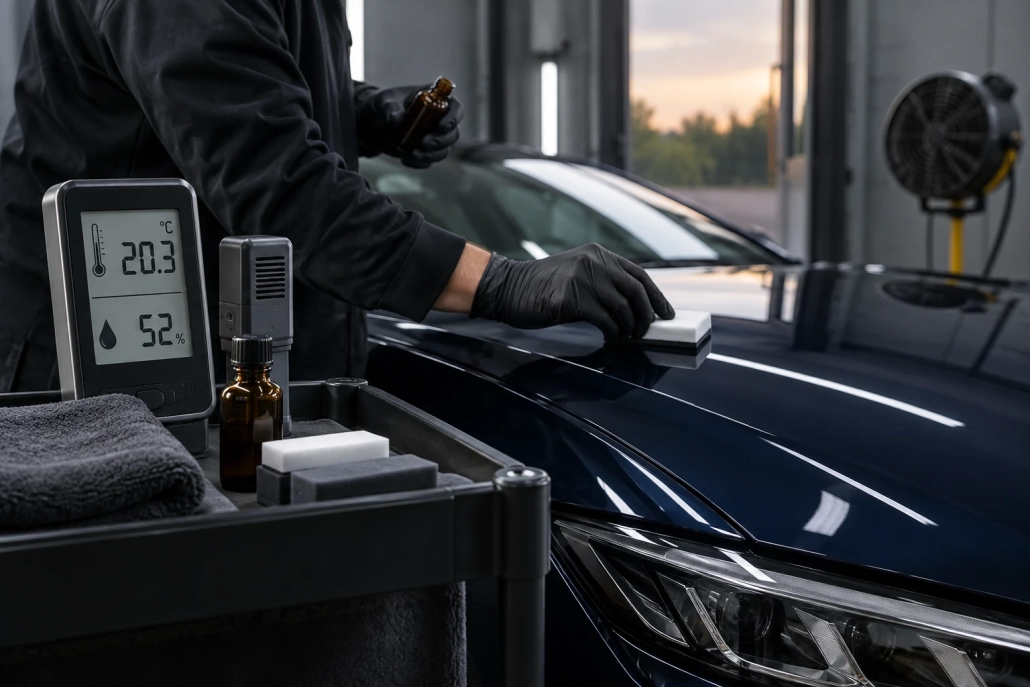
Room temperature does not tell the whole story. A panel recently exposed to sun can remain warmer than the air, while a cold vehicle brought indoors may behave differently from one already acclimatised. Humidity and airflow also affect application and drying behaviour.
Read the selected product’s permitted conditions. There is no universal temperature-and-humidity rule that safely replaces each formulation’s instructions.
MATRIX is described as offering extended workability across demanding conditions. BEAST PRO and QUARTZ99 specify a controlled, air-conditioned application area with low temperature and humidity and no direct wind. Those differences matter when choosing a workspace.
Even a forgiving formula still needs clean surfaces, proper tools and inspection. Outdoor work can introduce dust and changing panel temperatures that affect the overall process.
Record relevant conditions at the start and reassess if sunlight, ventilation or weather changes. Use a small test section to confirm spreading and levelling. If condensation, contamination or unstable application behaviour appears, pause until the cause is resolved. A good environment is one that meets the product’s requirements and lets the installer complete every stage predictably.
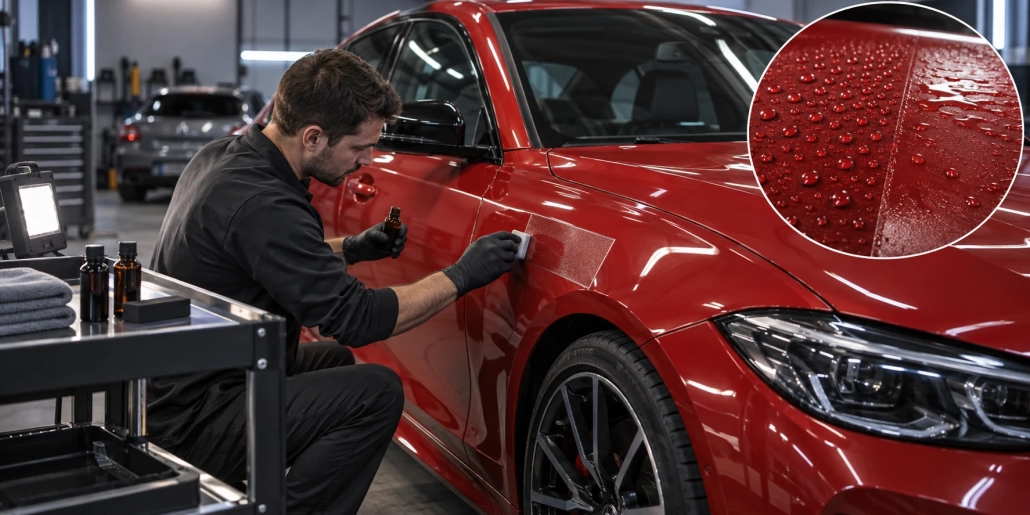
Use a small test area to verify compatibility, finish change and levelling before applying a coating across the vehicle.
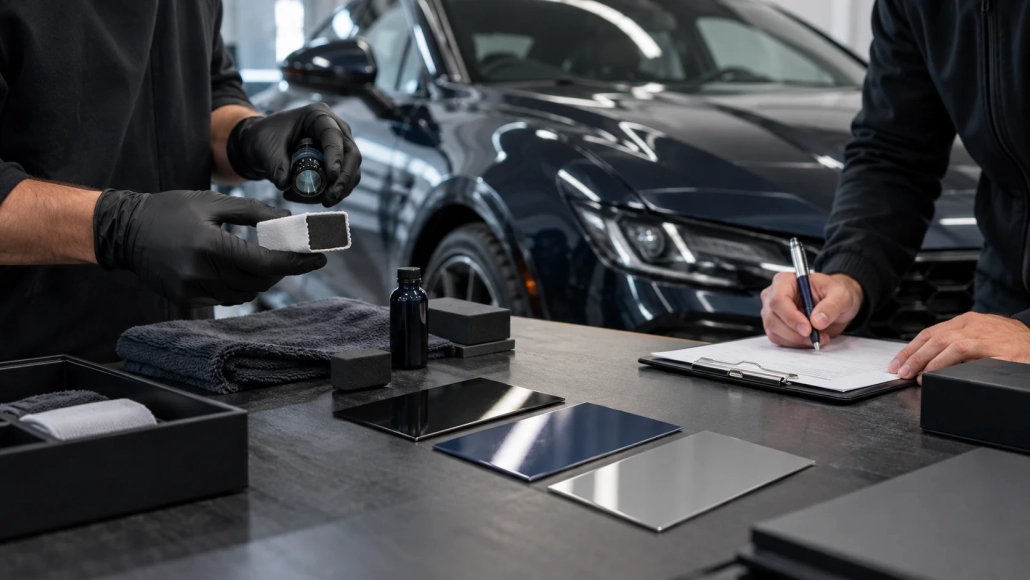
Review BEAST PRO's installer requirement, controlled application conditions and care milestones before planning a professional clear-coat job.
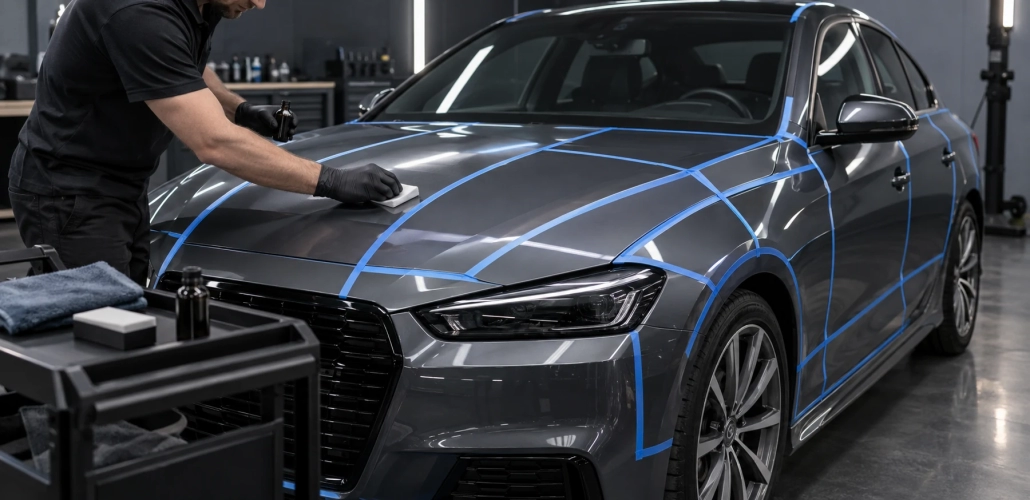
Create a practical panel map that prevents missed areas, excessive overlap and inconsistent levelling during coating application.
Take useful workshop temperature and humidity readings by placing the meter near the work and recording changes that affect application planning.
Allow a vehicle to reach suitable working conditions and assess the actual surfaces before applying ceramic coating after sun exposure.

 Removing Bird Droppings from Ceramic-Coated Paint