






A full polishing range.
From cutting and one-step correction to final finishing.
Specialist chemistry. Expert application.
 QUARTZ99 / CERAMIC BASE COAT
The foundation of your coating system.
A layerable quartz base coat designed for mechanical protection. Pair it with a suitable top coat to create the final finish.
For application by NANOLAB certified installers only.
Four formulas. Extended working time. Find the coating for your finish.
Explore the BEAST family of ceramic coatings.
Find the coating for each exterior surface.
 PPF & VINYLGLOSSProtection for glossy films and wraps.Discover
 MATTE & SATINMATTEProtection that respects the finish.Discover
 GLASSWINDOWSExplore dedicated glass protection.Discover
 WHEEL PROTECTIONWHEELSA dedicated coating for your wheels.Discover
 TRIM PROTECTIONPLASTICProtection for plastic surfaces.Discover
Dedicated care for the surfaces inside.
 LEATHER SURFACESLEATHERDiscover NANOLAB leather protection.Discover PLASTIC SURFACESPLASTICProtection for interior plastic surfaces.Discover TEXTILE SURFACESFABRICExplore the latest fabric formulation.Discover
Spray protection, maintenance and upcoming wash products.
 MAINTENANCEBEAST 365Explore the BEAST maintenance range.Discover
Next in washing, cleaning & care.
Ceramic protection for boats and yachts.
An easy-to-apply ceramic coating with an established track record on boats and yachts around the world.
Results vary with surface preparation, exposure and maintenance.
Read 50 MARINE guides →Explore MARINEProtection for the surfaces you live with.
A look at what we’re developing.
From cutting and one-step correction to final finishing.
A wider range for professional vehicle care.
Taking shape alongside BEAST & MATRIX.
Practical guidance for your next coating project.
Explore all guides →
Recognise excess coating residue and understand why the appropriate correction depends on the product and how far curing has progressed.
Updated · NANOLAB Knowledge
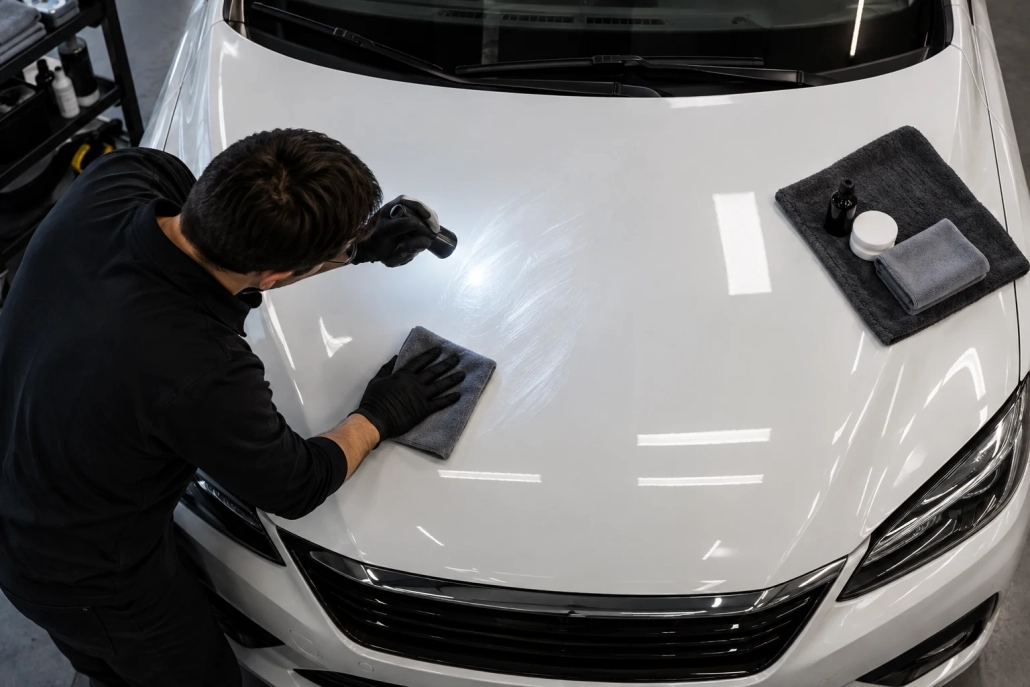
High spots are areas of excess or uneven coating that remain visible after application. They may appear as darker patches, rainbow-like areas or streaks when viewed at an angle. Dark paint often reveals them readily, but lighter finishes can hide them until lighting changes.
Do not assume every mark is a high spot. Polishing haze, water deposits and towel residue can create different problems that need separate treatment.
Fresh residue may respond to the product’s approved levelling or recovery process. Once material has cured, correction may require controlled polishing and local reapplication. The transition is formula-dependent; there is no universal rescue solvent or waiting time.
Avoid scrubbing a stubborn patch or spreading more coating over it without confirming the method. That can enlarge the area needing correction.
Use a test section, appropriate lighting and clean towels. Inspect edges and curves before completing each work area. Replace loaded towels and revise section size when conditions change. Record any correction and check the finish again before release. Early identification makes the response more manageable and helps distinguish application residue from later contamination.
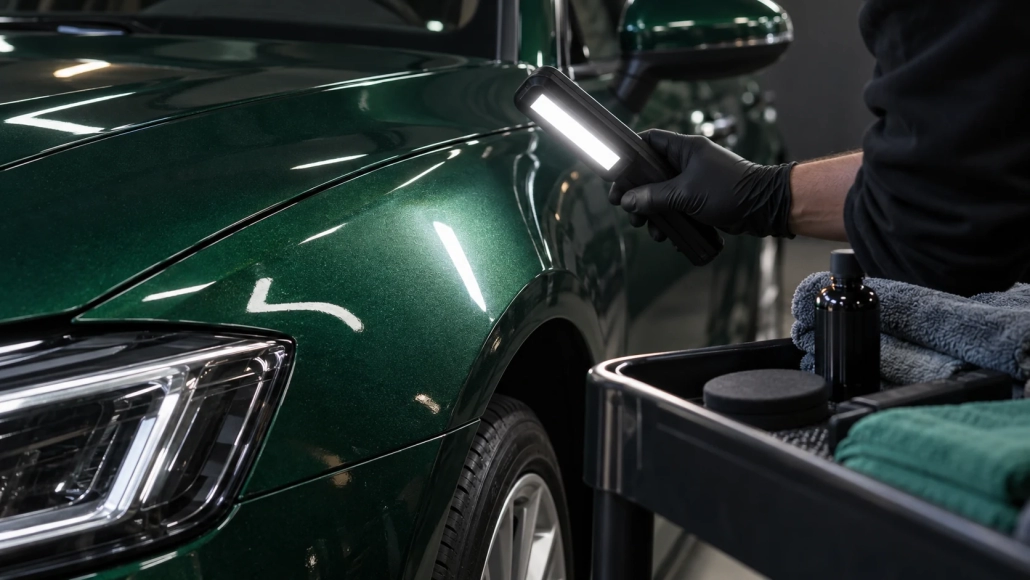
Use complementary lighting and viewing angles to reveal scratches, haze and coating residue without relying on one bright reflection.
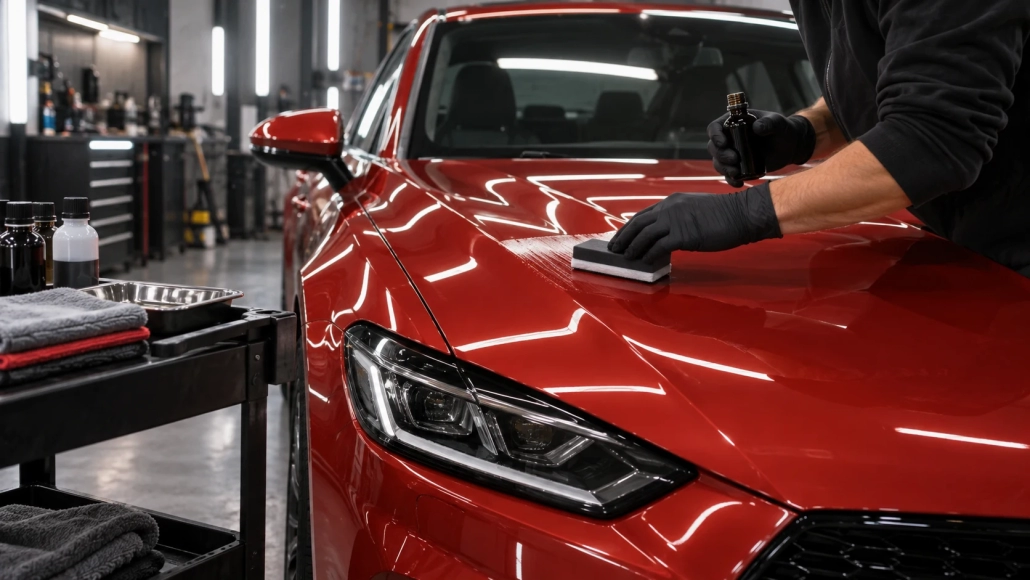
Learn how to remove excess coating, recognise streaks and high spots, and use clean towels without confusing hard wiping with effective levelling.
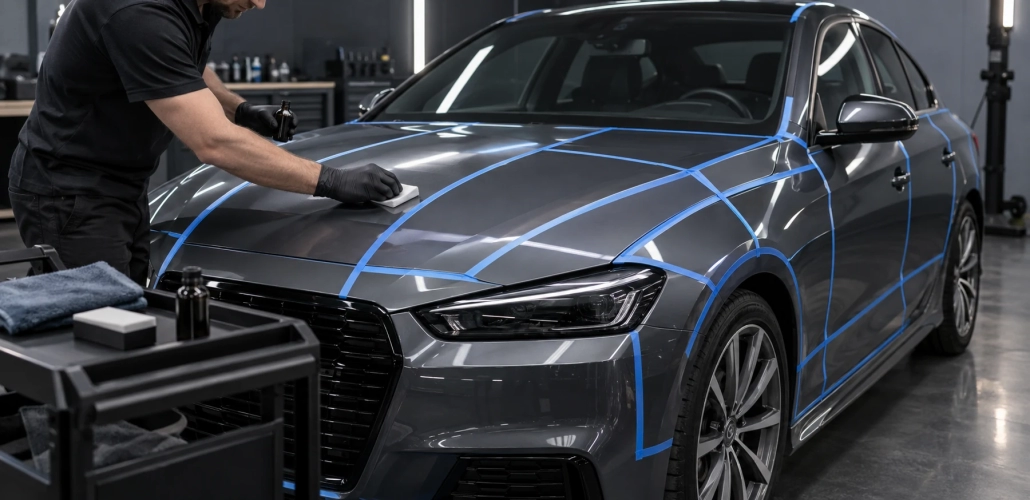
Create a practical panel map that prevents missed areas, excessive overlap and inconsistent levelling during coating application.

 Ceramic Coating Care in Winter: Why Rain Is Not a Wash