


A full polishing range.
From cutting and one-step correction to final finishing.
Specialist chemistry. Expert application.
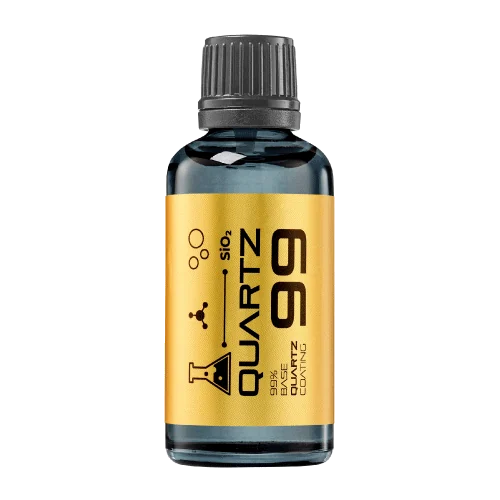 QUARTZ99 / CERAMIC BASE COAT
The foundation of your coating system.
A layerable quartz base coat designed for mechanical protection. Pair it with a suitable top coat to create the final finish.
For application by NANOLAB certified installers only.
Four formulas. Extended working time. Find the coating for your finish.
Explore the BEAST family of ceramic coatings.
Find the coating for each exterior surface.
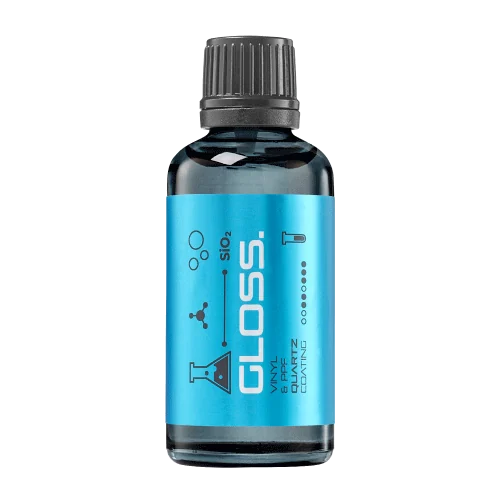 PPF & VINYLGLOSSProtection for glossy films and wraps.Discover
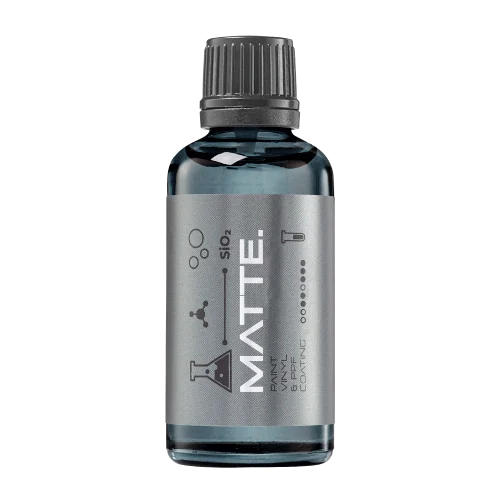 MATTE & SATINMATTEProtection that respects the finish.Discover
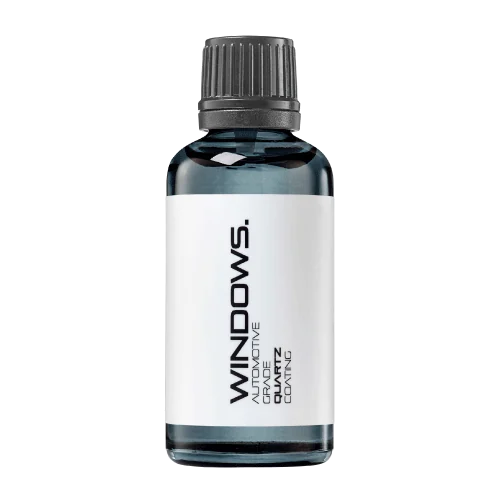 GLASSWINDOWSExplore dedicated glass protection.Discover
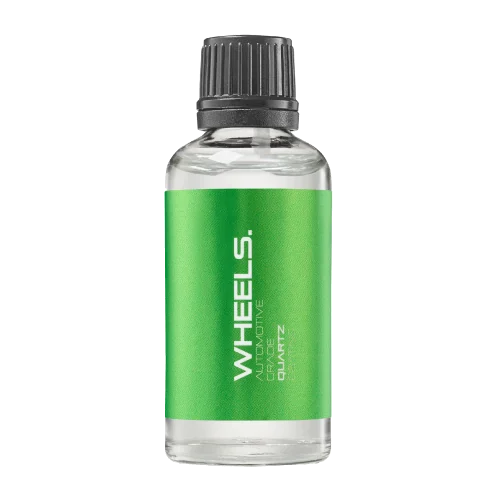 WHEEL PROTECTIONWHEELSA dedicated coating for your wheels.Discover
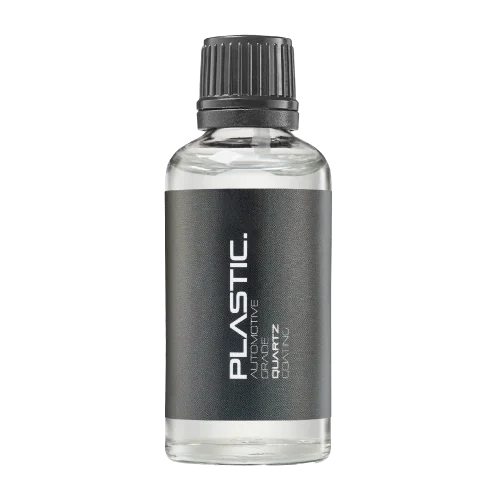 TRIM PROTECTIONPLASTICProtection for plastic surfaces.Discover
Dedicated care for the surfaces inside.
 LEATHER SURFACESLEATHERDiscover NANOLAB leather protection.Discover PLASTIC SURFACESPLASTICProtection for interior plastic surfaces.Discover TEXTILE SURFACESFABRICExplore the latest fabric formulation.Discover
 Preview all six shampoos →
Spray protection, maintenance and upcoming wash products.
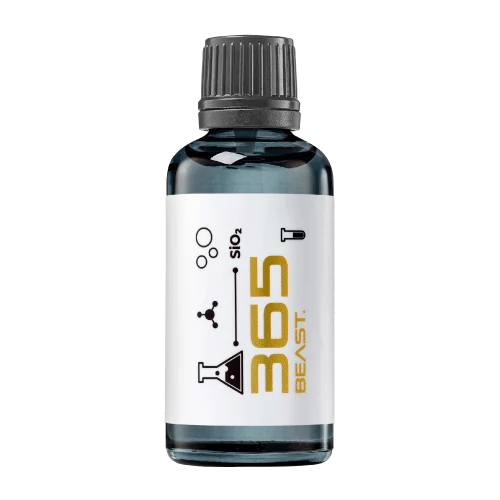 MAINTENANCEBEAST 365Explore the BEAST maintenance range.Discover
Next in washing, cleaning & care.
Ceramic protection for boats and yachts.
An easy-to-apply ceramic coating with an established track record on boats and yachts around the world.
Results vary with surface preparation, exposure and maintenance.
Read 50 MARINE guides →Explore MARINEProtection for the surfaces you live with.
A look at what we’re developing.
From cutting and one-step correction to final finishing.
A wider range for professional vehicle care.
Taking shape alongside BEAST & MATRIX.
Practical guidance for your next coating project.
Explore all guides →
Audit a mobility-to-zeta conversion with a worked Henry-equation example. Check model assumptions, permittivity, viscosity and units before comparing reports.
Updated · NANOLAB Knowledge
Electrophoretic mobility and zeta potential are different reported quantities. A laboratory converts mobility into zeta potential using a model and dispersant properties. Before comparing two coating-dispersion reports, check those inputs: changing the conversion can change the reported millivolts without changing the measured mobility.
In the Henry relationship, μe = 2εζf(κa)/(3η), so ζ = 3ημe/(2εf(κa)). Use a consistent SI calculation:
The Hückel limiting value is f = 1 for small κa; the Smoluchowski limiting value is f = 1.5 for large κa. These are applicability limits, not settings to select according to which answer looks better. Ask the laboratory to justify its model for the actual sample and medium.
This is hypothetical arithmetic, not a NANOLAB measurement or a recommended test medium. Suppose μe = −2.0 × 10⁻⁸ m²/(V·s), η = 1.0 × 10⁻³ Pa·s and ε = 7.0 × 10⁻¹⁰ F/m.
| Assumed conversion | Calculation | Reported result |
|---|---|---|
| f = 1.5 | (−6.0 × 10⁻¹¹)/(2.1 × 10−9) V | About −28.6 mV |
| f = 1 | (−6.0 × 10⁻¹¹)/(1.4 × 10−9) V | About −42.9 mV |
The magnitude changes by 50% solely because the assumed function changes. Neither row demonstrates improved dispersion stability. Both cannot be treated as interchangeable interpretations of an unspecified sample. Resolve the appropriate model before comparing batches or discussing a specification.
For a spreadsheet check, explicitly convert 1 mPa·s to 0.001 Pa·s. A mobility reported as 1 μm·cm/(V·s) equals 1 × 10⁻⁸ m²/(V·s). Keep these conversion cells visible instead of burying factors inside the final formula.
Henry conversion is not a universal description of every concentrated or complex formulation. Malvern Panalytical documents additional electrokinetic models; the laboratory must establish which treatment is suitable. This calculation does not prescribe dilution or prove that a selected method preserves the original dispersion.
For the next decision, read why zeta potential cannot independently establish shelf life. If a particle-size report also changes, review viscosity inputs in DLS; that is a separate measurement and calculation.