






A full polishing range.
From cutting and one-step correction to final finishing.
Specialist chemistry. Expert application.
 QUARTZ99 / CERAMIC BASE COAT
The foundation of your coating system.
A layerable quartz base coat designed for mechanical protection. Pair it with a suitable top coat to create the final finish.
For application by NANOLAB certified installers only.
Four formulas. Extended working time. Find the coating for your finish.
Explore the BEAST family of ceramic coatings.
Find the coating for each exterior surface.
 PPF & VINYLGLOSSProtection for glossy films and wraps.Discover
 MATTE & SATINMATTEProtection that respects the finish.Discover
 GLASSWINDOWSExplore dedicated glass protection.Discover
 WHEEL PROTECTIONWHEELSA dedicated coating for your wheels.Discover
 TRIM PROTECTIONPLASTICProtection for plastic surfaces.Discover
Dedicated care for the surfaces inside.
 LEATHER SURFACESLEATHERDiscover NANOLAB leather protection.Discover PLASTIC SURFACESPLASTICProtection for interior plastic surfaces.Discover TEXTILE SURFACESFABRICExplore the latest fabric formulation.Discover
Spray protection, maintenance and upcoming wash products.
 MAINTENANCEBEAST 365Explore the BEAST maintenance range.Discover
Next in washing, cleaning & care.
Ceramic protection for boats and yachts.
An easy-to-apply ceramic coating with an established track record on boats and yachts around the world.
Results vary with surface preparation, exposure and maintenance.
Read 50 MARINE guides →Explore MARINEProtection for the surfaces you live with.
A look at what we’re developing.
From cutting and one-step correction to final finishing.
A wider range for professional vehicle care.
Taking shape alongside BEAST & MATRIX.
Practical guidance for your next coating project.
Explore all guides →
Keep opened-bottle identity and storage history clear without confusing the opening date with an invented universal shelf-life rule.
Updated · NANOLAB Knowledge
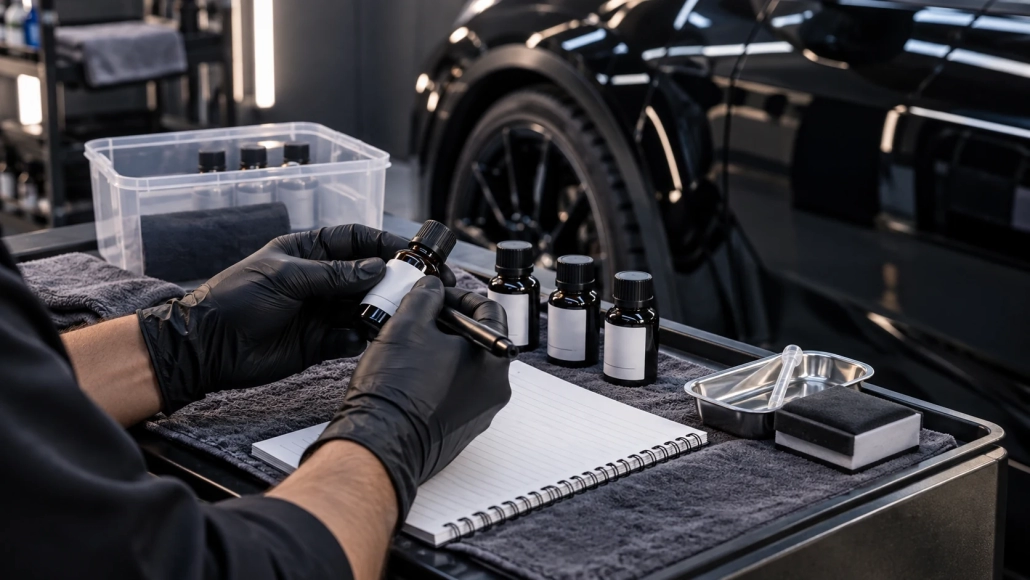
An opening-date label helps a workshop understand a ceramic coating bottle’s history. It does not establish a universal period during which every opened formula remains usable. Storage and use decisions must follow the exact product’s current instructions.
Keep the product name, batch and original label legible. Add an opening date and operator initials without covering hazard information or instructions. If a separate log is used, give the bottle a clear reference that connects it to the correct entry.
Avoid transferring coating into an unapproved container just to simplify labelling. Closure compatibility and product handling requirements are part of the system, not optional packaging details.
Note unusual exposure, a damaged closure or an unexplained change in appearance. A bottle returned from a mobile job should not automatically be treated as equivalent to stock that remained under controlled storage. Do not attempt to restore an altered product by adding solvent or mixing bottles.
Check the specified storage conditions and any guidance after opening. When usable life is unclear, contact the supplier with the product and batch details rather than assigning an arbitrary number of days.
Review the label and log before selecting the bottle. If its history or condition is uncertain, set it aside for assessment and use suitable stock for the appointment. Do not discover the uncertainty after spreading material onto a customer’s panel.
Consult NANOLAB product documentation for the applicable requirements. A small opening-date system supports traceability because it records what happened; it should never create a shelf-life claim that the manufacturer has not provided.
Keep product identity, opening dates and storage conditions organised so an opened coating bottle remains traceable and suitable for use.

Organise similar coating bottles by product role, surface and batch so the correct formula reaches each job.

Assess observable coating-work skills with a defined task, clear criteria and a documented result.

 Ceramic Coating Stock Picking: Preventing Similar-Bottle Errors