






A full polishing range.
From cutting and one-step correction to final finishing.
Specialist chemistry. Expert application.
 QUARTZ99 / CERAMIC BASE COAT
The foundation of your coating system.
A layerable quartz base coat designed for mechanical protection. Pair it with a suitable top coat to create the final finish.
For application by NANOLAB certified installers only.
Four formulas. Extended working time. Find the coating for your finish.
Explore the BEAST family of ceramic coatings.
Find the coating for each exterior surface.
 PPF & VINYLGLOSSProtection for glossy films and wraps.Discover
 MATTE & SATINMATTEProtection that respects the finish.Discover
 GLASSWINDOWSExplore dedicated glass protection.Discover
 WHEEL PROTECTIONWHEELSA dedicated coating for your wheels.Discover
 TRIM PROTECTIONPLASTICProtection for plastic surfaces.Discover
Dedicated care for the surfaces inside.
 LEATHER SURFACESLEATHERDiscover NANOLAB leather protection.Discover PLASTIC SURFACESPLASTICProtection for interior plastic surfaces.Discover TEXTILE SURFACESFABRICExplore the latest fabric formulation.Discover
Spray protection, maintenance and upcoming wash products.
 MAINTENANCEBEAST 365Explore the BEAST maintenance range.Discover
Next in washing, cleaning & care.
Ceramic protection for boats and yachts.
An easy-to-apply ceramic coating with an established track record on boats and yachts around the world.
Results vary with surface preparation, exposure and maintenance.
Read 50 MARINE guides →Explore MARINEProtection for the surfaces you live with.
A look at what we’re developing.
From cutting and one-step correction to final finishing.
A wider range for professional vehicle care.
Taking shape alongside BEAST & MATRIX.
Practical guidance for your next coating project.
Explore all guides →
Product leaving a sprayer is not the same as product reaching the intended surface. Separating total consumption from avoidable overspray helps a workshop investigate cost without assuming that a lower spray count always means a better process.
Updated · NANOLAB Knowledge
Map where the product goes during a normal application. Some loss may be inherent to the approved method, while poor positioning or an unsuitable spray pattern may create unnecessary waste. Do not reduce the applied amount below the product's requirements simply to improve a consumption metric. The finished cleaning result remains part of the assessment.
Illustrative example: two operators use the same approved cleaner on comparable vehicles. One sprays repeatedly from too far away and coats adjacent areas unnecessarily. Reviewing application technique may explain the difference more directly than changing the dilution or blaming the product.
Consumption data does not establish airborne exposure, environmental compliance or surface compatibility. Those questions require the relevant product and workplace guidance. Use the measurement to improve a defined process, and retain any necessary application and removal steps even if they consume material.
Ask NANOLAB about the exact product and intended use. Use the current product documentation for formulation-specific instructions.
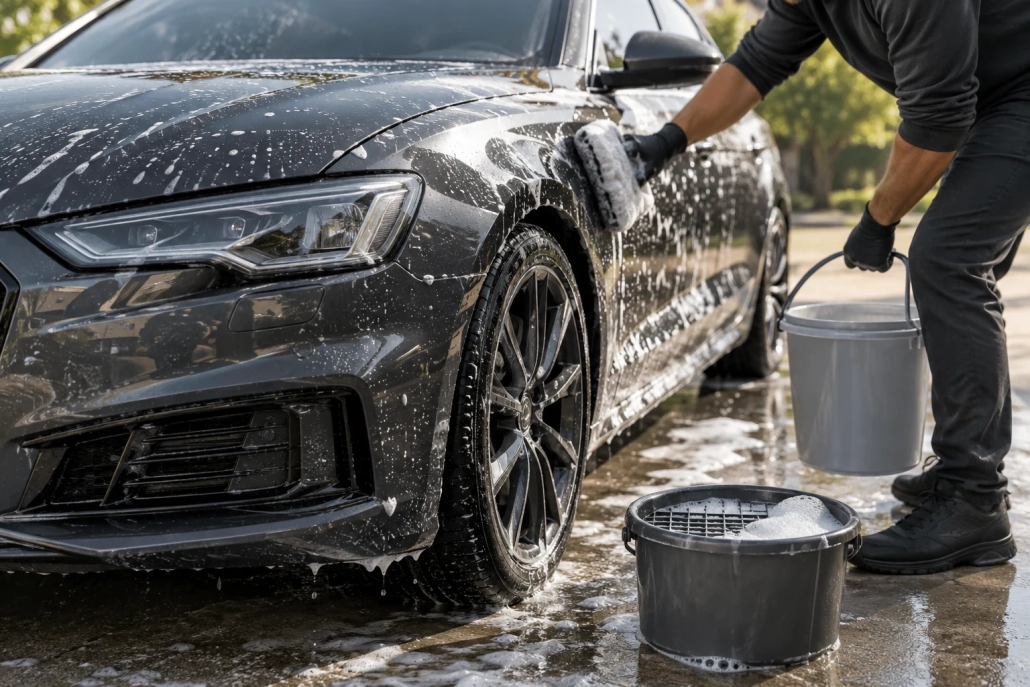
Use a short practical demonstration to explain safe washing, tool separation, drying and the first-wash instructions for a coated vehicle.

Consumption and coverage are reciprocal descriptions only when their units and scope match. Keep waste and application losses on the same basis.
A return visit for an existing coating job should remain linked to that job even if it creates a new appointment. Otherwise, workload and quality metrics can make repeat work look like additional new business.